A letter from Dallas Water Utilities says your service line material is “unknown,” and now you’re wondering about lead. Dallas water service line notices like this go to customers whose service-line material isn’t confirmed in the utility’s records, as part of a federal requirement to inventory those lines. Unknown does not mean lead. And the letter is about the buried pipe from the meter to your house, not the plumbing inside.
Fullbore Dallas Repiping replaces the water piping inside Dallas homes and commercial buildings. We don’t replace service lines or lead service lines. This post explains what the DWU letters say and why they’re a separate question from a whole-house repipe.
What DWU announced
The DWU notice dated September 30, 2026 said the utility would begin mailing notifications in early October to more than 200,000 customers whose service-line material is listed as unknown. The letters support the federal Lead and Copper Rule requirement that water systems keep a public inventory of service lines, and they help DWU improve its own records.
The notice says DWU completed its initial inventory in 2024 and is refining it, with an expanded baseline inventory due by November 1, 2027.
Does unknown mean lead?
No, and the notice says so plainly: an unknown classification does not mean lead has been found in a customer’s service line or detected in drinking water. It means DWU doesn’t have enough information to confirm the material. The same notice says DWU had not identified any lead service lines through its inventory work, and that Dallas uses corrosion-control treatment to reduce the potential for metals to leach from plumbing.
Many houses are listed as unknown simply because older records never noted the material.
What DWU wants you to do
DWU asks you to complete its Customer Service Line Survey. The survey shows how to find the service line where it enters your home and how to upload photos, so the utility can decide whether more checking is needed. The DWU Lead and Copper page links the survey and a public inventory map.
That page also says the DWU Water Quality Division offers lead testing on request through Dallas 311. If you want certainty about your tap water, that’s the direct route.
Taking useful photos safely
Look where the pipe comes out of the ground near the house, usually close to the main shutoff, a front hose bib or the garage. Take a wide shot and a close shot, including any printed markings. Don’t dig, cut or remove anything.
Which part of the pipe is yours?
The DWU Lead and Copper page describes a public side, the meter and a private side. The utility maintains the public side and the meter. You’re responsible for the private side, from the meter into the building, including the plumbing inside. So the private service line and the interior piping are both yours, but they’re different pipes with different contractors and approvals.
Would a repipe fix this?
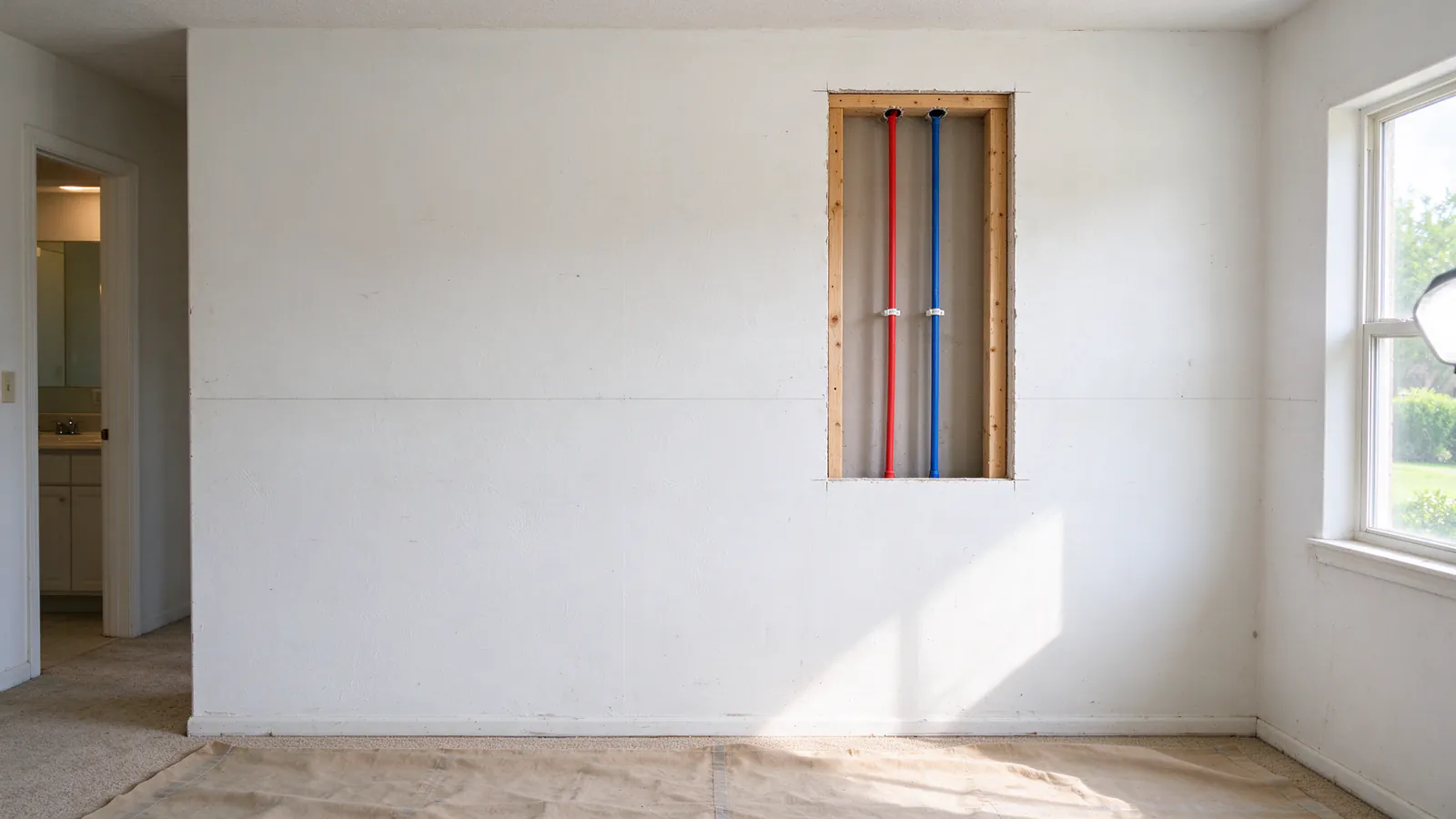
No. A repipe replaces the hot and cold piping inside your house: trunks, branches, water heater connections and stub-outs. It ties into the existing service at or just after the main shutoff. It doesn’t replace or test the buried line from the meter. Our interior repiping vs water service line guide maps the boundary in detail.
What’s inside also says nothing about the service line. New pipe from a recent PEX repipe can sit downstream of an older service line, and old galvanized pipe inside can sit downstream of a newer one. Our pipe identification guide covers the interior side.
When the inside is the real problem
Sometimes the letter shows up at the same time as trouble inside: rusty hot water, weak flow at one bathroom, or pinhole leaks that keep coming back. Those are about your interior piping and are worth looking at on their own. Our brown water guide and recurring pinhole leaks guide help you sort out what points inside.
If both the service line and the interior need work, plan them together so the new main shutoff sits where the new service line will arrive.
What to do next
Answer the DWU survey, keep the letter with your property records, and use Dallas 311 for testing if you want it. If the plumbing inside is your concern, our Dallas home repiping guide covers the job, and you can get an estimate for an interior repipe.