Your old copper has started leaking in more than one room, or the gray plastic under the sink turned out to be polybutylene, and you want the next system to be the last one for a long while. For PEX repiping, Dallas slab houses have a real advantage: an attic that can carry long, continuous runs of flexible tubing with very few hidden joints. Fullbore Dallas Repiping replaces water supply lines in Dallas homes, from a single bathroom branch to the whole house.
We plan the route, run the new lines overhead, drop them down interior walls, pressure test them and have the City inspect them before any wall closes. A good PEX quote names more than “PEX”. It names the tubing type, the fitting method and the layout. If you are still deciding on material, our copper repiping page and the PEX versus copper guide set the two side by side.
What we check on the first visit
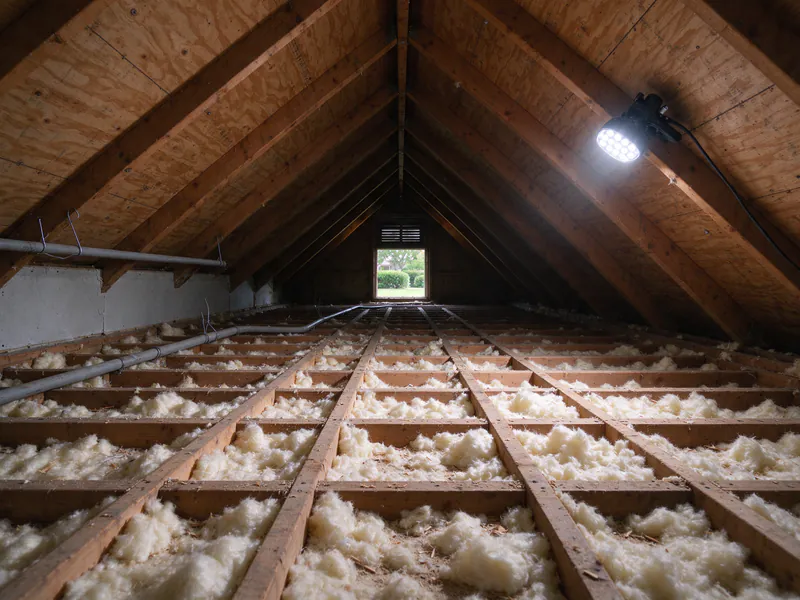
We map the system you have and the route the new one will take. We note what the current pipe is, where it runs and which fixtures share a branch. Then we go up into the attic and look at how much headroom there is over each bathroom, where the trusses and ductwork sit, how deep the insulation is and where the vents let sunlight in. Those details decide whether long PEX runs can lie low under the insulation or have to climb over ducts.
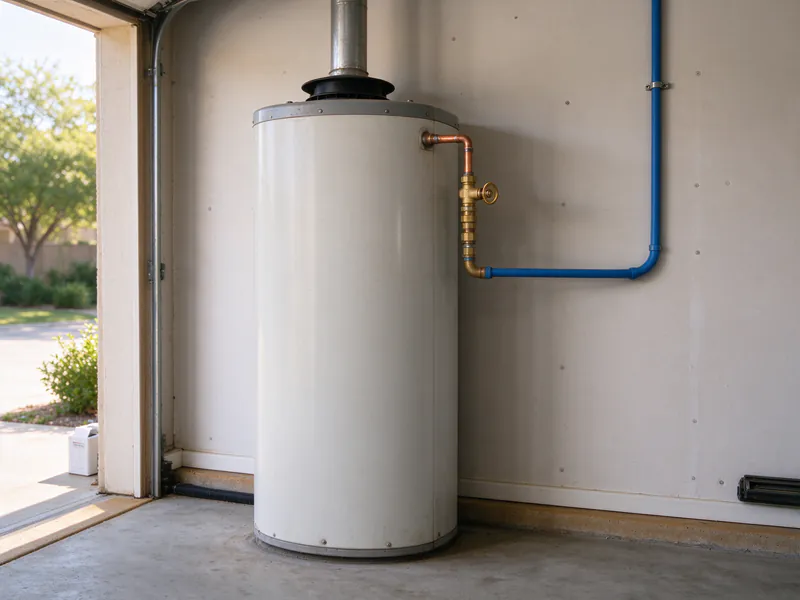
We also look for a home for a manifold, if you want one. It needs a wall or closet that stays reachable after the job: a utility closet, a garage wall near the water heater, the back of a linen closet. If nowhere works, trunk-and-branch or small group manifolds may suit the house better. The water heater location matters too, because the tubing maker’s instructions set how we connect there.
Which PEX goes in your walls?
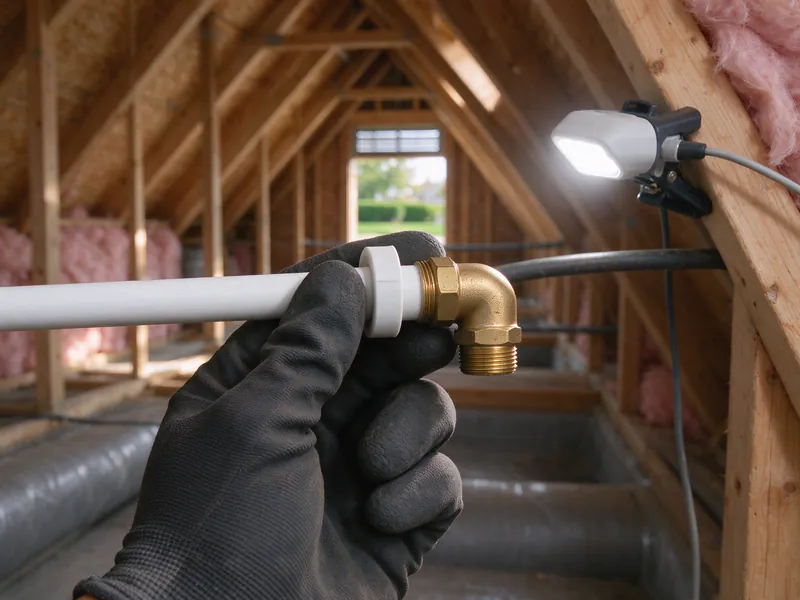
PEX for drinking water is made to ASTM F876 for the tubing and listed to ASTM F877 as a system. The letter after it names how the plastic was crosslinked. PEX-A is the most flexible, and we usually join it with cold-expansion fittings to ASTM F1960: the tubing end is stretched, slipped over the fitting and shrinks back tight. PEX-B is stiffer and is usually joined with copper crimp rings or stainless clamp rings over an insert fitting, to ASTM F1807 or a similar listing. PEX-AL-PEX adds an aluminum layer that holds a bend.
The rule that matters is matching. The fittings, rings and tools should be the ones the tubing maker lists for that tubing. Mixed systems are where installation mistakes and warranty arguments start, so we use one named system from end to end and write it on your estimate.
Does Dallas water bother PEX?
Dallas Water Utilities treats its surface water with chloramine and corrosion control. PEX tubing carries a printed chlorine-resistance rating from its listing, and we put that rating on the scope, especially for hot lines and any recirculation loop. That is a reason to read the printing on the tubing, not a reason to worry about the material.
How we run PEX through a Dallas attic
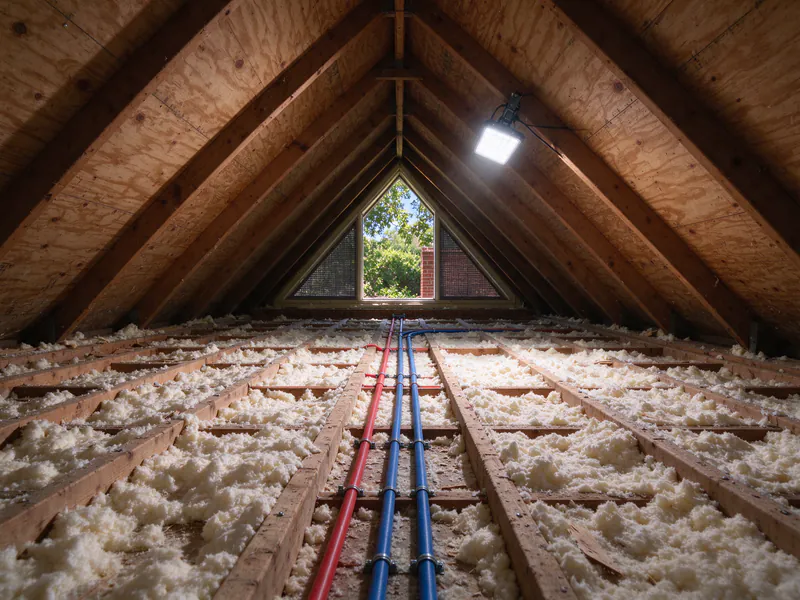
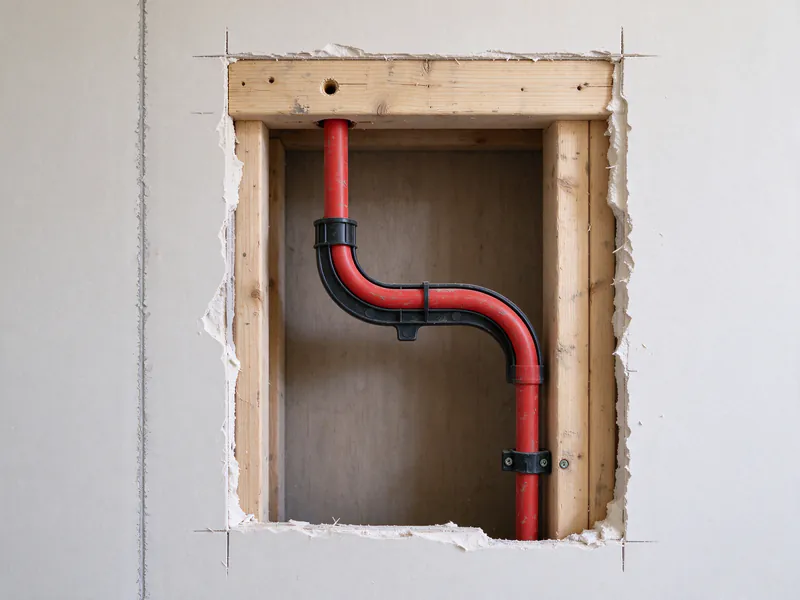
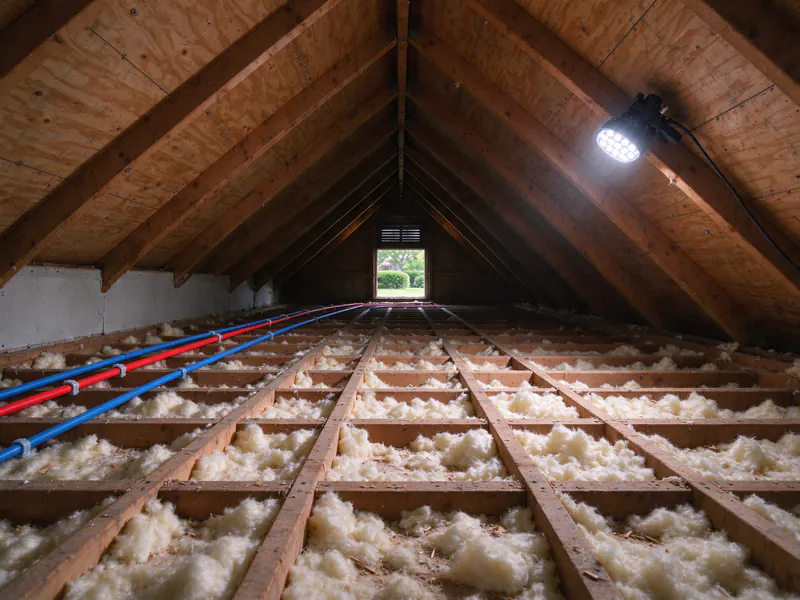
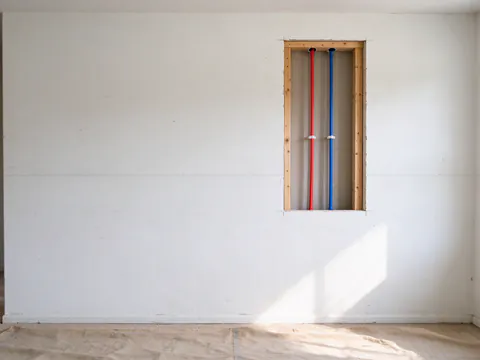
The attic is why PEX suits so many Dallas repipes. Flexible tubing runs a long way overhead and turns down into a wall through a drilled top plate with a bend support, with no joint inside the wall. Fewer hidden fittings means fewer places for a future leak and fewer holes in finished rooms.
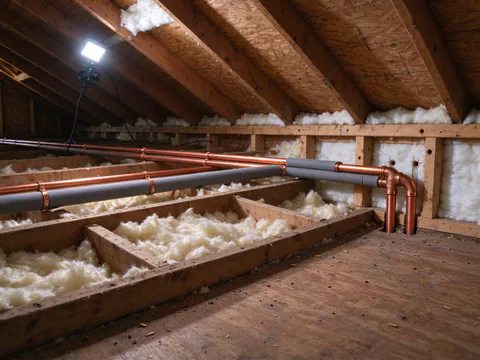
The attic is also the hardest place the tubing will live. In summer a Dallas attic gets far hotter than the house below, and PEX has to stay within its rated temperature and out of sunlight, since ultraviolet light breaks it down. In winter the same space can freeze; the February 2021 storm, documented by the National Weather Service in Fort Worth, froze pipes across the city. We keep the lines low against the ceiling drywall and under the insulation, insulate them, support them at the maker’s spacing and keep them clear of flues. Our attic routing and freeze protection guide covers each step.
Want a PEX route drawn for your house?
We check the attic, the manifold location and the water heater connection before we price a layout.
Manifold or trunk-and-branch?
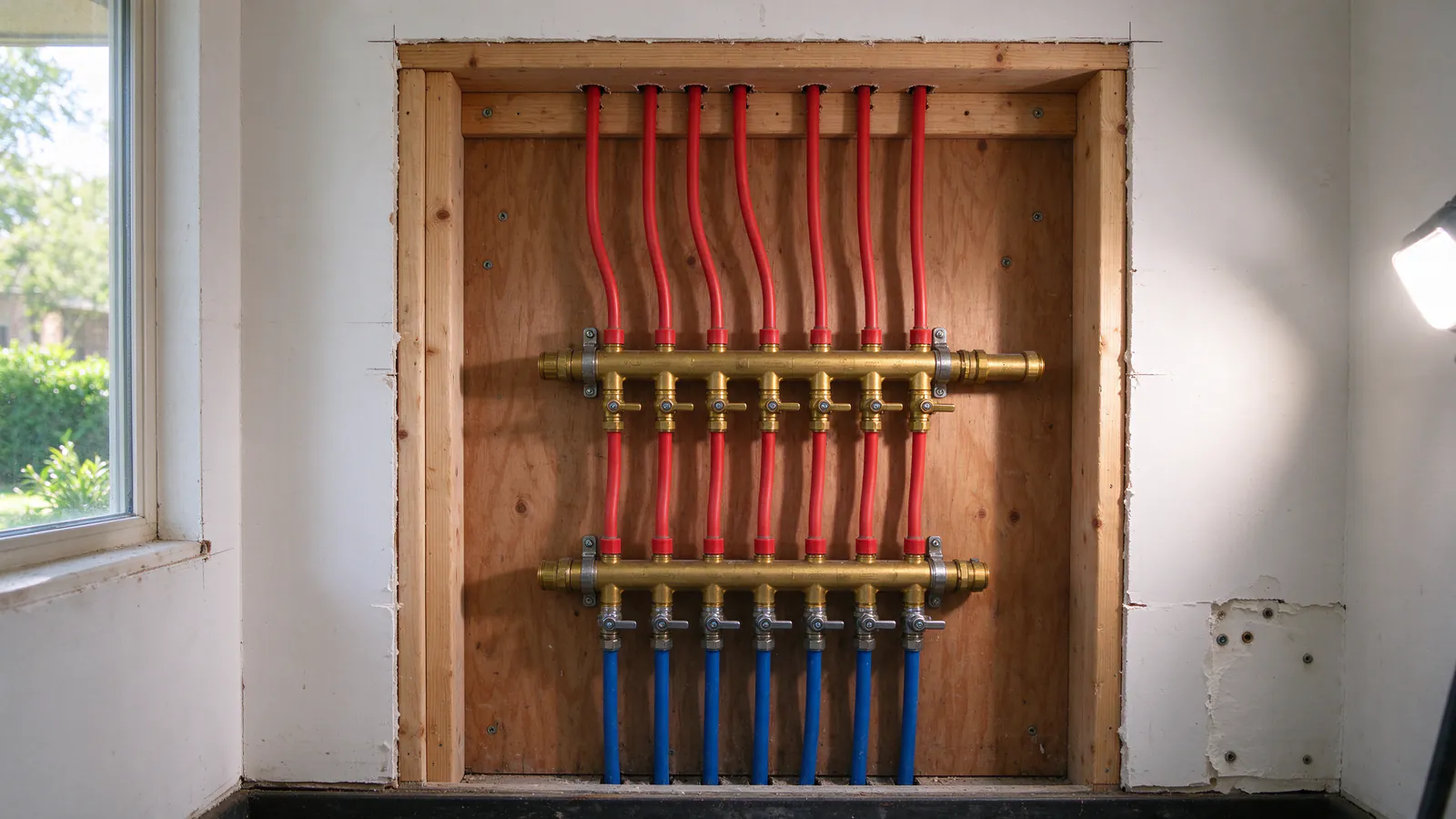
A home-run manifold gives each fixture its own line and its own valve at one panel. It cuts hidden fittings to almost none, but it puts many parallel lines in the attic, and each long line has to purge before hot water arrives. Trunk-and-branch uses a larger main with tees to smaller branches, so it uses less tubing, and a warm shared trunk can bring hot water sooner to nearby fixtures. Many houses do best with a hybrid: trunk lines to a small manifold at each bathroom group.
We will walk you through what each means for your floor plan. The manifold versus trunk-and-branch guide compares them, and the slow hot water guide covers what to expect at the far bathroom. PEX is quieter than rigid pipe, but a fast-closing valve can still bang if lines are loose where they leave the wall; the water hammer guide explains the fix.
Will you have to open walls?
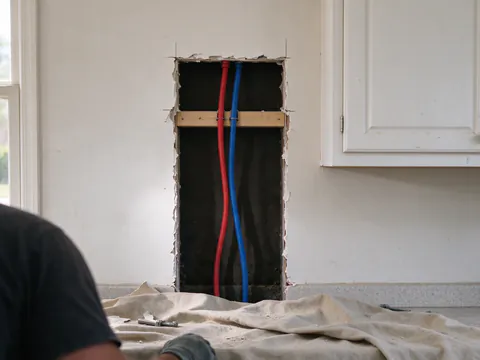
Yes, though the attic route keeps it modest. Each drop usually needs a small cut at the top of the wall and another behind the fixture where the stub-out lands. Kitchens and tub valves on exterior walls are the usual trouble spots. Your estimate lists each expected opening and who patches, textures and paints it; the wall openings guide explains the finish levels.
Before anything closes, we pressure test the new system and the City inspects the rough-in. The permit goes in through DallasNow, and walls stay open until the inspection passes, because the City charges a concealment fee when work is covered first. After cutover we flush the lines and clean the aerators.
What a PEX repipe costs in Dallas
Our typical range for a whole-house PEX repipe in Dallas is $4,500 to $15,000 and up. A one-story house with good attic room and two bathrooms lands toward the lower end. More stories, more bathrooms, tile or plaster in the path, a long run to a far wing, a full manifold and a larger patch-and-paint scope push it toward the top. For a single bathroom or one side of the house, see partial repiping.
We set your number after the first visit, and the written estimate shows what builds it: fixture and branch count, layout, attic route length, stories, the water heater connection, valves and any PRV, openings and finish work, and the permit and inspections. A per-square-foot shortcut misses most of that. The repiping cost estimator shows how each driver changes the scope, and the Dallas repiping cost guide shows how to line up two PEX quotes so they describe the same work.
For labor context, the Bureau of Labor Statistics puts the mean wage for plumbers, pipefitters and steamfitters in Dallas-Fort Worth-Arlington at $29.94 an hour. That is an employee wage, not a billing rate, which also carries licensing, insurance, vehicles, permits and overhead.
Before you decide
The PEX versus copper guide compares the two materials for Dallas houses. For the full-house version of this work, see whole-house repiping, and if one line under the slab has failed, slab leak rerouting uses the same overhead approach for a single run. The repiping process and timeline guide shows the order of work, and the repiping water shutoffs guide explains when your water goes off.