You fill a glass and it comes out the color of weak tea. Brown tap water causes fall into three groups: sediment stirred up in the utility main, a water heater shedding sediment or rust, and corroding galvanized pipe inside the house. A few checks at your taps usually separate them. Fullbore Dallas Repiping replaces galvanized and other worn-out water lines in Dallas homes, but only that last cause is a pipe problem.
So before we talk about a repipe, let’s find out where the color is coming from.
Three checks that narrow it down
Look at three things: whether the color shows at every tap or only some, whether it comes from hot, cold or both, and whether it clears after a few minutes of running. Every tap, both temperatures, clearing after a while points to the main. Hot only points to the heater. Some taps, coming back every day, points to the pipe.
| What you see | Likely source | Next step |
|---|---|---|
| All taps, hot and cold, clears with running | Utility main disturbance | Check for utility work; run cold until clear |
| Hot taps only | Water heater sediment or rusting tank | Flush the heater; have it inspected |
| Some taps, worse after water sits overnight | Corroding galvanized branches | Identify the pipe; assess for replacement |
| All taps, returns daily, weak flow | Galvanized throughout the house or service line | Assess the interior pipe and service line separately |
| One fixture only | Fixture, valve or a single branch | Check the aerator and stop valve first |
Brown at every tap all at once?
Brown water at every tap, hot and cold, that shows up suddenly and clears after running is usually sediment in the street main, stirred up by a main break, hydrant flushing, fire flows or nearby work. That is a utility issue, not your pipes, and it usually passes within hours.
Dallas Water Utilities treats surface water with chloramine and corrosion control. When a main gets disturbed, iron and sediment that settled in it can reach houses. Run cold water from a tub or hose bib until it clears, and don’t run hot water, which pulls the sediment into your water heater. If it lasts, report it to the utility.
Brown from the hot side only?
Brown or rusty water from hot taps only points to your water heater. Tank heaters collect sediment over time, and Dallas water hardness, reported at 120 to 155 mg/L as calcium carbonate in a December 2023 City memo, adds scale. Once the tank’s protective anode is used up, the steel tank itself can rust from the inside.
Flushing the tank can clear sediment. Rust from the tank usually means the heater is near the end of its life. We don’t replace water heaters on their own, but every repipe we scope includes the hot and cold connections at the heater, and if galvanized nipples connect your heater, those are part of the pipe question.
Rusty water that keeps coming back?
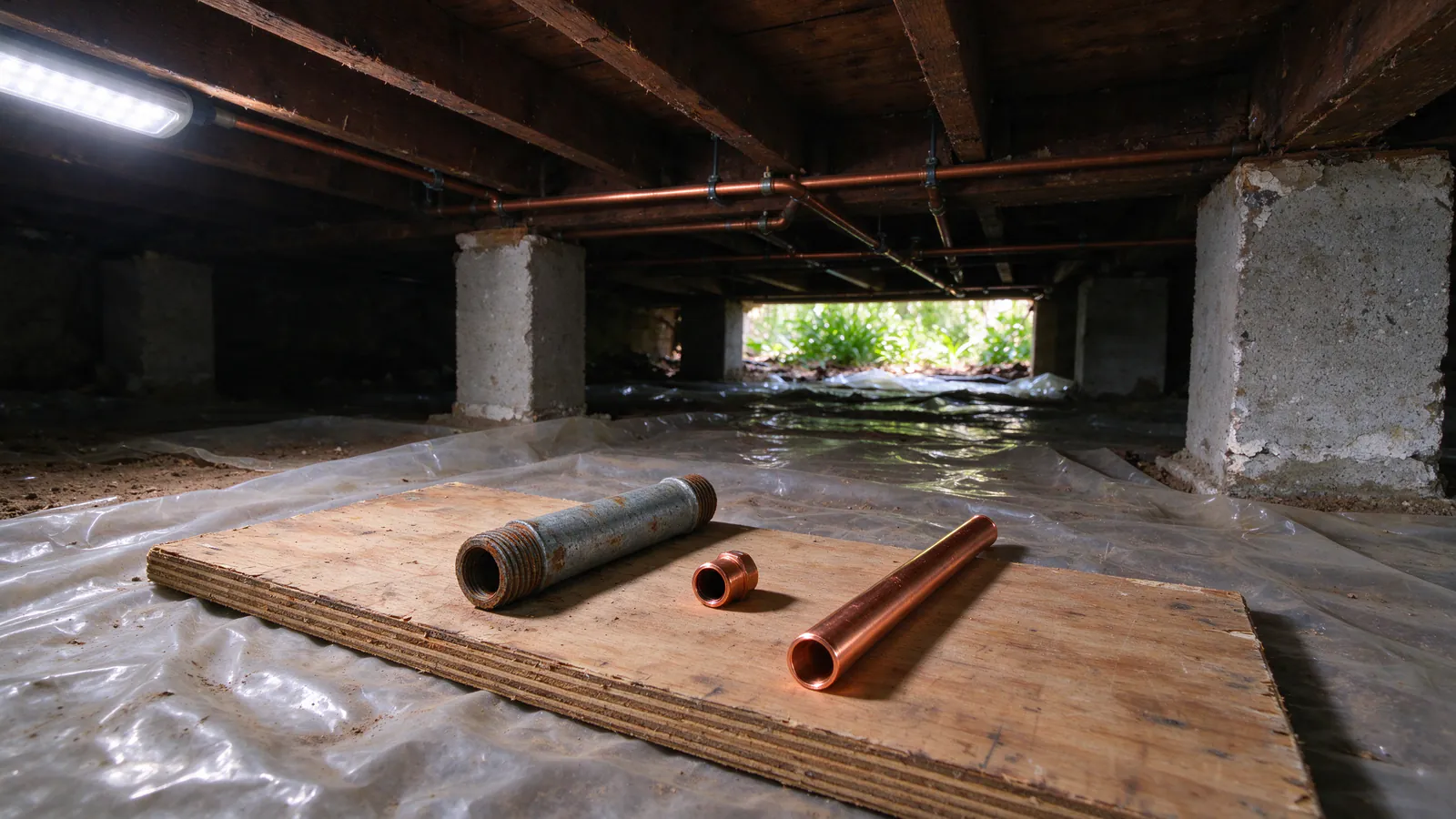
Galvanized steel pipe was common in Dallas houses plumbed through roughly the 1950s and 1960s. Once its zinc coating wears away, the steel rusts from the inside and builds deposits called tuberculation. Rusty water that comes back every day, worst first thing in the morning, together with falling flow, is the classic sign.
The rust in your glass is the same rust that is narrowing the bore. Over time the opening shrinks and flow drops, especially at upstairs fixtures and at the far end of long runs; our guide to low water pressure vs low flow explains why. Threaded joints are the thinnest point, so leaks at threads often come next.
Galvanized can look fine on the outside while the inside is badly choked. If you’re not sure what you have, our pipe identification guide helps; a magnet sticks to galvanized and not to copper or plastic.
Rusty water that keeps coming back?
We confirm whether galvanized pipe is the source and give you a written estimate for replacing it in your house.
Could it be the service line?
On older lots, the service line from the meter to your house may also be galvanized and can shed rust into every fixture. That is a separate scope from an interior repipe, and not one we take on. Dallas Water Utilities has sent notices about service-line material; an “unknown” listing is not a finding of lead. Our guide to repiping and water service lines explains the boundary.
How urgent is it?
Brief brown water after utility work isn’t urgent; let it clear and hold off on laundry until it does. Rusty water that returns every day isn’t an emergency either, but it tells you the pipe is corroding and closing up, and leaks at threads tend to follow. Any active leak, or brown water with an odor or after flooding, needs attention now.
Dallas Water Utilities can answer questions about water quality at the main. For whether the water in your house is safe to drink, the utility and an independent lab test are the right sources, not a plumber.
What replacing galvanized pipe involves
Replacing galvanized pipe removes both the rust source and the restriction. In a slab house with an attic, we usually run new lines overhead and down interior walls. Loosened scale may reach aerators, valve cartridges and the water heater for a short while afterward, so flushing and cleaning aerators are part of finishing the job.
Some owners replace only the worst runs in a partial repipe, which leaves old galvanized in service elsewhere; our guide to repair or repipe explains the trade-off. Older houses with plaster or original finishes need extra planning, covered in our guide to repiping older homes.
Find the source first
Run the checks above, note what you see, and take a photo of the pipe at the water heater. If it all points to galvanized, get an estimate. We confirm the material and explain what a whole-house repipe or a partial scope would replace.