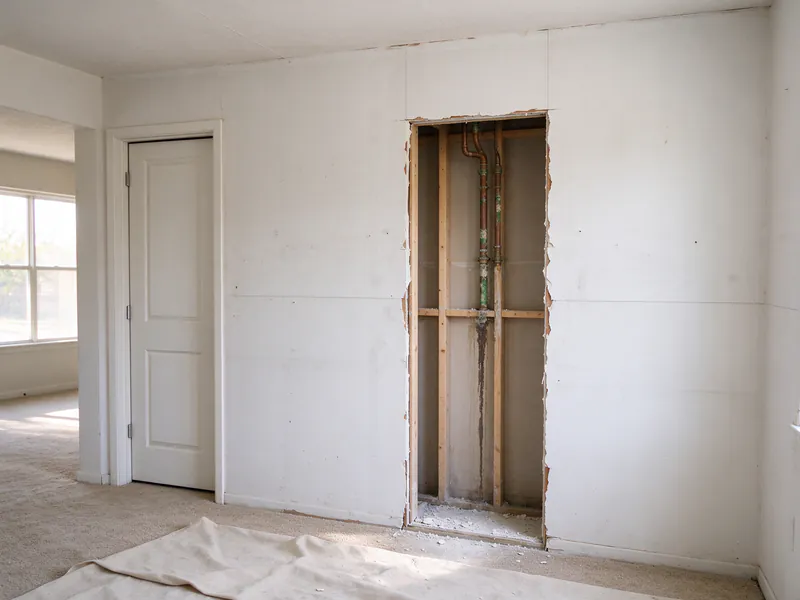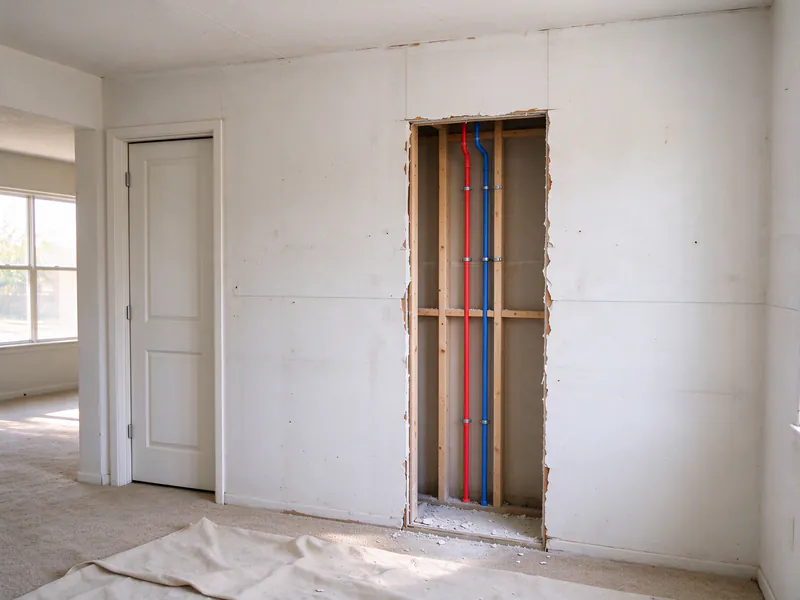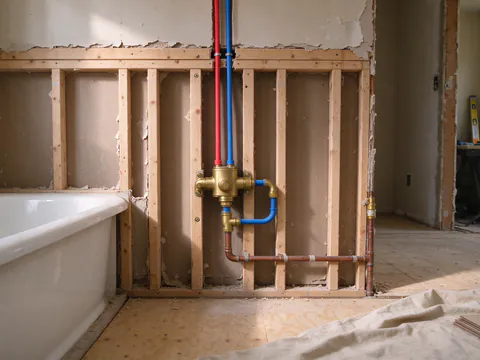
A pinhole drip stains the hallway ceiling, then a few months later another one shows up in a bathroom on the other side of the house. The hot water runs rusty after a weekend away. When the trouble is all over the house, one more patch rarely holds. For whole house repiping, Dallas slab homes usually get their new lines through the attic, not the concrete. Fullbore Dallas Repiping replaces water supply lines in Dallas homes, from a single bathroom branch to every line in the house.
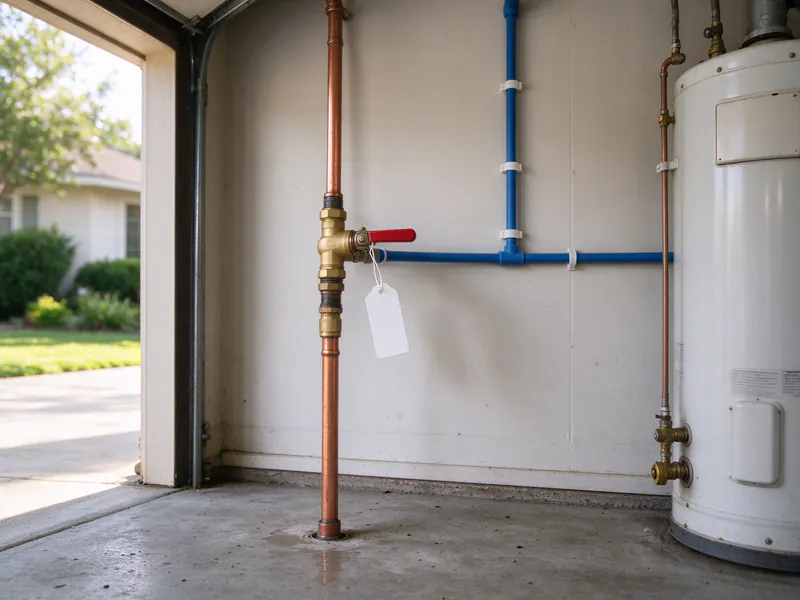
On a whole-house job we replace every interior hot and cold line, from the main shutoff where water enters the house to the stop valve under each fixture. We plan the route with you, schedule the City inspections and leave the walls open until the new system passes. If the trouble is confined to one bathroom or one side of the house, partial repiping may be the better fit, and our repair-or-repipe guide walks through that choice.
What we check on the first visit
We follow the water. We start at the main shutoff and the pressure-reducing valve, if the house has one, then trace the lines to the water heater and out to each bathroom, the kitchen and the laundry. Wherever pipe is exposed, under sinks, at the heater, in the attic, at the hose bibbs, we note what it is made of. One Dallas house can hold gray steel, copper, CPVC, gray polybutylene and PEX after decades of repairs, and our pipe identification guide shows you what to look for before we arrive.
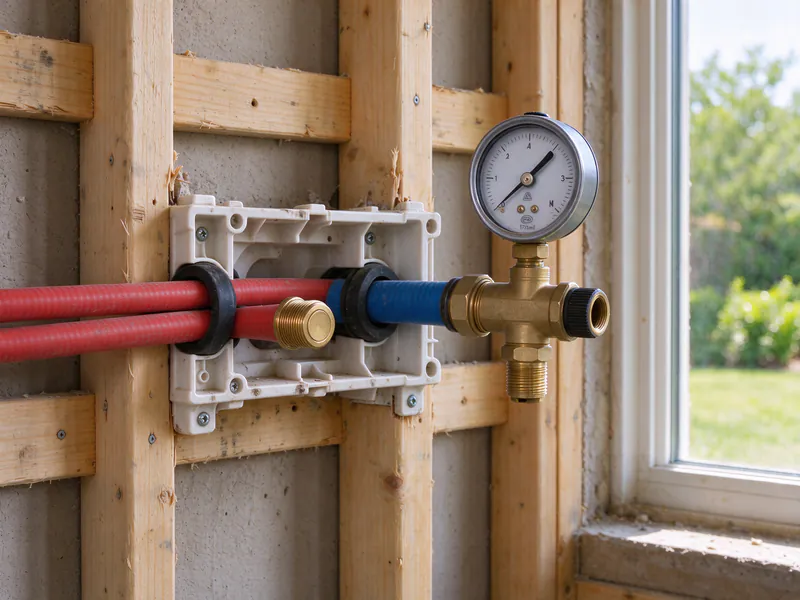
Then we measure. We read static pressure at a hose bibb and compare flow at the nearest and farthest fixtures with two taps open. Those two numbers tell us whether old pipe is choking the flow or whether the supply, a valve or a fixture is to blame; the low pressure versus low flow guide explains the difference.
We also climb into the attic to check headroom, insulation depth and where drops can come down interior walls. You leave the visit with a boundary: what the repipe replaces, what stays, where walls open, and which extras such as a PRV or new water heater connections are on the list.
Why replace it all instead of one more repair
Pipe of one age and material, carrying the same water, tends to wear out together. Galvanized steel narrows from the inside along its whole length. Polybutylene fails at fittings all over the house, not at one spot. Copper that has pinholed in two rooms has seen the same water and the same velocity everywhere else. A repair fixes the leak in front of you and leaves the rest of that pipe in service, with a new joint between old and new at every patch.
Weak flow is the other common reason. If the upstairs shower drops to a trickle whenever someone runs the kitchen tap, and the hose bibb by the meter is strong, the pipe in between is usually the restriction. That is a whole-system problem, and patching one leak does nothing for it. Our recurring pinhole leak guide covers what a pattern of leaks can mean.
Is Dallas water to blame?
Not by itself. Dallas Water Utilities treats its surface water with chloramine and corrosion control, and a December 2023 City memo put its hardness at 120 to 155 mg/L as calcium carbonate. That hardness explains scale in aerators and water heaters. It does not, on its own, explain pinholes, and we will not blame one cause for every leak.
Running new lines through the attic
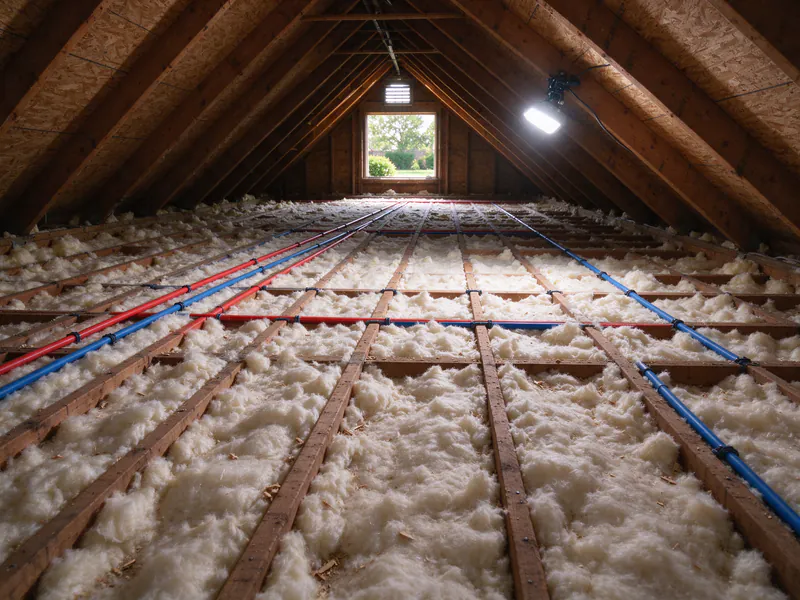
Many Dallas houses were plumbed with supply lines under or inside the slab. We rarely follow that path again. The usual plan runs new trunk lines overhead in the attic and drops branches down interior walls to each fixture group, and the old under-slab lines are cut, capped and left in place. You keep your floors, and any future leak happens somewhere it can be seen and reached. If only one line under the slab has failed, slab leak rerouting is the narrower version of the same idea.
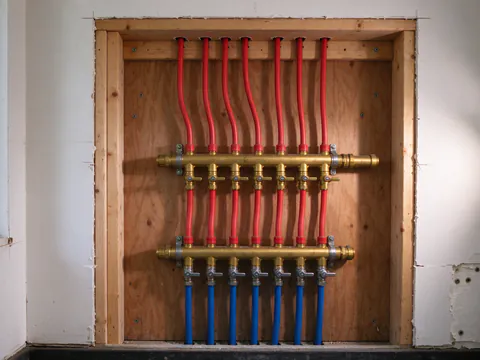
We will talk through layout with you. Trunk-and-branch uses larger mains feeding smaller branches; a home-run manifold gives each fixture its own line and its own valve. Our manifold versus trunk-and-branch guide compares hot-water wait, valve access and how much tubing each needs.
Summer heat and the next hard freeze
A Dallas attic in August runs far hotter than the rooms below, and in February it can drop below freezing. The 2021 winter storm, documented by the National Weather Service in Fort Worth, kept the area below freezing for days. We keep new attic lines low against the ceiling and under the insulation where the framing allows, insulate them, support them at the maker’s spacing and keep them out of sunlight from gable vents. Our attic routing and freeze protection guide goes deeper.
Want to see where new lines would run in your house?
We walk the house from the main shutoff to the farthest fixture and mark the attic route, the wall drops and every opening before anything is cut.
Will we need a permit and inspections?
Yes. Replacing or rearranging supply piping is permitted plumbing work in Dallas; it does not fit the City’s small exemption for stopping a leak. We submit the permit through DallasNow, the City’s permitting portal, and the work is built to the 2021 International Plumbing Code with Dallas amendments. PEX and copper are both allowed when they are listed and installed to the code and the maker’s instructions.
The City inspects the new piping at rough-in, with walls and ceilings open after the pressure test, and again at final. Since June 1, 2026 the City has coordinated plumbing and mechanical rough and final inspections. Drywall goes back only after the rough passes. Our Dallas repiping permit guide has the details.
Will you have to open walls?
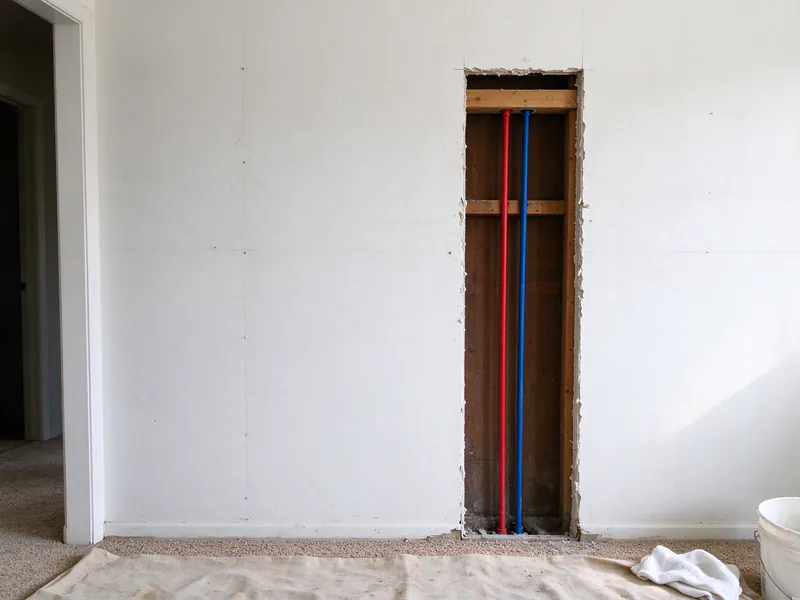
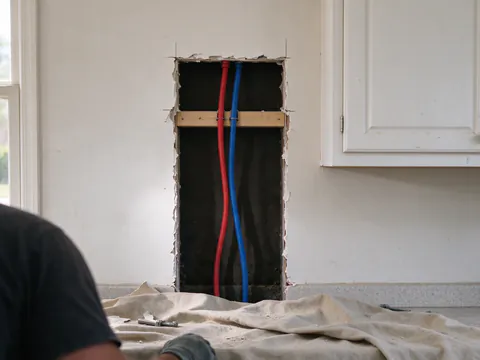
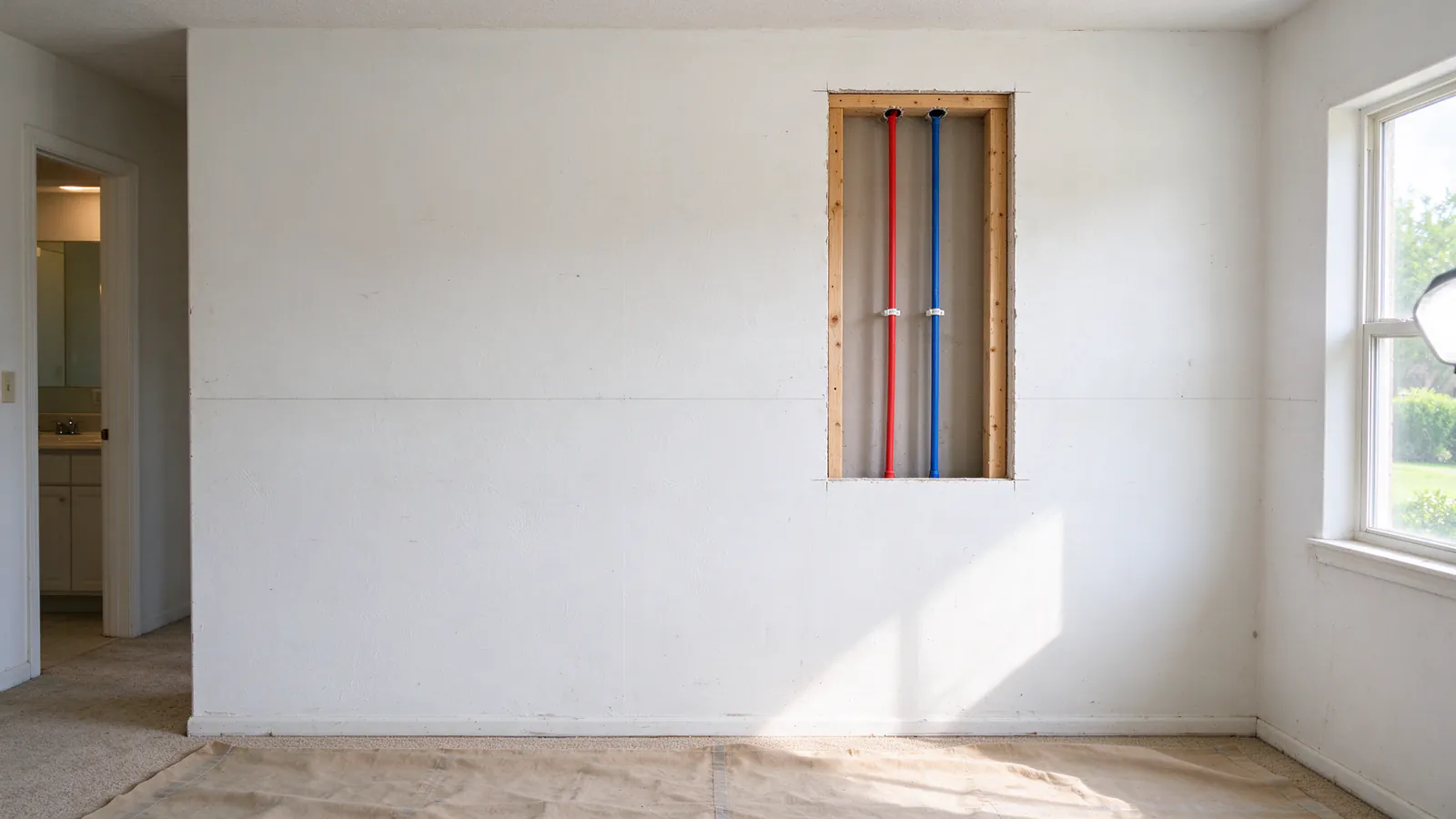
Some, yes. Every whole-house repipe needs openings, and the attic route keeps most of them small: a rectangle at the top of a wall where a drop enters, one behind each fixture group where the new stub-outs land, sometimes one in a closet or garage ceiling. Tile walls are the hard case, so we look for a way to reach a shower valve from the closet or bedroom side.
Your written estimate lists every expected opening and says who closes it and to what finish: patch only, patch and texture, or patch, texture and paint. Firestopping where new pipe passes through the wall between the garage and the house belongs on that list too. The wall openings and drywall repair guide explains each finish level.
The water stays on while we build the new system beside the old one. It goes off for each cutover, and the repiping water shutoffs guide shows how to plan a household around those windows.
What a whole-house repipe costs in Dallas
Our typical range for a whole-house PEX repipe in Dallas is $4,500 to $15,000 and up. Our typical range for a whole-house copper repipe in Dallas is $8,500 to $18,000 and up. A one-story house with a roomy attic and two bathrooms sits toward the low end. More stories, more bathrooms, plaster or tile in the path of the new lines, a long route to a far wing and a bigger patch-and-paint scope push it toward the top.
We set your number after the first visit, and the written estimate lists the pieces that build it: fixture and branch count, the route, the material and layout, the openings and finish work, valves and any PRV, the water heater connections, and the permit and inspections. Our repiping cost estimator shows how each of those moves the scope, and the Dallas repiping cost guide explains how to compare two quotes on the same boundary.
For labor context, the Bureau of Labor Statistics reports a mean wage of $29.94 an hour for plumbers, pipefitters and steamfitters in the Dallas-Fort Worth-Arlington area, against $34.70 nationally. A wage is not a billing rate: the billed rate also carries licensing, insurance, vehicles, permits and overhead.
Before you decide
Start with the Dallas home repiping guide for the whole decision in one place. The repiping process and timeline guide shows the order of work from first visit to final inspection, and the quotes and warranties guide lists what a written scope should name. If your house is older, repiping old homes covers plaster, pier-and-beam floors and mixed materials, and the service line guide explains where our work stops and the utility side begins.