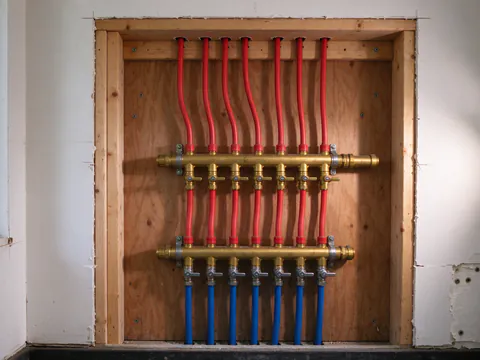
You have had a pinhole in the copper over the garage, then another in the bathroom wall, and you would rather put copper back than switch to plastic. That is a sound choice in many Dallas houses, as long as the new system fixes whatever made the old one fail. With copper repiping, Dallas homes get rigid tube joined fitting by fitting along straight runs through the attic and down the wall bays. Fullbore Dallas Repiping replaces water supply lines in Dallas homes, from a single bathroom branch to the whole house.
We plan the route, choose the joining method for each area with you, and have the new tube supported, insulated, pressure tested and inspected by the City before any wall closes. Copper costs more per foot than PEX repiping, takes more fittings and can need more openings, so we weigh it against your house and your leak history. The PEX versus copper guide sets the two side by side.
What we check on the first visit
When your current pipe is copper, we start with the leaks. Where were they? Hot or cold line? How far from the water heater, and on straight runs or just past elbows and tees? A cluster of pinholes on the hot side just past a recirculation pump tells a different story from one leak at an old joint. If anyone kept the cut sections from earlier repairs, bring them out; the inside wall shows a lot.
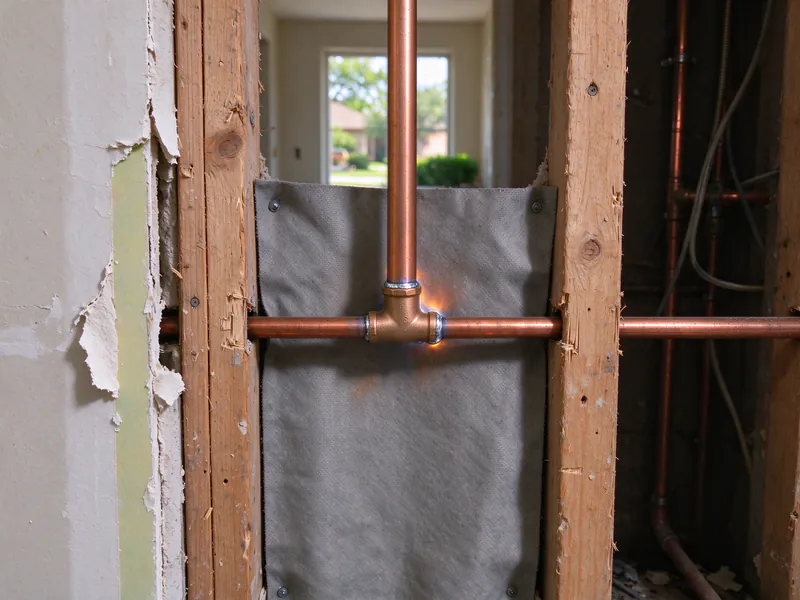
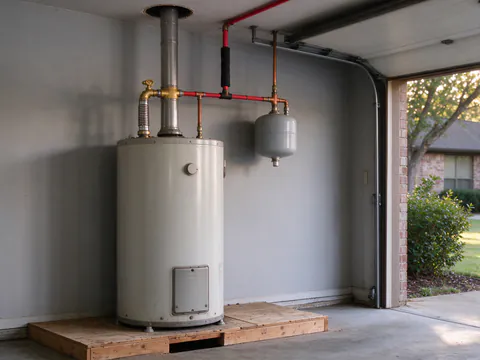
Then we plan the new route. Rigid tube needs straight bays, room for fittings and supports, and access to each joint, so we check attic headroom, which walls line up with the bathrooms and where a run would have to cross a duct. We note where torch work would sit near old framing or insulation, which shapes the choice between sweat and press fittings. And we check the water heater, the PRV if you have one and the main shutoff for the connections the new copper will need.
Pinholes keep coming back?
Copper pinholes rarely have a single cause. Velocity is a big one: water moving too fast through undersized tube, or a recirculation pump running hard, can wear the wall away just past elbows. Workmanship is another, especially flux left inside joints, burrs left on cut ends and tube rubbing on framing. Water chemistry plays its part as well. Our recurring pinhole leak guide explains how to read a leak pattern.
A copper repipe replaces aged and badly installed pipe. It does not change the water coming in from the street. That is why we pay as much attention to sizing, clean joints and pump settings as to the tube itself.
When copper again makes sense
Putting copper back fits best when the old failures trace to something a repipe removes: undersized branches, a pump run too hard, careless original joints, or decades of patches with mixed fittings. It also fits houses with open, straight routes, such as a one-story slab house with clear attic bays over the bathrooms, where rigid runs need few extra openings. If the leaks are only on hot lines, hot water line replacement may cover the problem without touching sound cold lines. Where routes are tight and every turn means another hole in finished drywall, flexible tubing usually wins on disruption.
Type L or M, sweat or press?
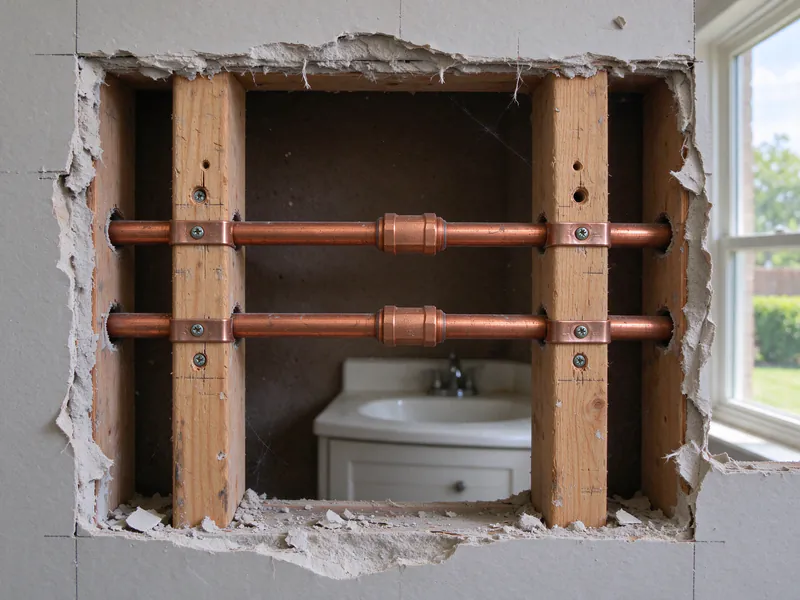
Copper water tube is made to ASTM B88. Type L has a thicker wall than Type M, and both can be used inside the house where the code and design allow; we write the type and sizes on your estimate. Joints are either sweat-soldered with lead-free solder and flux or press-connected with fittings that seal with an O-ring when a powered tool crimps them. Press fittings cost more each but need no flame, which matters in an attic full of dry wood and loose insulation or inside a finished wall. Every pressed fitting is made with the jaws and tool its maker specifies.
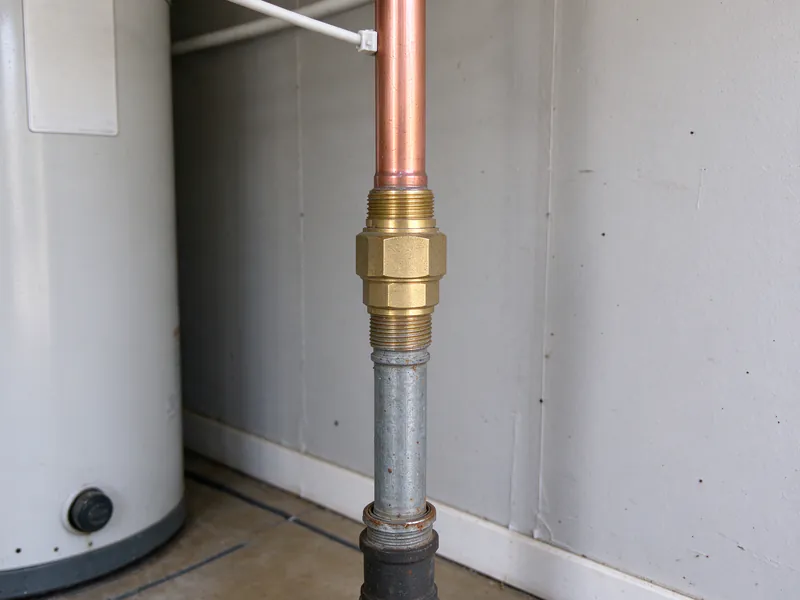
Where new copper meets galvanized steel that stays, the code calls for a dielectric or brass transition so the two metals do not corrode each other at the joint. On a full repipe that is usually only at the main or the water heater.
Want copper priced on the same scope as PEX?
One walk-through gives you both routes, so you compare tube against tube instead of guess against guess.
Heat, freeze and the ground path
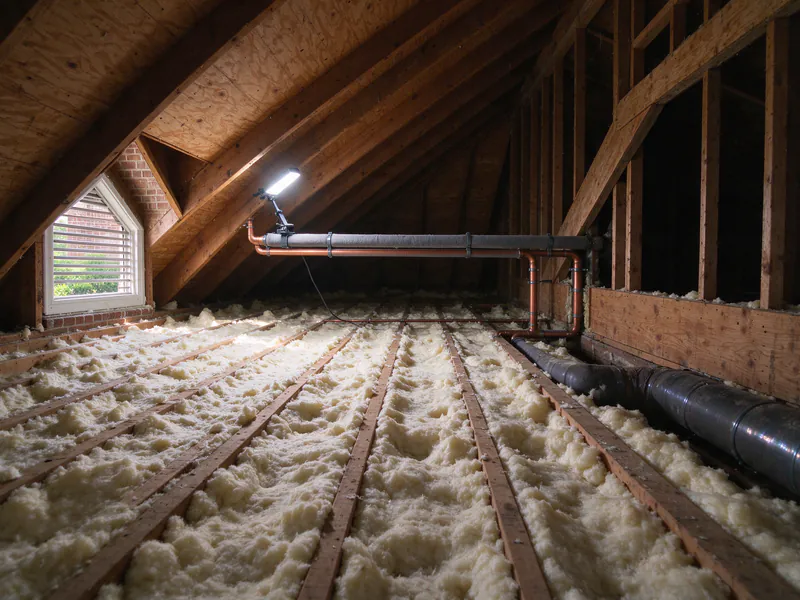
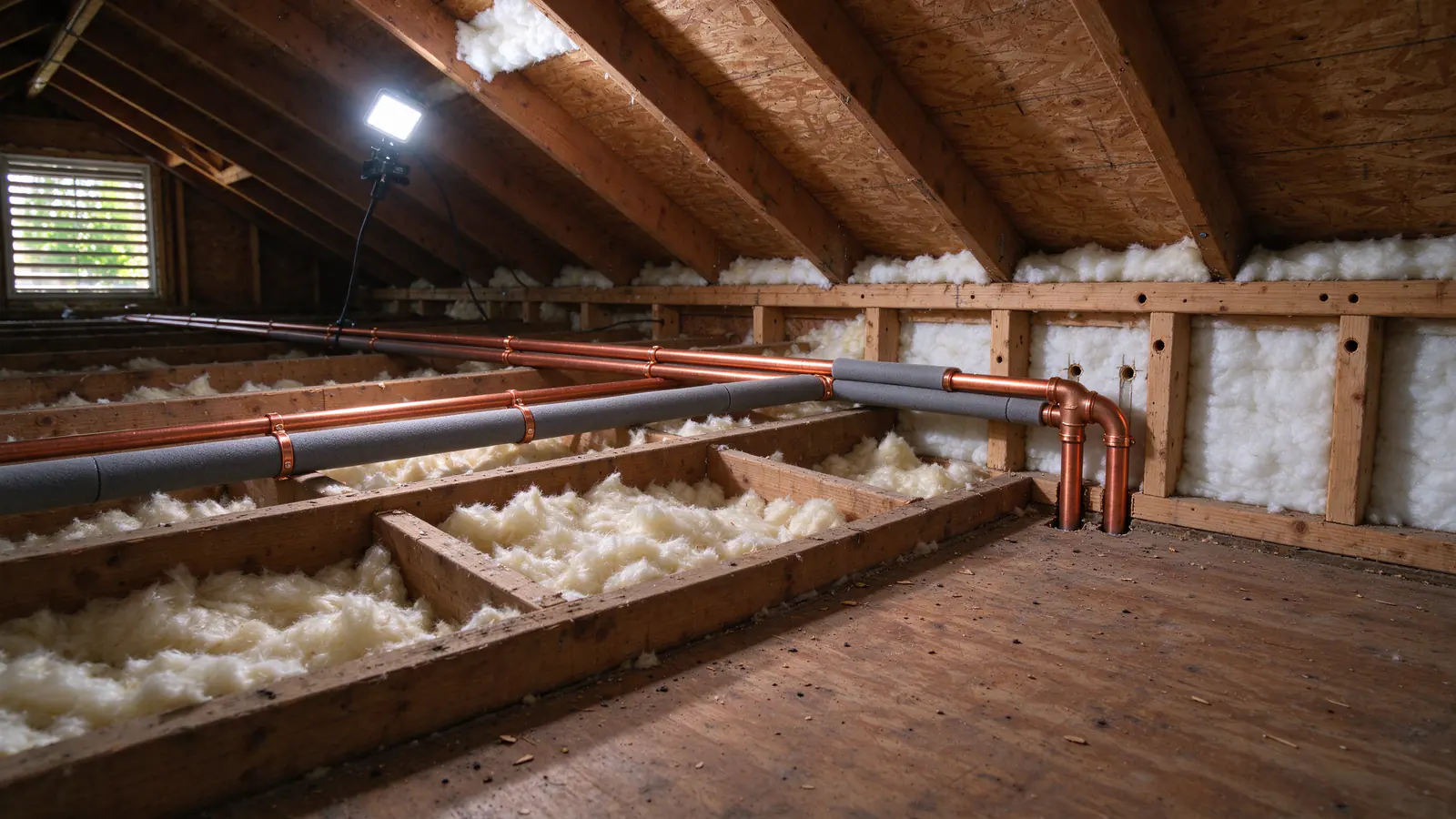
Rigid tube grows as it heats. A hot line crossing a Dallas attic in August moves, and a run clamped tight against framing ticks and wears. We support it at the code’s spacing with room to move. Insulation on attic and exterior-wall runs cuts summer heat gain in the cold lines and protects against a freeze like the February 2021 storm the National Weather Service in Fort Worth documented. In many houses the metal water pipe is also part of the electrical bonding path; staying with copper keeps it. The attic routing guide covers the protection details.
Will you have to open walls?
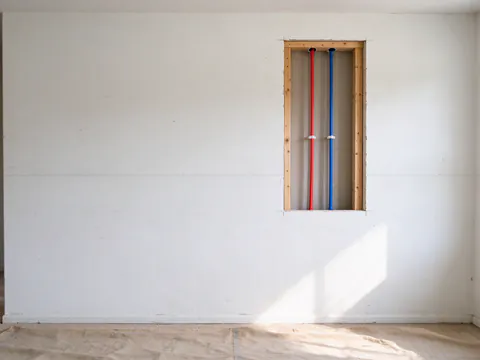
More than with PEX, usually. Copper needs room, so we often open a cut at each turn that cannot be made from the attic and access behind each fixture. Tile walls, built-ins and kitchen cabinets are the usual hard spots. Your estimate lists the expected openings and who patches, textures and paints each one; the wall openings and drywall repair guide explains the finish levels.
Replacing supply piping is permitted plumbing work in Dallas. We submit the permit through DallasNow, and the City inspects at rough-in and final. Walls stay open until the rough passes; the City’s fee schedule lists $75 for a reinspection and $200 per trade for covering work before inspection. The Dallas repiping permits guide has the steps.
What a copper repipe costs in Dallas
Our typical range for a whole-house copper repipe in Dallas is $8,500 to $18,000 and up. A one-story house with straight attic bays and two bathrooms sits toward the lower end. Two stories, more bathrooms, tile or plaster in the path, press fittings throughout and a larger patch-and-paint scope push it toward the top. For comparison, our typical range for a whole-house PEX repipe in Dallas is $4,500 to $15,000 and up.
We set your number after the first visit, and the written estimate lists what builds it: tube type and sizes, fixture and branch count, stories and route length, fitting count, sweat or press joints, openings in finished walls and tile, transitions to any pipe that stays, valves, the water heater connections, and the permit and inspections. The repiping cost estimator shows how those combine, and the Dallas repiping cost guide explains how to compare quotes on the same boundary.
For labor context, the Bureau of Labor Statistics reports a mean wage of $29.94 an hour for plumbers, pipefitters and steamfitters in Dallas-Fort Worth-Arlington, about 14% below the $34.70 national mean. A wage is not a billing rate: the billed rate also carries licensing, insurance, vehicles, permits and overhead.
Before you decide
The repair-or-repipe guide helps you decide whether a copper leak calls for one fix or a new system. For the full boundary, see whole-house repiping. The quotes and warranties guide lists what a copper scope should name, and the repiping process and timeline guide shows the order of work.