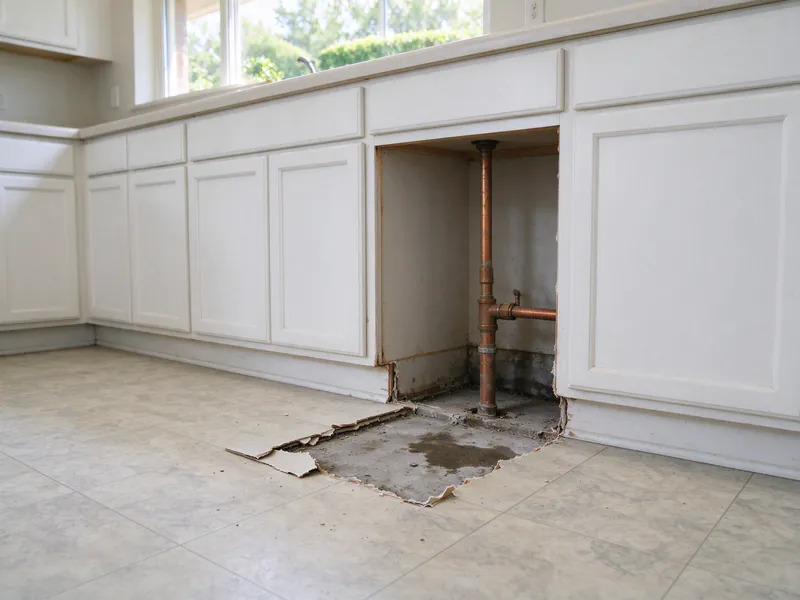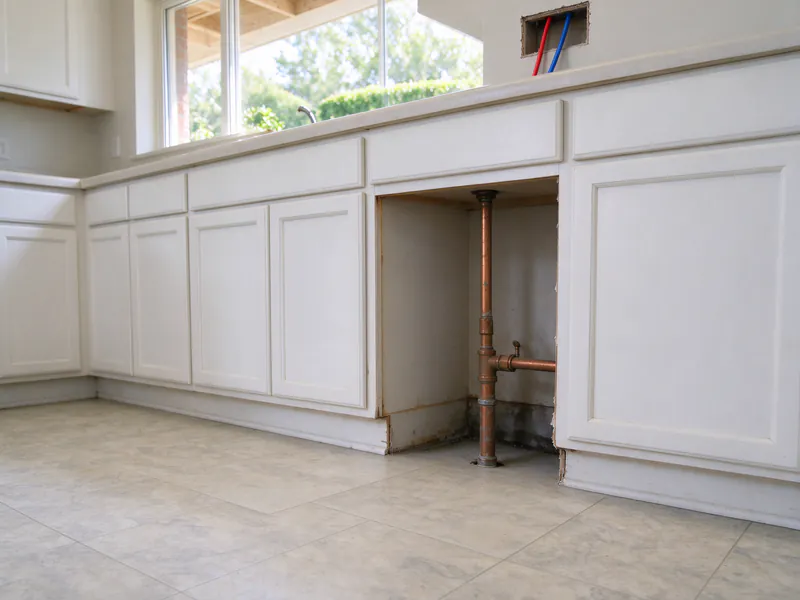
There is a warm spot on the kitchen tile. The water bill jumped and nothing is running. The leak detection company has marked an X on the floor and said “supply line under the slab.” Now you are choosing between breaking concrete and going around it. For slab leak rerouting, Dallas houses usually get a new line run through the attic and down an interior wall, and the leaking one is left capped in the concrete. Fullbore Dallas Repiping replaces water supply lines in Dallas homes, from a single bathroom branch to the whole house.
Your floors stay whole, and the line that failed is replaced end to end instead of patched at one spot. This is supply-side work only: it covers the pressurized water lines, not drains or the sewer, and it does not repair a foundation.
What we check on the first visit
We make sure the leak is on a supply line, and which one, before we price a reroute. With every fixture off, a turning leak indicator on the water meter means something under pressure is leaking; a drain leak does not move the meter. A warm floor, a water heater that runs more than it should, or the sound of running water near a wall points to the hot side. If you have leak detection findings, from acoustic listening or from isolating and pressure testing each line, bring them; they narrow the source to one run.
Then we map that run. In many slab-on-grade houses, supply lines leave a trunk under the concrete and rise inside a wall at each fixture, so we trace where the failed line starts and which fixtures it feeds. We also go into the attic to find a clear path, check headroom and pick where to drop down each wall.
Why lines under a Dallas slab fail
Many Dallas houses were plumbed with copper, or galvanized steel in older homes, laid under or in the slab before the concrete was poured. Nobody can see that pipe, and it wears in ways an exposed line does not. Copper can rub thin where it touches concrete, rebar or gravel as the slab moves and the pipe grows with each hot-water draw. Hot lines go through the most of those cycles, which is one reason a warm floor is such a common first sign.
A second leak on the same under-slab line is a strong hint that the rest of that pipe is in similar shape, which is the case for replacing the run rather than one more patch. No single cause explains every pinhole; our guide to recurring pinhole leaks explains why the pattern matters more than any one theory.
Why go around the slab?
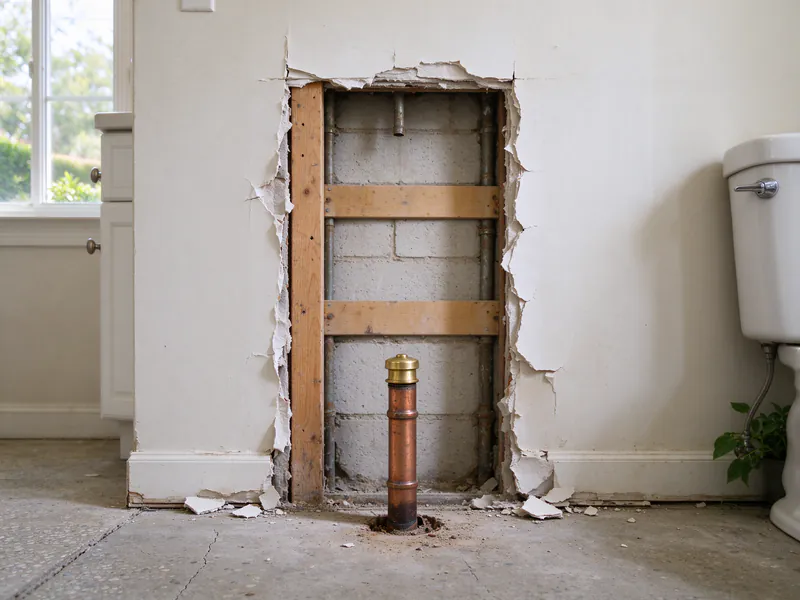
Opening a slab means lifting flooring, breaking concrete over the leak, repairing one spot on a pipe that is the same age everywhere, then pouring and refinishing. Rerouting skips the concrete entirely and replaces the full length of the failed line. The trade-off is a new path through the attic and a few openings in drywall, which is usually easier to put back than tile or wood floors.
Post-tensioned slabs add a firm limit. Many newer Dallas-area slabs are post-tensioned, with steel tendons stressed after the pour, and cutting one is dangerous and can damage the structure. Nobody should cut a post-tensioned slab without the structural information: the drawings, the stamp near the garage or an engineer’s direction. Where that information is missing, going overhead is the safer default.
Has leak detection already found the line?
Send us the findings and the fixtures on that line, and we will price rerouting it through the attic.
How we run the new line
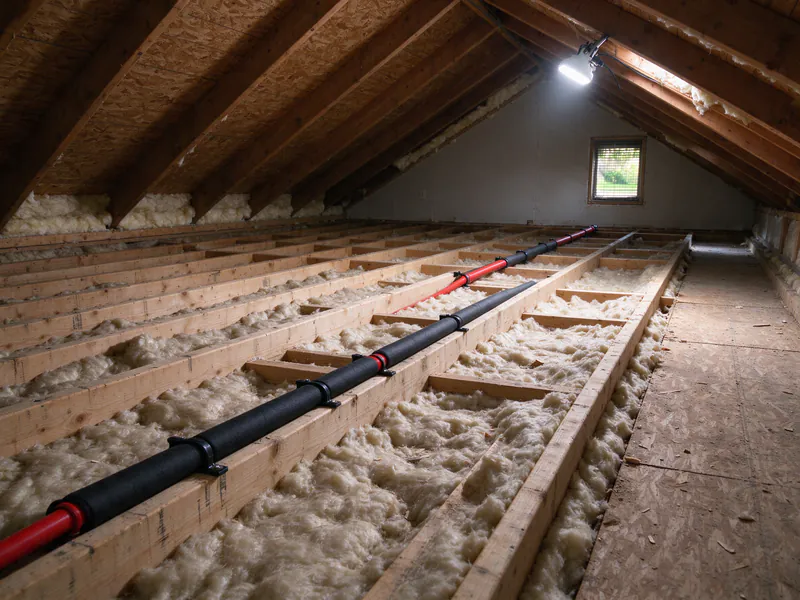
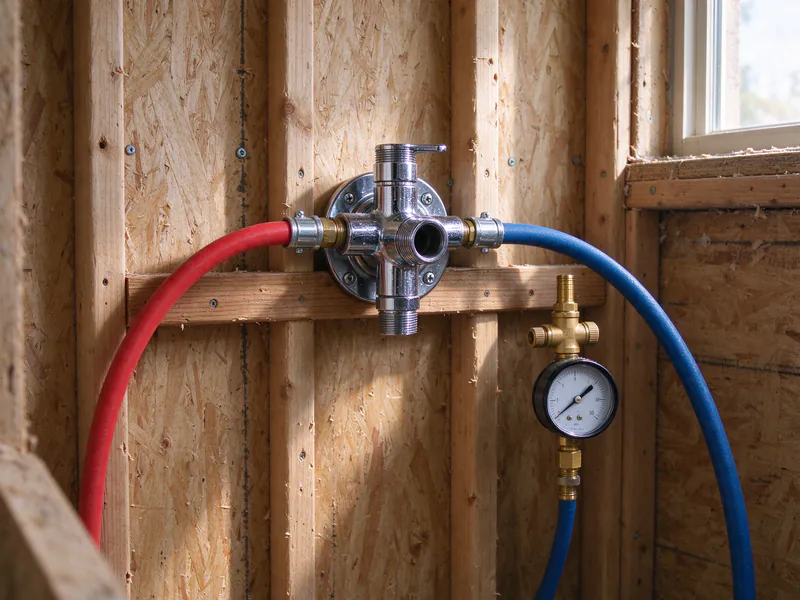
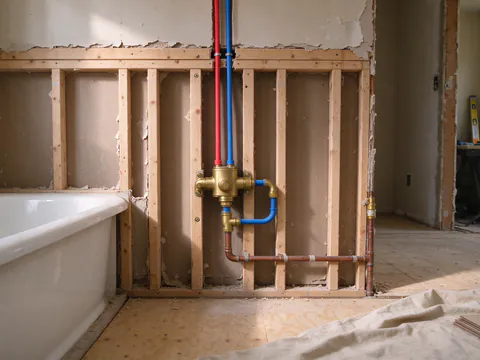
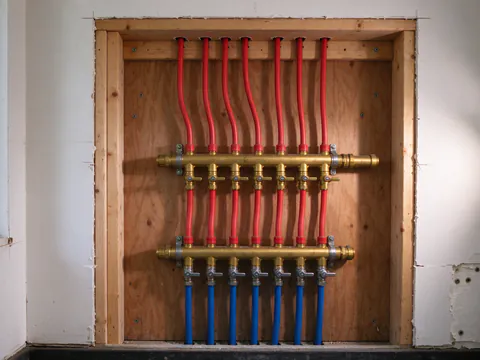
We usually run the new line in PEX, with copper as the other option; see PEX repiping and copper repiping for the trade-offs. From a tee at the water heater or the trunk, it climbs into the attic, runs across the joists and drops down an interior wall to each fixture. Summer attic heat sits within the rating of listed PEX, but sunlight breaks it down, so we keep the tubing out of UV light, support it at its maker’s spacing and keep it clear of flues.
Freeze protection matters just as much. The prolonged February 2021 winter storm, documented by the National Weather Service, showed how cold a Dallas attic can get. We insulate the line and run it low, against the ceiling drywall and under the attic insulation, so it stays closer to the heated house. The attic pipe routing and freeze protection guide covers both concerns. We cut and cap the old line where it leaves the slab at each end we can reach, and record the reroute so a later plumber knows the slab line is dead.
Will you have to open walls?
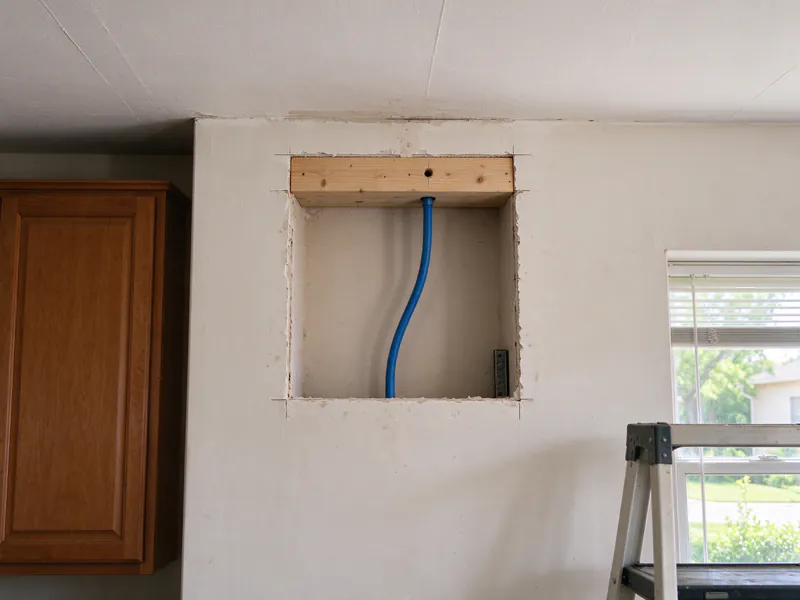
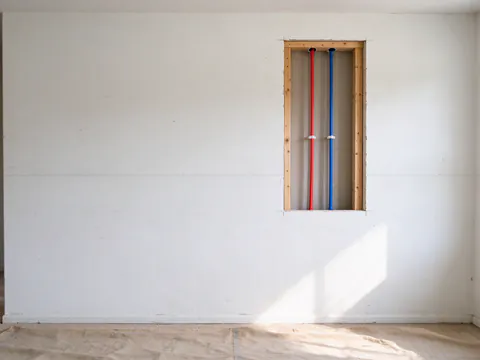
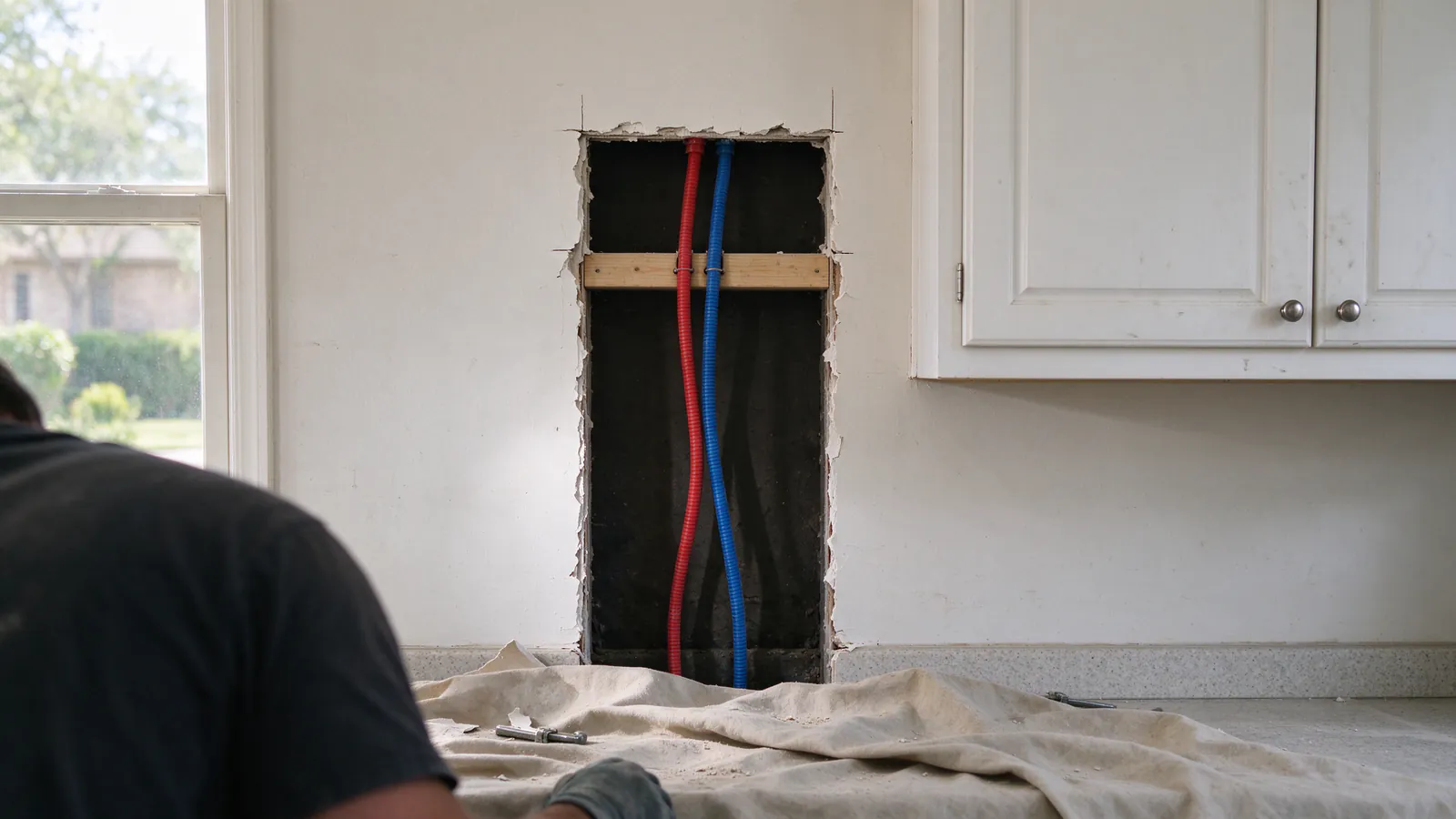
A few small openings, yes: at the top plate where each line drops from the attic, and at each fixture where it connects. Those are usually small cuts in drywall, but a fixture behind tile or a cabinet back can widen the job. Your estimate lists each opening and says who patches, textures and paints it. The wall openings and drywall repair guide covers what a patch scope should include.
The work needs a permit. Rearranging supply piping falls outside the City of Dallas leak-stop exemption, and the 2021 International Plumbing Code with Dallas amendments applies. We submit the permit through DallasNow, and the City inspects the rough-in with the walls open; covering new pipe first can bring the City’s $200 unauthorized concealment fee. The Dallas repiping permit guide covers the steps.
How we price a reroute
We price each reroute after the first visit, from the line and the house. The main pieces are the length of the new route from source to fixture, how many fixtures the abandoned line served, whether it is hot, cold or both, and how much attic room there is to work in. A two-story house, a low-slope roof or a fixture far from any interior wall all add work.
Fixture walls behind tile or cabinets, the permit and inspections, and the drywall, texture and paint scope also move the number, and your written estimate lists each. The repiping cost estimator shows how each driver adds up, and the Dallas repiping cost guide explains why a reroute and a slab repair are priced so differently.
Before you decide
When one under-slab line has already failed, our repair-or-repipe guide helps you decide whether to reroute one line or all of them; the broader option is whole-house repiping. For what a reroute is like to live through, read the guide to the repiping process and timeline. If the meter shows no leak but the floor is wet, the source is probably not a supply line, and neither a reroute nor partial repiping will help until it is found.