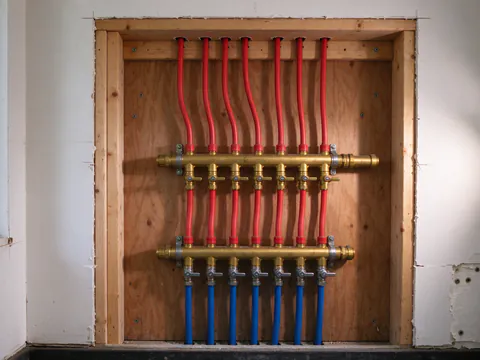
You bought an old frame cottage off Singleton and the walls are coming down to the studs. Or you’re in a new three-story townhome down the block, and there’s a damp spot on the ceiling under the top-floor bath. Or you’re turning a former shop near Trinity Groves into a restaurant and the old supply lines don’t fit the new kitchen. On the same West Dallas street, those are three very different jobs.
Fullbore Dallas Repiping replaces water supply lines in West Dallas homes and small commercial buildings, from one bathroom group to a full system. We match the plan to the age and use of your building: an older house may need everything replaced, while a newer one may only need one repair. Our guide on whether to repair or repipe explains how to tell the difference.
Gutting an older cottage
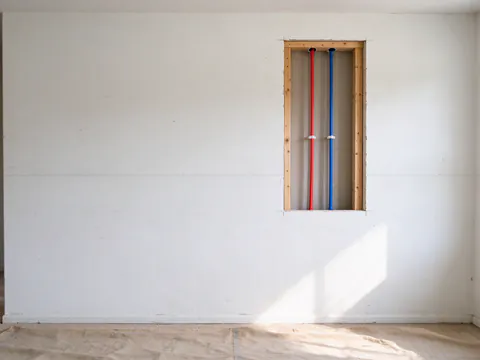
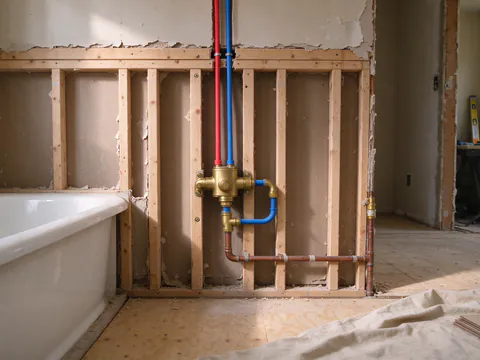
If the walls are already open, this is the cheapest moment you will ever get to repipe. We run new lines straight to each fixture, pressure test them and have the City inspect them before insulation and drywall go up. Where the house still has galvanized steel, our galvanized pipe replacement page explains what a full replacement includes.
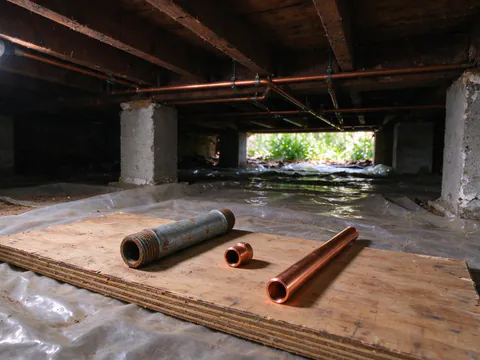
Where a cottage sits on pier-and-beam, the crawlspace gives us another route. Lines under the floor get support and insulation, because a vented crawlspace lets winter air reach them. Our guide on repiping old homes covers the other decisions older houses raise.
If you’re still buying, look before closing. Galvanized is dull gray and threaded at the joints; copper is reddish-brown with soldered joints. Our guide on how to identify water pipe material shows what else to check, including the water heater connections.
A leak in a newer townhome
In a house built in the last twenty years, a leak usually means one failed fitting, crimp ring or valve, not a worn-out system. Have it found and repaired first. If failures keep showing up in different places, a broader scope starts to make sense, and if one area keeps failing, a partial repipe may be enough.
Three-story townhomes have long vertical runs from a ground-floor water heater to the top-floor baths. If hot water is slow to arrive upstairs, the run length may be the cause rather than a defect, and our guide on slow hot water after repiping explains the options. Ask the original builder or installer whether any coverage still applies before planning a repair, and keep records of the leak.
Turning a warehouse into a restaurant or office
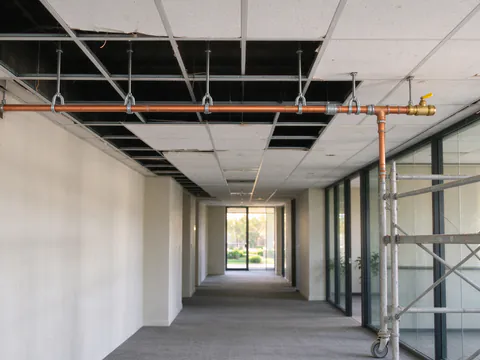
Former warehouses and shops along Singleton Boulevard and near Trinity Groves are becoming restaurants, offices and other businesses. In those projects, we design the domestic water piping as part of the build-out, sized for the new fixtures, restrooms and kitchen. The build-out schedule decides when the rough inspection can happen. Our commercial repiping page explains how those projects are scoped and phased.
Timing matters as much as sizing. A restaurant needs hot water at its prep and hand sinks before opening day, and a shared building may have neighbors who need water during business hours. We set shutdown windows with the owner and any landlord, add isolation valves early so later work affects smaller areas, and write down who tells the other occupants when the water goes off.
Where our work stops
A renovation brings several trades into the same walls. Our repipe covers the interior hot- and cold-water piping, valves, testing and the restoration we agree. Sewer and drain lines, gas piping, standalone water-heater replacement and the water service line from the meter are separate, and the schedule should show when each trade works.
The service line is worth checking on its own. Dallas Water Utilities has sent service-line material notices, and an “unknown” listing is not a lead finding. Our guide on repiping and water service lines explains how the two scopes differ.
Permits and the rough inspection
All of this is permitted work. The permit goes in through DallasNow, the new pipe is inspected at rough-in, and a final inspection closes it out. On a renovation, the rough inspection has to happen before insulation and drywall: closing walls early can bring a $200 unauthorized-concealment charge per trade under the City’s fee schedule, plus the cost of reopening them. We book the inspection so that doesn’t happen. Our Dallas repiping permits guide explains each step.
Plan a West Dallas repipe around your renovation or build-out.
Share the building's age, its use and whether the walls are already open. We build the plan from there.
A neighborhood in transition
The Census Bureau’s 2020-2024 American Community Survey estimates show a mixed picture in ZIP 75212, which covers much of West Dallas. The median year built is 2000, yet 39.8% of units were built before 1980, which fits an area where new construction has joined a large stock of older housing. As general trade history, older Dallas houses were often plumbed with galvanized steel or early copper, while houses built since the late 1990s often use PEX or CPVC, so one ZIP can hold both.
Since January 2024, City of Dallas open data shows 1 permit record in ZIP 75212 that explicitly describes interior water-supply repiping. The City’s ForwardDallas plan describes the SW-1 planning district as having a legacy industrial role, about half residential, and shifting toward commercial and mixed-use space.
Water across Dallas comes from Dallas Water Utilities, which treats surface water with chloramine and corrosion control; a December 2023 City memo puts hardness at 120 to 155 mg/L as calcium carbonate, enough to scale water heaters and aerators over time.
Comparing estimates and getting a price
When you collect more than one estimate, check that each covers the same work: the same fixtures, material and fittings, the same treatment of the water heater, PRV and valves, the same pressure test and flush, and the same restoration. Our guide on repiping quotes and warranties gives a checklist.
We price after the first visit, from the fixture count, whether walls are open, the access, the old material and the restoration. The whole-house repiping page shows a full scope, PEX repiping explains the most common material for new work, and the repiping cost estimator walks through the drivers.