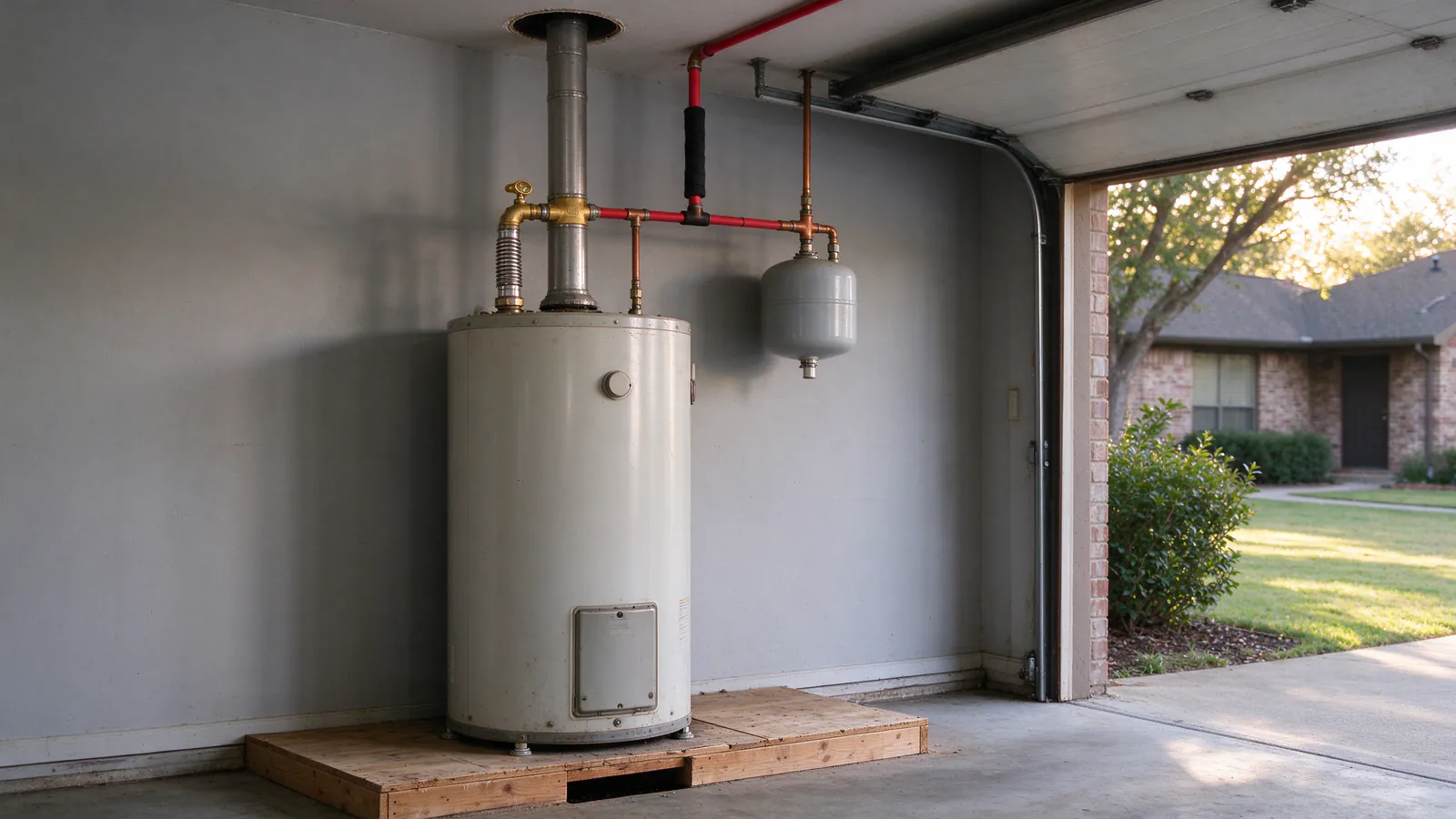
The new pipes are in, the leaks are gone, and now you stand at the shower waiting. Hot water takes longer after repiping for a simple reason: the new line holds more cold water between the heater and the tap, or it loses more heat on the way. In Dallas that usually means a longer attic route than the old slab lines took, a larger pipe size, or a recirculation loop that wasn’t rebuilt. When only the wait changed, the water heater is rarely the cause.
Fullbore Dallas Repiping handles hot water line replacement and whole-house repiping for Dallas homes, and we design the hot-side route with your wait in mind. Here’s what drives it and how to shorten it.
Why you’re waiting
When you open a hot tap, the heater doesn’t send heat down the pipe. It pushes water, and the cold water already in the line has to come out first. Your wait is the volume of that water divided by the fixture’s flow rate, which is why a low-flow bathroom faucet takes longer to clear the same line than a shower does.
Heat loss adds a second delay. The first hot water to arrive warms the pipe itself, and in a cold attic the line drops back to attic temperature between uses.
How a repipe can add to the wait
A longer route
In many Dallas slab houses, the old lines ran fairly directly under the floor. A repipe that goes overhead climbs from the water heater, crosses the attic and drops down the wall to each fixture, and that path can be a lot longer for a far bathroom.
Pipe size and volume
Bigger pipe holds more water per foot. A three-quarter-inch line holds roughly twice the water of a half-inch line of the same type, so upsizing a trunk for better flow can add wait at the end of the run. PEX of the same nominal size holds a little less than copper, because its thicker wall narrows the inside.
A cold attic in winter
A hot line crossing the attic loses heat between draws. Our attic routing and freeze protection guide explains how burying lines under ceiling insulation and sleeving them cuts that loss.
The recirculation loop
If your old system had a recirculation pump and return line, the repipe has to rebuild that loop. If the return gets left out, or the pump, check valve or timer isn’t reconnected, a house that had near-instant hot water won’t anymore.
Want the hot-water wait planned into the route?
We look at the distance from your water heater to each bathroom, whether you have a recirculation pump now and how the attic route affects both.
Is it the route or the water heater?
| What you notice | Likely area |
|---|---|
| Longer wait, water gets fully hot | Route length, pipe volume, missing recirculation |
| Longer wait at one fixture only | That branch’s route or a valve at the fixture |
| Lukewarm at every tap | Water heater, mixing valve or crossover |
| Hot fades during a shower | Water heater capacity or a failing dip tube |
| Hot at night, slow in the morning | Recirculation timer or attic heat loss |
A crossover happens when a faulty single-handle cartridge or mixing valve lets cold water push into the hot line. Closing the cold stop at a suspect fixture and seeing whether the hot side improves can point to it. Low pressure vs low flow symptoms are a separate question.
How to get hot water faster
Recirculation
A dedicated return line from the farthest fixture back to the heater is the most complete answer, and it fits trunk-and-branch layouts. A pump with a crossover valve under the farthest sink uses the cold line as the return, which avoids a new line but can make the cold tap run warm at first. Timers or on-demand controls limit running time and heat loss.
Route and insulation
Keeping the hot trunk short, central and buried under ceiling insulation, and adding pipe insulation on hot lines, cuts both volume and heat loss. These cost least when we plan them before the repipe, not after.
Right-sizing
Sizing each branch to the fixtures it serves, rather than upsizing everything, keeps the volume down. Our PEX vs copper guide covers how the two materials compare on volume and heat loss.
Why it’s worse in January
The same house can feel different in July and January. In summer, attic air keeps a hot line warm between uses, and the wait shrinks. In a cold spell, an attic hot line falls close to attic temperature within an hour or so of the last draw, so the first shower of the morning waits longest. Insulating the hot trunk where it crosses the attic narrows that swing.
When to call us back
A wait that’s longer but steady is a design trade-off. Call back if hot water never fully arrives, if one fixture changed sharply, if the cold tap now runs warm or if the water heater is making new noises. Our Dallas home repiping guide covers the full scope of a repipe.
Planning ahead
If you’re planning a repipe and already have a recirculation pump, or a bathroom far from the heater, tell us when you get an estimate. Our cost estimator lists recirculation as one of the things that moves the price.