Water is coming through your downstairs neighbor’s ceiling, the association wants answers, and nobody is sure whose pipe failed. Or you own a house south of I-30 near Fair Park that has been patched three times and still runs brown after a weekend away. Central Dallas holds both kinds of problem, and the first job is working out which one you have.
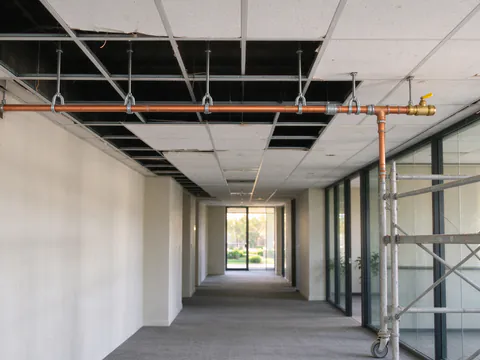
Fullbore Dallas Repiping replaces water supply lines across Central Dallas, from a single condo bathroom to a whole South Dallas house. In a building, we start by sorting your branch lines from the shared risers, because that decides who signs off, how long the water is off and which service fits: apartment and condo repiping for a unit, plumbing riser replacement for a building stack, or whole-house repiping for a house.
Whose pipe is it?
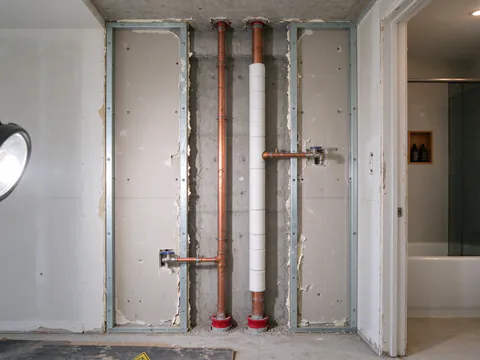
In most condominiums the governing documents split the plumbing. The association owns the risers and common mains; you own the branches past your unit’s shutoff valves. That line is easy to state and hard to find on site, so we read the documents with you and then trace the pipe from the riser to your fixtures.
Where your unit has its own valves, we can replace your branches without touching the building’s system. Where it doesn’t, any branch work needs a stack shutdown, and the association has to approve and schedule it. Firestopping matters in both cases: where new pipe passes through rated walls or floors, it gets restored around the penetration.
Working around the building
A tower repipe runs on building logistics as much as plumbing. We reserve the freight elevator, check the loading-dock rules and the security check-in, and give the association the notice period it requires before any shutdown. Our guide to repiping water shutoffs explains how those windows are planned so the rest of the stack keeps water as long as possible.
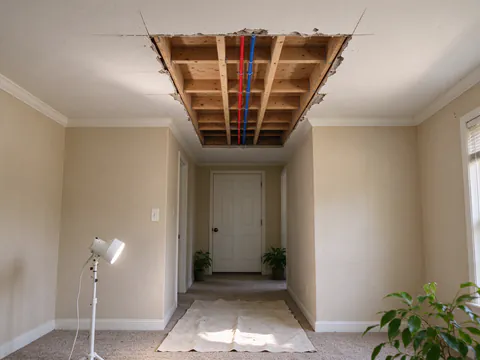
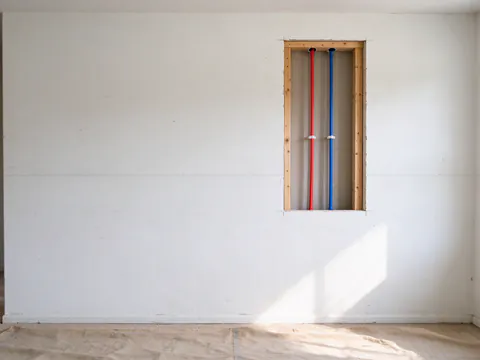
Inside the unit, routes are tight. There is no open attic, so lines travel through soffits, closets and ceiling chases. Your estimate names each opening and who restores it, matched to the association’s finish rules. The guide on wall openings and drywall repair explains what that restoration should cover.
Slow or uneven water in a tower unit
Before anyone prices a repipe, we check whether the pipe is really the problem. Many tall buildings split their supply into pressure zones with a PRV on each, and a failing valve can starve a floor. Scale is the other suspect. Dallas Water Utilities water is moderately hard, and scale clogs aerators, mixing cartridges and water heaters long before it troubles the pipe. Our guide to low water pressure versus low flow helps separate the two.
Houses south of I-30
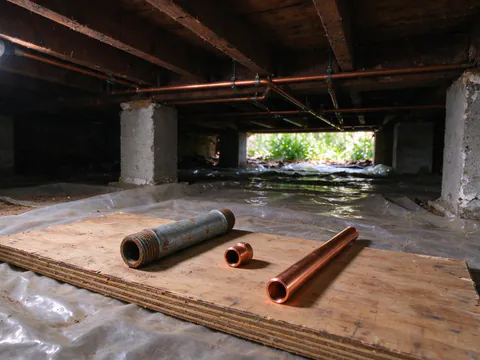
South Dallas houses run differently. You own the plumbing from the meter to the faucet, and many sit on slabs. We leave the old lines under the floor, cap them and run new supply overhead through the attic, dropping down interior walls and insulating against freezing. Where a house is on pier-and-beam, much of the route can run in the crawlspace instead.
Either way, the permit goes in through DallasNow, the City inspects the new pipe at rough-in while it is exposed, and a final inspection closes it out. Our Dallas repiping permits guide walks through the sequence.
Neighborhoods in Central Dallas
Downtown Dallas
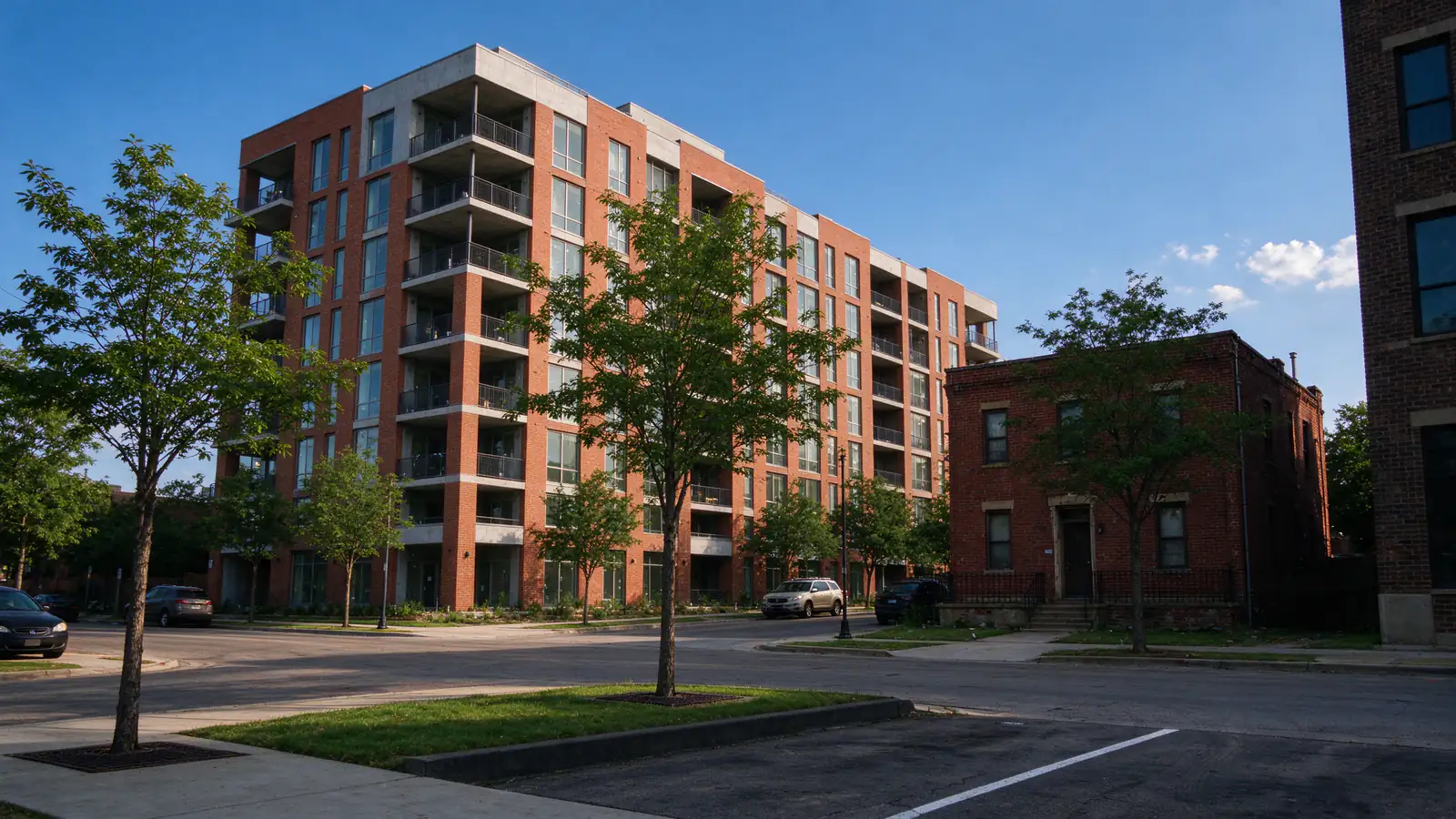
Downtown’s residences are mostly towers and older office and commercial buildings converted to housing. In a conversion, the domestic water risers may date from the conversion or may be older pipe kept in service, and the association’s renovation records are where we look first. Start times here depend on a freight elevator, a loading-dock slot and a security check-in as much as on the plumbing.
Uptown
Uptown mixes mid-rise condos and apartments with three-story townhomes. A townhome’s supply often climbs from a ground-floor water heater to bathrooms two floors up, so if the trouble is all on the hot side, a hot water line replacement or a partial repipe of the upper floors may be enough. The association still approves first.
Oak Lawn
Oak Lawn mixes newer mid-rises with older garden-style condominium buildings. When an older garden building has no shutoff for each unit, even a small branch repair needs a stack shutdown, and that is often when a board starts weighing riser replacement for the complex. Where units do have their own valves, owners can replace their branches now and leave the riser question for the board.
South Dallas and Fair Park
Here the housing turns to detached single-family homes. If yours has visible galvanized pipe at the water heater and a history of brown water, our galvanized pipe replacement page explains a full replacement. Owner-occupants can also watch the City’s Home Improvement and Preservation Program, run by Volunteers of America Texas, which offers major-systems repair help as a forgivable loan of up to $24,000 for eligible homes during short application windows. We are not a program participant, and the program decides eligibility.
Bring your building's rules to the first conversation.
Share the unit or house, the association's shutoff and work-hour rules, and what you have seen. We build the estimate around that boundary.
The housing record behind the district
The Census Bureau’s 2020-2024 American Community Survey estimates show two different Central Dallas pictures. In ZIP 75201 the median housing unit was built in 2004 and 92.6% of units sit in buildings of 20 or more units. South of I-30, ZIP 75215 has a 1965 median, and 62.2% of its units are single-family houses.
Those figures point us in different directions. A tower finished in the 2000s was plumbed when copper, CPVC and PEX were all in use, so a leak there usually leads to one fitting, a riser section or a mixing valve. A house plumbed in the 1950s or 1960s may still carry galvanized branches; our guide on identifying water pipe material shows what to look for at the heater and under sinks.
The City’s ForwardDallas plan treats Downtown and Uptown as one planning district, C-1, shaped by the central business district, DART light rail, the Trinity River corridor and Turtle Creek Parkway. South Dallas and Fair Park form their own district with several historic districts. Historic controls apply only inside those mapped districts.
How we price work here
We price after the first visit, not before. In a building, the drivers are the fixture count, how your branches reach the riser, the work-hour and shutdown rules, and finish restoration. In a house, they are fixtures, the route through the attic or crawlspace, and patch and paint. Our repiping cost guide for Dallas and the repiping cost estimator explain each one. Keep the water service line outside in mind too: it is a separate scope, and the guide to repiping and water service lines explains where ours stops.