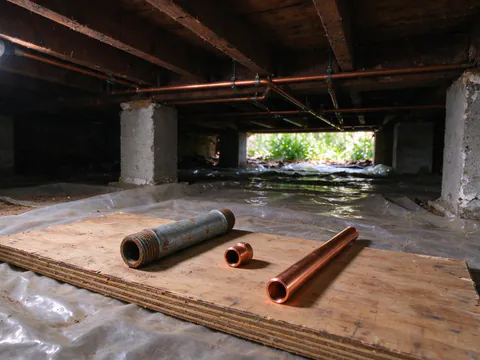
Lift the hatch on an older Oak Cliff house and the plumbing history is right there in the crawlspace: galvanized steel, a few lengths of copper from a repair in the 1980s, some plastic spliced in more recently, all joined with whatever fitting was handy. Upstairs, you see it as brown water first thing in the morning and a shower that never quite has enough pressure. And you want it fixed without tearing up the plaster.
Fullbore Dallas Repiping replaces water supply lines in Oak Cliff homes, from a single bathroom group to the whole house. In a pier-and-beam bungalow, we run the new lines under the floor and bring them up at each fixture, so most of your walls stay closed. Our guide to repiping old homes covers the decisions involved.
Brown water and a weak shower
Galvanized steel rusts from the inside. Scale builds up until a line that started at half an inch has the opening of a straw, and when the water has been sitting it picks up rust and runs brown. That is what you are seeing at the first draw of the day. Our guide on brown water and rusty pipes explains what the color can and can’t tell you, because a water heater or a single old branch can cause it too.
We start by finding how much steel is left: at the water heater, under the sinks and along the crawlspace. That tells us whether one branch is the problem or the whole system.
A crawlspace full of old repairs
A crawlspace shows a house’s plumbing history in a way a slab never does. Under an older Oak Cliff house you might find galvanized joined straight to copper with no dielectric union, brass nipples at the water heater, CPVC spliced into steel, and push-fit fittings from a quick fix. Every joint between unlike metals invites corrosion, and every mismatched repair is one more place to leak.
A whole-house repipe takes those joints out instead of adding more. Your written scope lists what is cut out of service, what is removed from the crawlspace, and where the new system connects at the main shutoff and the water heater. If some original pipe stays, such as a line to an outdoor hose bib, the estimate names it and the fitting used at the joint. Our galvanized pipe replacement page explains how a full replacement clears these out.
Keeping the plaster closed
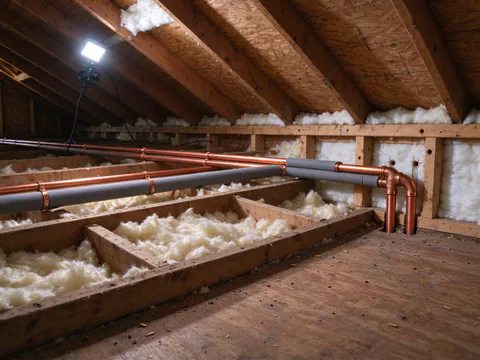
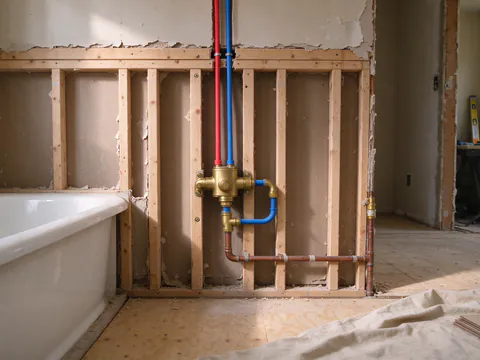
The crawlspace is the main route. New lines run along the joists and come up through the floor under sinks, tubs and toilets. The attic covers what the floor cannot reach, such as a second-floor bath or a shower valve on an exterior wall. Crawlspace height and condition decide how easy that is; a tight or wet crawlspace takes longer and sometimes needs access repairs first.
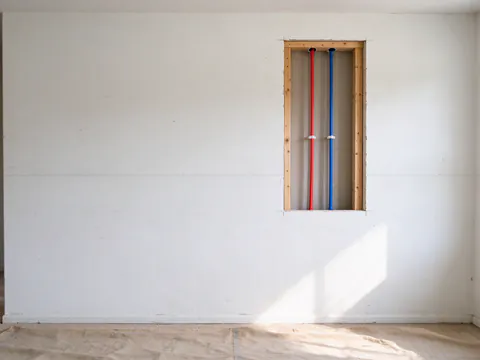
Plaster is harder to patch than drywall, so we plan around it. Some openings may still be needed, and the guide on wall openings and drywall repair explains what restoration should include. Pipe under the floor is supported and insulated, because a vented crawlspace lets winter air in, and the February 2021 freeze showed how cold that air gets.
The work is permitted. The permit goes in through DallasNow, the new pipe is inspected at rough-in before the floor and walls are closed, and a final inspection closes it out.
Ranches, apartments and the rest of Oak Cliff
Not all of Oak Cliff is bungalows. Postwar ranches, many on slab, fill large areas to the south and west, and those usually get an attic reroute instead of a crawlspace route. If only one area keeps failing, partial repiping may be enough. Apartment buildings near I-35E and along the main roads have shared shutoffs and need the owner’s or association’s approval before we schedule anything.
Neighborhoods in Oak Cliff
North Oak Cliff
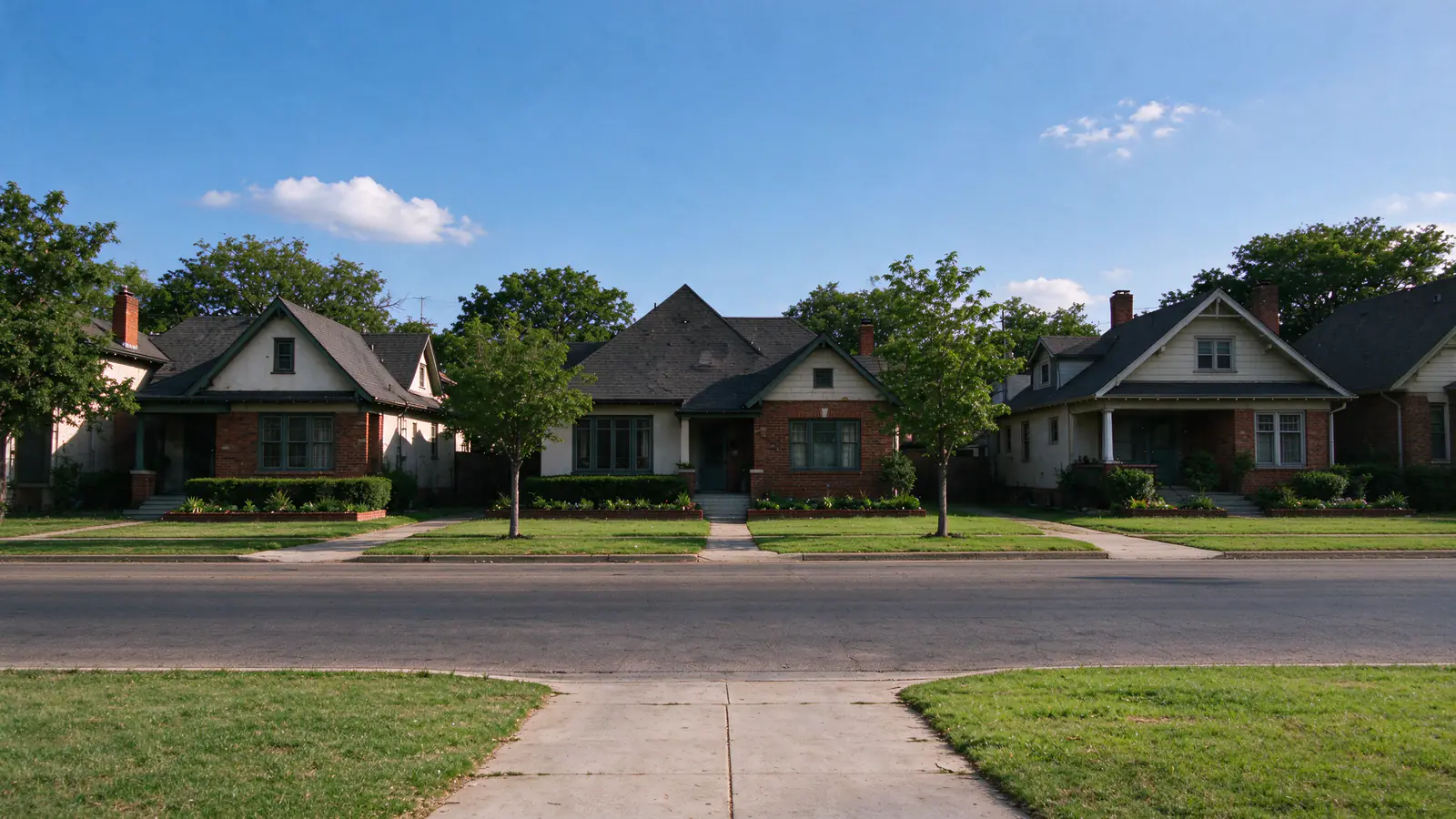
North Oak Cliff takes in Bishop Arts, Kessler Park, Winnetka Heights and other older neighborhoods, with early-1900s bungalows, postwar cottages and small apartment buildings. In a house with a crawlspace and original galvanized, a whole-house replacement routed under the floor is the usual plan. If your house has been remodeled, we sort out which lines are original and whether old steel still feeds the new fixtures.
On the hillside streets of Kessler Park, crawlspace height can change from one side of a house to the other, which affects how easily we can run lines underneath. In the two-story Prairie houses of Winnetka Heights, the upstairs bath is usually reached through a closet or chase, and we show you where that drop will go. Our copper repiping and PEX repiping pages compare the two materials.
Plan an Oak Cliff repipe that keeps your plaster walls closed.
Tell us the house's age, whether it has a crawlspace and what the pipe looks like at the water heater. We plan the route from there.
Historic districts and the planning picture
The City’s historic preservation pages describe Winnetka Heights as a district platted in 1908, with one-story bungalows and two-story Prairie houses. Houses of that age and type are where a crawlspace route works best. Historic controls apply only to properties inside mapped districts, and they mostly concern the exterior; if a repipe would add a penetration or move a hose bib, we check with the City’s historic preservation office first.
The City’s ForwardDallas plan divides Oak Cliff into several planning districts, including West Oak Cliff, East Oak Cliff, Southeast Oak Cliff and Redbird/South Oak Cliff, and describes East Oak Cliff as mostly residential, with a commercial and transit hub along the Lancaster Corridor and the Tenth Street Historic District.
What the housing record shows
The Census Bureau’s 2020-2024 American Community Survey estimates show a district of older homes. In ZIP 75224 the median house was built in 1958, and 78.8% of units predate 1980. ZIPs 75208 and 75211 have 1960 and 1963 medians. As general trade history, Dallas houses built through the 1950s were often plumbed with galvanized steel, with copper more common in the 1960s; our guide on identifying water pipe material shows how to tell. Since January 2024, City of Dallas open data shows 1 permit record in ZIP 75208 that explicitly describes interior water-supply repiping.
How we price an Oak Cliff repipe
We price after the first visit. Crawlspace height and condition, how much galvanized and how many old transitions come out, the fixture count, attic access for upstairs baths, and plaster or drywall repair each move the number, and the written estimate lists them. The repiping cost estimator walks through those drivers. The water service line from the meter is a separate scope; the guide to repiping and water service lines explains where ours stops.