The cold water is strong, but the hot barely dribbles. Or there is a warm spot on the kitchen tile and the water heater seems to run all day. Or you have had three pinhole leaks in two years, all on hot lines. With hot water line replacement, Dallas homes get just that side of the house redone: we replace the hot piping from the water heater outlet to your fixtures, along with any recirculation return. Fullbore Dallas Repiping replaces water supply lines in Dallas homes, from a single bathroom branch to the whole house.
This is a piping job, not a water heater sale. We reconnect the heater you have, and we will tell you plainly which hot water complaints new pipe can fix and which it cannot.
What we check on the first visit
First we sort a pipe problem from a heater, valve or fixture problem. At each fixture you are worried about, we compare hot and cold flow. Weak hot beside strong cold points to the hot side, but the restriction could be in the pipe, the heater outlet, a mixing valve or a cartridge, so we check flow again right at the heater.
Then we map the hot side: where the heater sits, which way the trunk runs, and whether there is a return loop and pump and whether they work. We note the material, because a galvanized hot line, an aging copper line and a CPVC line fail in different ways. And we ask about repairs so far. Several leaks on hot copper within a few years usually say more about the line than any single pinhole does.
Why the hot side wears out first
Heat speeds most corrosion. In galvanized steel, warm water builds rust lumps inside the pipe faster on the hot side, so hot flow often fades years before cold. In copper, the hot side expands and shrinks more, and on a recirculating loop the pump keeps water moving all day; where it runs fast, it can wear through elbows and tees from the inside. CPVC carrying hot water ages faster and can turn brittle near fittings.
Under a slab, a hot line flexes against concrete and gravel with each draw. A warm patch on the floor is often the first sign of a leak there, and the answer is usually slab leak rerouting rather than another patch. Our guide to recurring pinhole leaks covers the patterns.
What your hot lines are probably made of
House age gives a hint, never proof. Galvanized steel was common in Dallas houses plumbed through roughly the 1950s and 1960s, copper after that, CPVC and polybutylene in some 1970s to 1990s construction, and PEX in newer work. A 1960s ranch house in East Dallas or Oak Cliff may have narrowed galvanized hot lines while the cold side, redone in an earlier remodel, is copper. Our guide to identifying water pipe material shows how to check at the heater and under a sink.
What happens to the cold side?
It stays, and your estimate says so in plain words. Every point where a new hot line meets old piping gets a listed transition, and we check the cold side for the same symptoms before we set the boundary. If the cold side shows them too, a hot-only job just splits one repipe into two, and we will tell you that. Replacing only the hot side is a form of partial repiping, with the same rules about naming the pipe that stays.
Dallas water plays a part on the hot side too. Dallas Water Utilities treats its surface water with chloramine and corrosion control, and its water runs moderately hard to hard, 120 to 155 mg/L as calcium carbonate in a December 2023 City memo. Minerals fall out of hot water faster, which scales heaters, aerators and cartridges. That is a maintenance matter rather than proof that hardness causes leaks.
Waiting forever for hot water?
A long wait is mostly the cooled water sitting in the pipe between heater and tap, and new pipe of the same size on the same route holds just as much. Replacing a hot line only shortens the wait when the new route is shorter, the tubing is smaller where flow allows, or a recirculation loop is added or repaired. The guide to slow hot water after repiping explains the math.
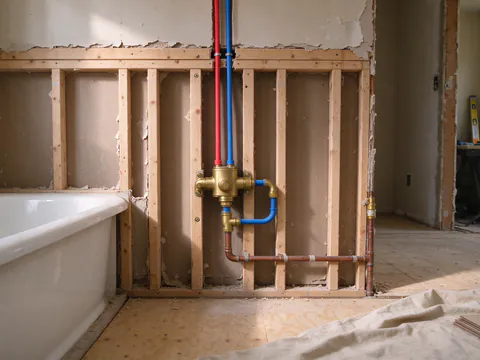
Layout matters here. Trunk-and-branch shares one larger hot line among fixtures, while a home-run manifold gives each fixture its own small line, which holds less water but runs longer; the manifold vs trunk-and-branch guide compares them. Adding a return loop is a design decision of its own, and your estimate shows it as a separate line.
Is the trouble only on the hot side?
Tell us which fixtures are affected and how hot and cold flow compare, and we will price the hot water lines.
Reconnecting at your water heater
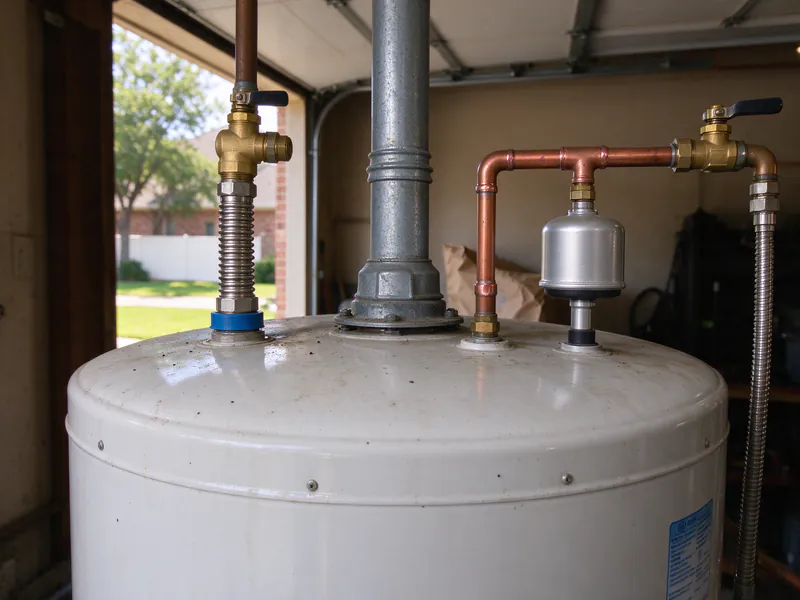
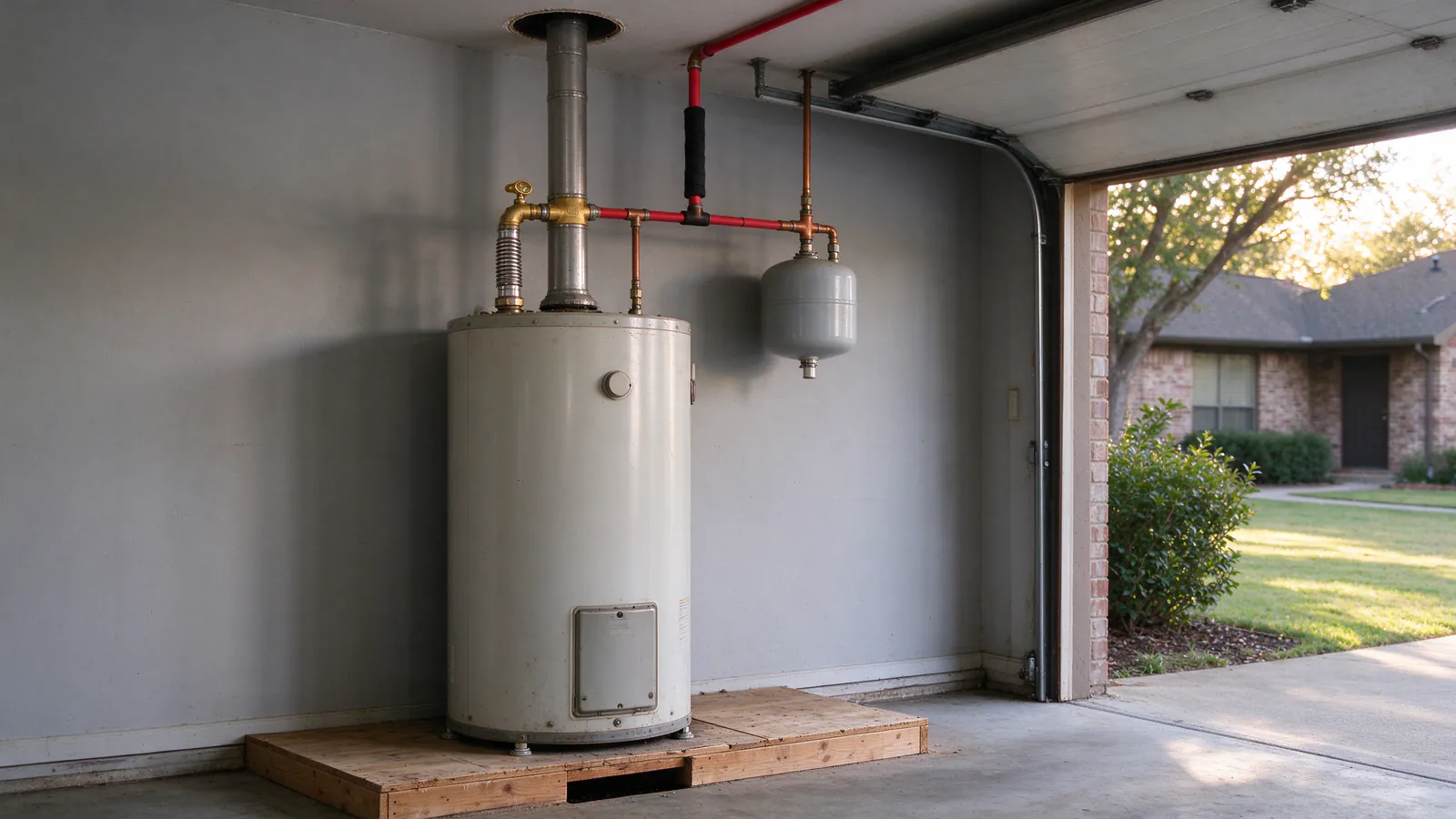
The heater is where most hot line jobs meet other equipment. Many PEX and gas water heater makers call for metal pipe or a metal connector for a set distance from the heater outlet, to keep the tubing clear of flue heat, so the first section may be copper or a listed connector even on a PEX job. Where copper meets the heater’s steel nipple, we put in a dielectric fitting.
A thermal expansion tank belongs on many systems with a check valve or pressure-reducing valve on the main, and if you have one, it stays connected. We add an isolation valve on the hot outlet so the heater can be serviced without draining the house. Replacing the water heater is outside this job; if yours is near the end of its life, we will mention it before we reconnect new pipe to it.
Will you have to open walls?
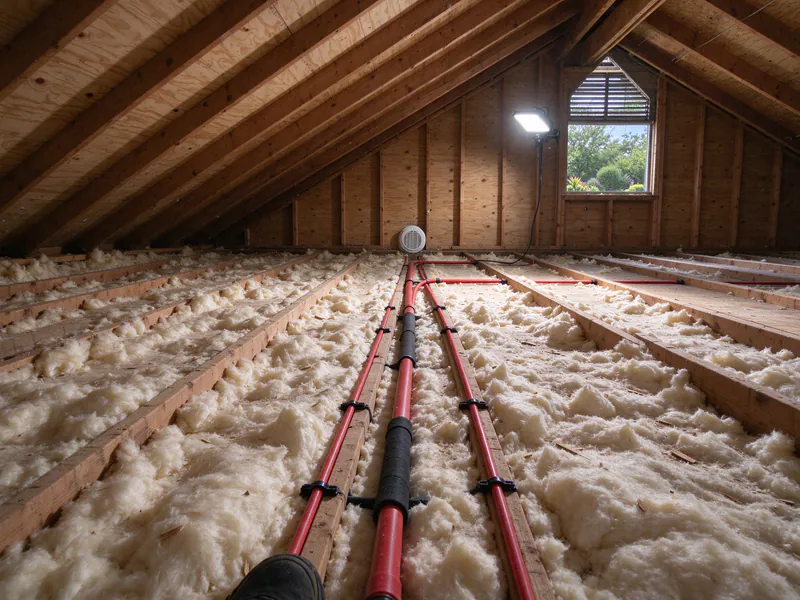
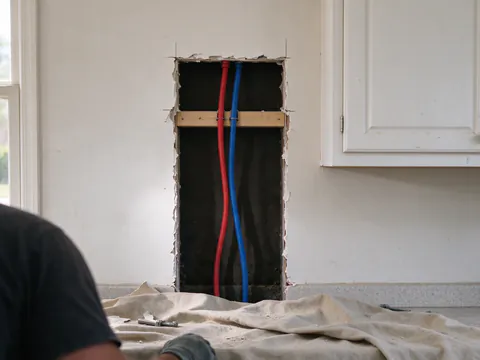
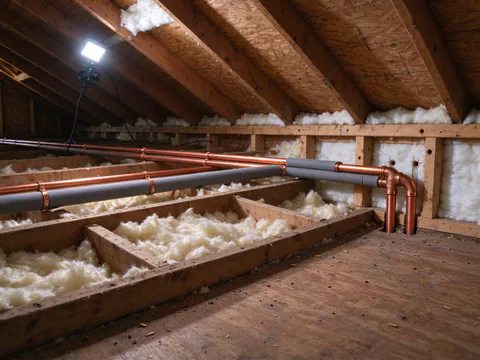
Some. In a slab-on-grade house we usually run new hot lines through the attic and down interior walls, so the openings sit at the top plate and behind each fixture. Every new hot run in the attic, garage or an exterior wall gets pipe insulation, both to hold heat and to protect against freezing; the attic pipe routing and freeze protection guide covers placement. Your estimate names each opening and who patches and paints it.
The work is permitted under the 2021 International Plumbing Code with Dallas amendments, and we submit it through DallasNow. The City inspects the rough-in with walls open, and covering pipe before then can bring the City’s $200 unauthorized concealment fee. The Dallas repiping permit guide covers the steps.
How we price hot water line replacement
We price it after the first visit, because the job runs from one branch to the entire hot side. The main pieces are the number of fixtures on the new hot lines, the route length from the heater, whether a return loop is replaced or added, and the material. Attic room, a second story and fixtures behind tile or cabinets add access work.
The heater connection, new valves, an expansion tank if one is needed, insulation, the permit and inspections, and the patch-and-paint scope also move the number. Your written estimate lists each. The repiping cost estimator shows how each driver shifts a quote, and the Dallas repiping cost guide compares hot-side and whole-house scopes.
Before you decide
If both sides show the same wear, whole-house repiping may cost less over time than doing the work twice, and our repair-or-repipe guide helps weigh that. For material choice on the new hot lines, see PEX vs copper or our copper repiping page.