A house near Kiest Boulevard has rust in the toilet tank and a pinhole drip under the bathroom sink. A few miles south, a Mountain Creek house has gray plastic pipe with metal crimp rings at the water heater, and the buyer’s inspector wants to know what it is. Both are Southwest Dallas, but they were built twenty years apart, and that gap decides what’s likely behind the walls.
Fullbore Dallas Repiping replaces water supply lines in Southwest Dallas homes, from one bathroom group to the whole house. We start by finding out which material you have, because each one fails differently and needs a different plan. Our guide on how to identify water pipe material shows what to look for before we visit.
Red Bird and Kiest-area ranches
These are mostly single-story houses from the 1960s, and many sit on slab. If yours still has galvanized steel, it narrows from the inside and sheds rust, and a whole-house replacement removes both problems. If it has original copper that keeps springing pinholes, we compare another round of repairs with a full replacement.
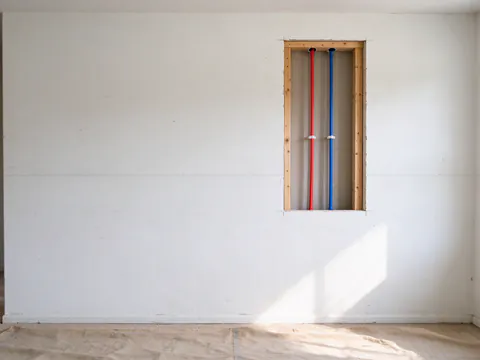
On a slab, we run new lines through the attic and down interior walls, leaving the old lines out of service. Past slab leaks and remodeled rooms are worth noting before we come, since remodeled rooms may already have newer pipe than the rest of the house. Our copper repiping and PEX repiping pages compare the two main materials.
Mountain Creek subdivisions
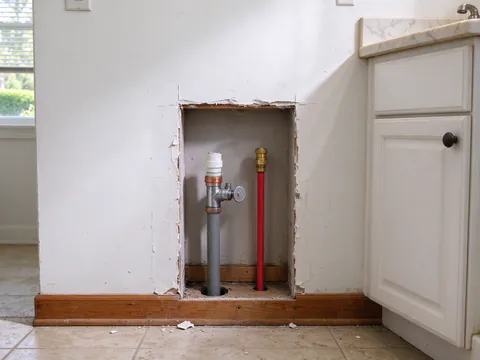
These houses are newer, but some carry polybutylene or CPVC. Polybutylene, usually gray and printed PB2110, is generally replaced in full once we confirm it; our polybutylene pipe replacement page explains that scope. CPVC can turn brittle and crack during routine work, like turning a stop valve, and the CPVC pipe replacement page covers what to do about it.
Check whether an earlier owner already replaced the polybutylene. A partial replacement can leave a few original runs in place, and those are the ones that fail next. In a two-story house, the upstairs bathrooms add access work through the chases between floors, and we show you where those openings go.
Banging pipes and high pressure
A loud bang when the washer or a faucet shuts off is water hammer. It usually comes from fast-closing valves, high static pressure or pipe that isn’t secured, not from worn-out pipe. Terrain plays a part here: pressure at a house depends partly on its elevation relative to the supply, so it can differ from one street to the next.
Where static pressure runs high, a working PRV and a thermal expansion tank protect both the old pipe and the new. We check those before deciding anything needs replacing. Our guide on water hammer after repiping explains the causes and fixes, including why a new system can bang if they are ignored.
Before we come out
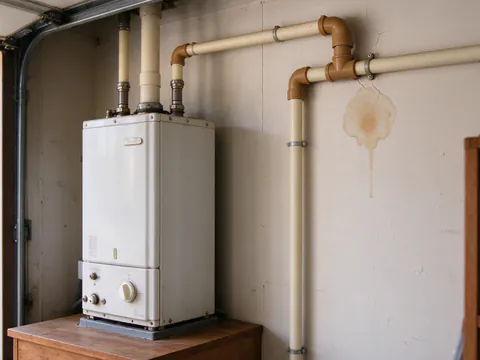
A little preparation makes the first visit more useful. Take photos of the pipe at the water heater, under the kitchen sink and at any exposed line in the garage or attic, and look for printed markings such as PB2110 or CPVC. Note where the main shutoff and the PRV are, which fixtures have leaked and when, and whether the house is one story or two.
Only photograph what you can see from where you stand. Skip the crawl into a hot attic or a tight crawlspace; we’ll go in on the first visit, and a picture taken from the hatch is plenty to start with.
PEX or copper, and how much of the house
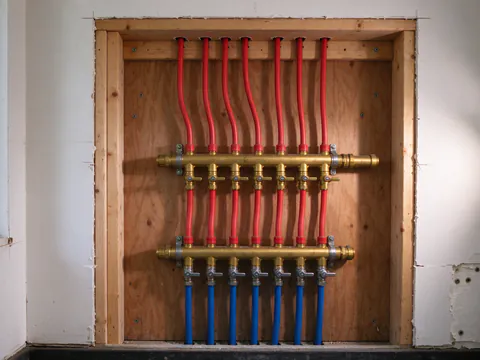
Copper and PEX are both allowed in Dallas when listed and installed to the code and the maker’s instructions. In an attic, PEX needs protection from sunlight, proper support and insulation; copper needs insulation too. Our guide on PEX versus copper explains the trade-offs.
A full repipe makes the most sense when the material itself is the problem, such as galvanized or polybutylene. When one area keeps failing and the rest is sound, a partial repipe may be enough. Either way, the estimate lists which lines are replaced, which stay and where new pipe joins old.
Attic heat and the occasional hard freeze
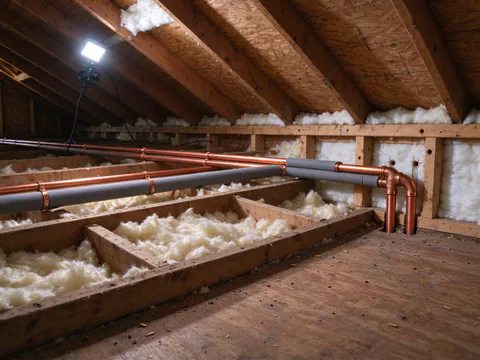
Both kinds of house usually get an attic route, and Dallas attics are hard on pipe. They bake in July, and NWS Fort Worth records below-freezing weather here, including the long February 2021 storm. We support new lines at the maker’s spacing, keep PEX out of direct sunlight near vents and insulate runs near the eaves. Our guide on attic pipe routing and freeze protection covers the details.
Tell us your Southwest Dallas home's build year and what the pipe looks like.
A photo of the pipe at the water heater and under a sink is the quickest way for us to start your estimate.
What the records show by ZIP
The Census Bureau’s 2020-2024 American Community Survey estimates show the two building waves. In ZIP 75232, near Kiest Boulevard and Red Bird, the median house was built in 1967 and 81.8% of units are single-family. In ZIP 75249, near Mountain Creek, the median is 1988 and 97.3% of units are single-family houses. ZIPs 75237 and 75236 have more apartments, where the owner controls shutoffs and a leak in one unit is usually traced and repaired before anyone discusses a repipe.
As general trade history, Dallas houses from the 1960s were usually plumbed with copper, sometimes with galvanized on older lines, while houses from the 1980s and early 1990s may have polybutylene, CPVC or copper. Since January 2024, City of Dallas open data shows 2 permit records, one each in ZIPs 75237 and 75249, that explicitly describe interior water-supply repiping.
The City’s ForwardDallas plan describes the SW-2 planning district as including Mountain Creek Lake, open space and escarpment terrain, with logistics uses around Hensley Field shifting toward housing and retail. Every repipe here follows the usual path: a permit through DallasNow, a rough inspection with the new pipe exposed, and a final. Our guide on the repiping process and timeline shows where those fall.
Getting your number
We price after the first visit, from the fixture count, the attic route, the old material and how much of it comes out, and the openings we restore. The whole-house repiping page shows what a full scope includes, and the repiping cost estimator walks through the drivers ahead of time. The service line from the meter to the house is a separate scope.