There’s a warm patch on the kitchen tile that wasn’t there last month. The water bill jumped, and the little dial on the meter keeps turning with every faucet in the house closed. In a Pleasant Grove or Buckner-area ranch on a slab, that usually means a hot line is leaking under the floor. If you’ve already been through one slab leak, you’re probably wondering how many more are down there.
Fullbore Dallas Repiping replaces water supply lines in Southeast Dallas homes, from rerouting a single leaking line to moving the whole house overhead. We confirm the leak, then lay out your choices with a price for each. Our slab leak rerouting page explains how a reroute works.
Is it a slab leak?
A few checks point the way. With every fixture off, watch the meter: a moving leak indicator means water is escaping somewhere. Close the cold inlet to the water heater and watch again; if it stops, the leak is on the hot side, which is common under slabs because hot lines expand and contract more.
From there the leak is pinpointed with pressure tests on individual lines and acoustic or thermal location. That tells you which line is failing and roughly where. It doesn’t tell you how long the other lines under the floor will last, and that is why the age of the house and any earlier leaks matter so much in the next decision.
Three ways to fix it
A spot repair breaks the slab over the leak, repairs the line and patches the floor. It fixes this leak and leaves every other under-slab line where it is.
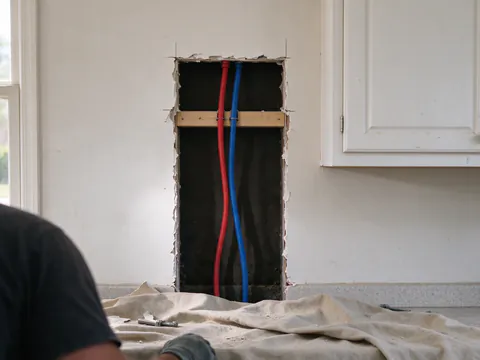
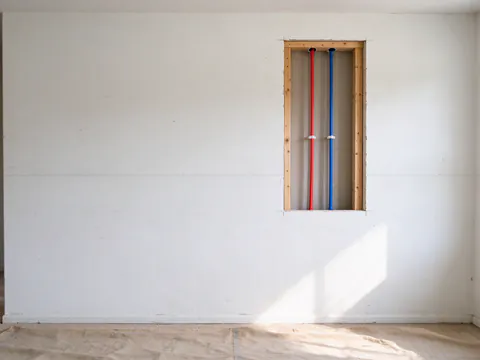
A single-line reroute caps the leaking line under the slab and replaces it with a new line through the attic and down a wall. The floor stays closed.
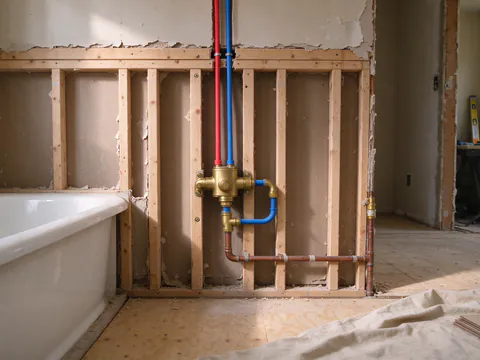
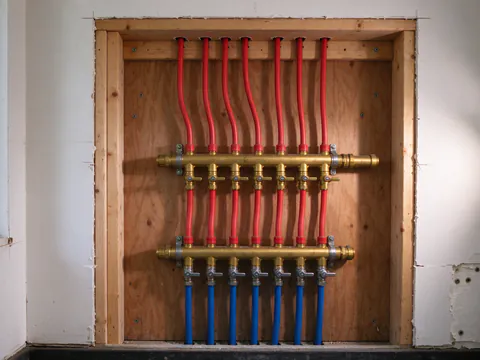
A whole-house repipe moves every supply line overhead and takes the rest of the under-slab lines out of service. It costs more up front; after a second slab leak, it is usually the more lasting answer. The whole-house repiping page shows what it includes.
In between sits a partial repipe, replacing the hot side or one bathroom group. Our guide on whether to repair or repipe explains how to weigh the options for your house.
Spreading the cost over time
A repipe is a big expense, and a clear plan helps you budget. Where money is tight, a staged plan can work: reroute the leaking hot line now and do the rest later. We draw both stages up front so the first one fits the second and nothing is torn out twice. Ask us to price the full repipe and any partial option side by side, with the same fixtures, materials, restoration and permit listed in each. Our guide on repiping quotes and warranties shows what each estimate should name.
Owner-occupants can also watch the City of Dallas Home Improvement and Preservation Program, run by Volunteers of America Texas, which offers major-systems repair help as a forgivable loan of up to $24,000 for eligible homes. Applications open in short windows, so check the program page. We are not a program participant and don’t decide eligibility.
Running new lines through a hot attic
Every one of these options except the spot repair puts new pipe in the attic. Dallas attics bake in summer and can drop below freezing in winter, as the February 2021 storm showed. We keep new lines low against the ceiling and under the insulation where the layout allows, support them at the maker’s spacing and keep PEX out of sunlight near the vents. Our guide on attic pipe routing and freeze protection explains the details.
Rerouting or replacing supply pipe is permitted work; Dallas’s limited exemption covers only stopping a leak. The permit goes in through DallasNow, the new pipe is inspected at rough-in while exposed, and a final inspection closes it out.
Neighborhoods in Southeast Dallas
Pleasant Grove
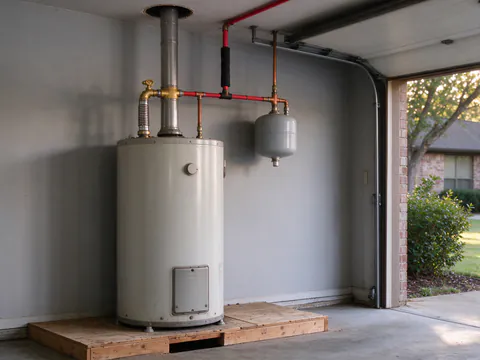
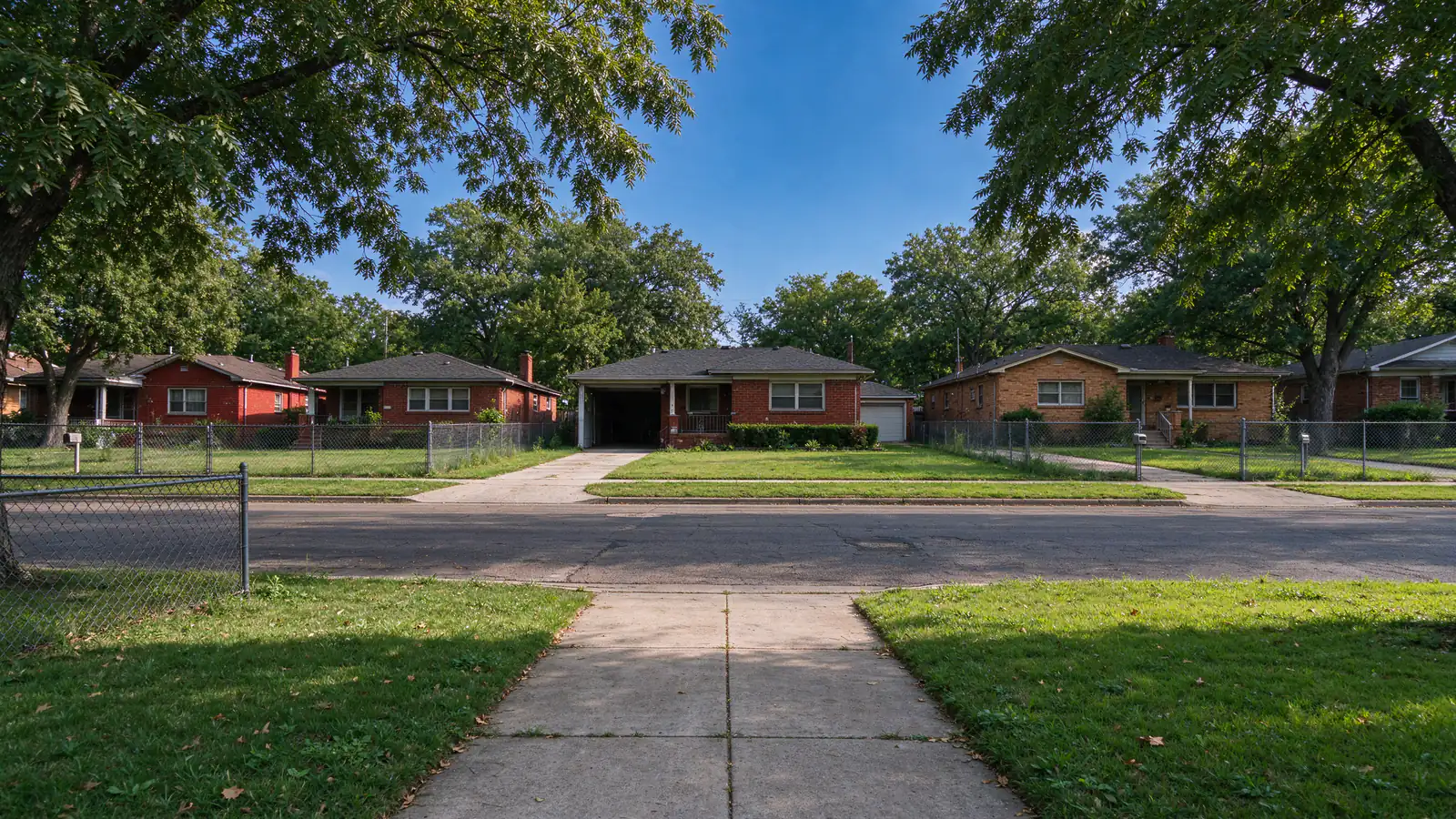
Pleasant Grove, mainly in ZIPs 75217 and 75227, is mostly single-family houses with some multifamily buildings mixed in. In a house that has had a slab leak, the choice between a reroute and a whole-house repipe is the main question. Where a long hot line runs from a garage water heater to a far bathroom, a hot water line replacement is a narrower option worth comparing. In an apartment building, the owner controls the shutoffs and residents get notice before any work.
Get a Southeast Dallas estimate that compares a reroute with a full repipe.
Tell us about the leak, the age of the house and how many bathrooms it has. We price both options side by side.
Newer houses toward Kleberg
The houses out toward Kleberg are younger, many from the late 1990s and 2000s. When one of them leaks, we look for the single failed fitting, crimp ring or valve before talking about anything bigger. If the same kind of fitting keeps failing, the fitting type rather than the pipe may be the problem, and we check that too.
The housing record in 75217, 75227 and 75253
The Census Bureau’s 2020-2024 American Community Survey estimates show how much of the housing here is single-family. In ZIP 75217, 78.1% of units are single-family houses and the median home was built in 1968. ZIP 75227 has a 1976 median, and ZIP 75253 is newer at 1999.
As general trade history, Dallas houses from the 1960s and 1970s were usually plumbed with copper, sometimes with galvanized on older lines, and some later houses with CPVC or polybutylene. In slab houses of that era the supply often runs under or in the slab, which is why a slab leak is so often the first sign of trouble. Since January 2024, City of Dallas open data shows 3 permit records in ZIP 75227 that explicitly describe interior water-supply repiping.
The City’s ForwardDallas plan describes the SE-4 planning district as mostly community residential, with commercial pockets along Loop 12, and treats Pleasant Grove as its own district, SE-3.
What sets your price
We price after the first visit, from the fixture count, the attic route, whether the old lines run under the slab, the water heater connections and how much drywall we patch. The repiping cost guide for Dallas and the repiping cost estimator explain each driver. The water service line from the meter to the house is a separate scope from ours.