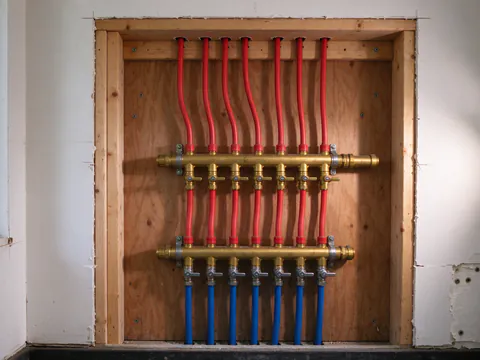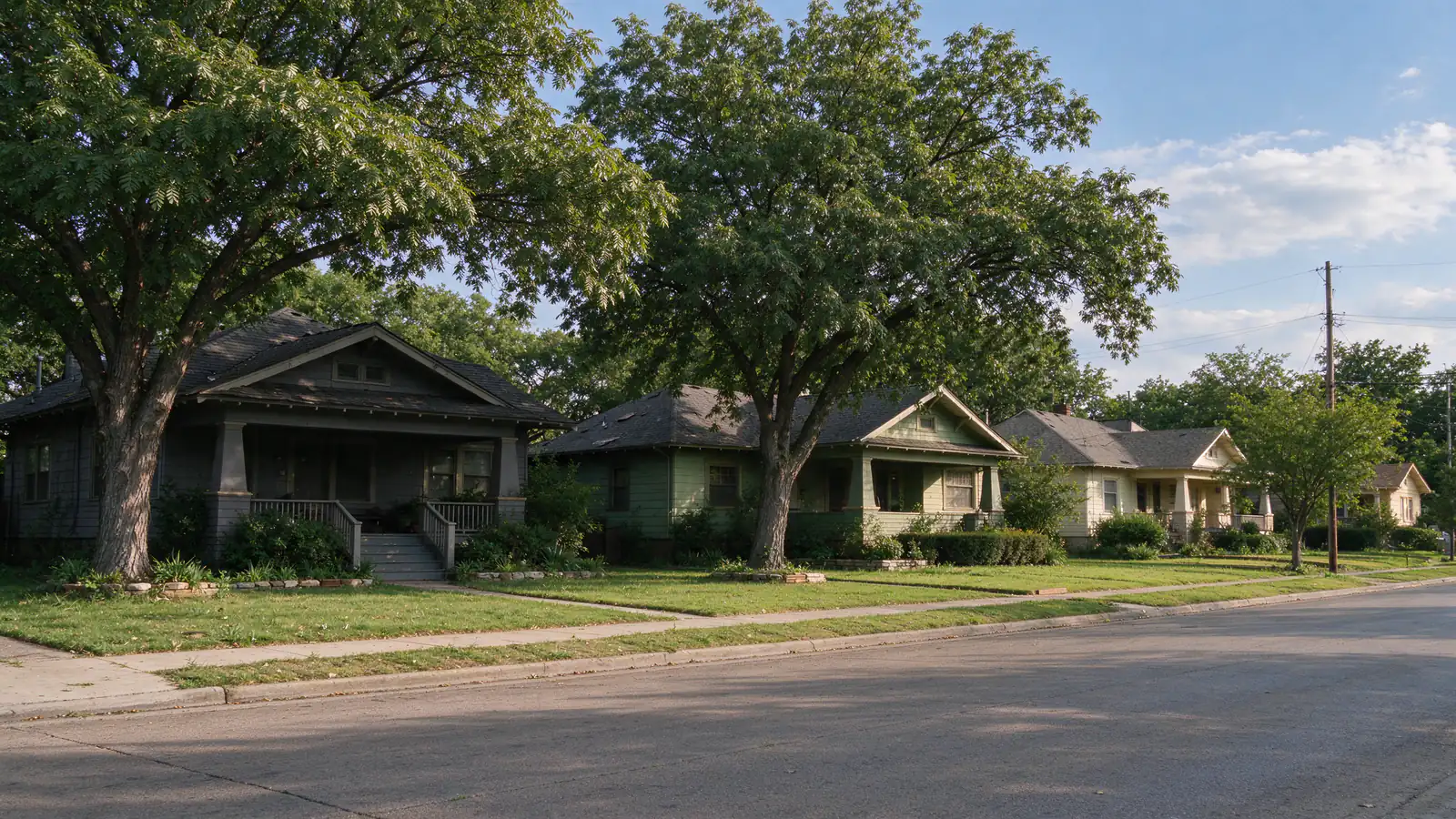
The kitchen tap runs brown for a minute after a weekend away. The patch in the hall bath is weeping again, right where somebody’s copper repair meets the old steel. The shower drops to a trickle every time the washer fills. In a Lakewood bungalow or a Casa View ranch, that mix of rust, weak flow and repairs that don’t hold is the usual sign that galvanized pipe is still doing some of the work.
Fullbore Dallas Repiping replaces water supply lines in East Dallas homes, from a single bathroom branch to the whole house. We come out, find what is actually in your walls, and give you a written plan that says what gets replaced, how the new lines get in and who closes the openings. If you are still weighing another patch, our repair or repipe guide sets out how to decide.
Rust, weak showers and patches that don’t hold
Galvanized steel fails slowly. The zinc wears through, the steel rusts, and scale builds inside until a half-inch line has the opening of a pencil. You notice it as weak flow at several taps at once and a brown tint when water has been sitting. Leaks come later, usually at threaded joints.
Mixed systems are where trouble collects. Decades of repairs in older East Dallas houses often leave copper spliced into steel, and that joint corrodes unless it has a proper dielectric union or transition fitting. Each patch fixes one spot and adds another joint. When you are on your third or fourth, we price a galvanized pipe replacement next to one more repair so you can see both numbers.
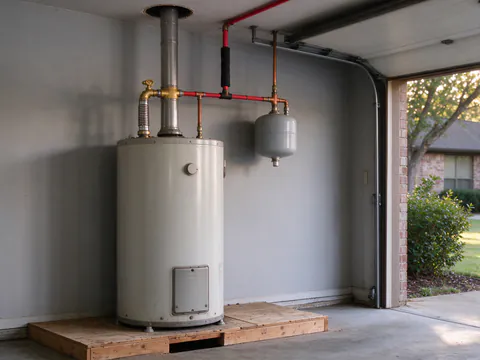
Not every symptom is the pipe. A failing PRV, a clogged aerator or a tired water heater can look the same, so we check those first.
Under the floor or through the attic
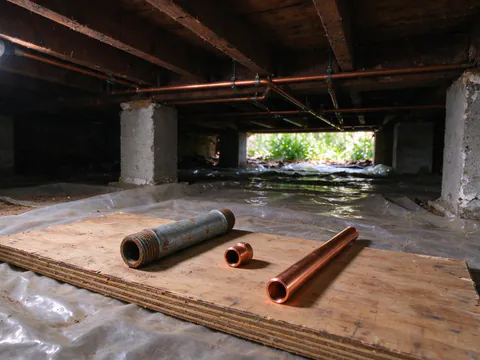
How the new lines get into your house depends on what it sits on. Many of the older bungalows and cottages stand on pier-and-beam foundations. With a crawlspace, new PEX or copper runs along the joists and comes up through the floor at each fixture, which keeps most walls closed.
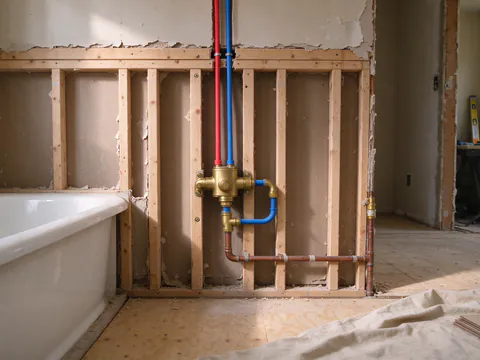
The postwar ranches further out Garland Road and toward I-30 are more often slab-on-grade. There we leave the old lines in the slab, cap them, and run new supply overhead through the attic, dropping down interior walls to each bathroom and the kitchen. Attic runs need support, protection from sunlight and insulation; our guide to attic pipe routing and freeze protection explains why the February 2021 freeze still matters here.
Will you have to open the plaster?
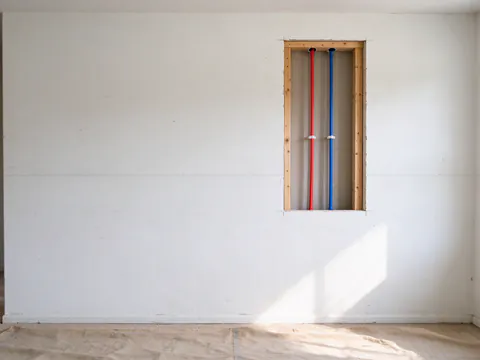
Some, usually less than people expect. In a slab house we cut small openings where each drop lands: behind the toilet, at the shower valve, under the sink. In a pier-and-beam house many fixtures can be fed from below with no wall opening at all. Plaster takes more care to cut and patch than drywall, so your estimate lists every opening by room and says who patches, textures and paints it. The guide on wall openings and drywall repair explains what good restoration looks like.
Openings stay open until the City has seen the new pipe. A repipe is permitted plumbing work in Dallas: the permit goes in through DallasNow, the inspector checks the new lines at rough-in, and a final inspection closes it out.
Street by street in East Dallas
Lakewood
Lakewood sits largely in ZIP 75214 near White Rock Lake, with houses from the early twentieth century through postwar builds and later remodels. Many have had some plumbing replaced already, so the real question is how much original pipe is left. Where a new kitchen or bath is still fed by old steel, rust keeps reaching the new fixtures. We map what is new, what is old and where the two meet.
Lochwood
Lochwood is mostly mid-century single-family housing in ZIP 75218. On a slab ranch here, the usual plan is an attic reroute with drops through interior walls. Ask us how the new lines will be protected in an attic that bakes in August and can still freeze in a hard winter.
Casa View
Casa View is largely postwar ranch housing in ZIP 75228. If your house has had a slab leak, the choice is usually between rerouting that one line, covered on our slab leak reroute page, and moving every supply line overhead. A second slab leak on a different line tips the balance toward the full scope, because the lines left under the floor are the same age.
Lower Greenville
Lower Greenville, in ZIP 75206, mixes older houses with duplexes, fourplexes and small apartment buildings. When several units share one supply, the shutoff schedule matters as much as the pipe. Owners can compare unit-by-unit partial repiping with one full replacement and one longer shutdown. A shared crawlspace can carry new lines to every unit without opening finished walls.
M Streets and Vickery Place
The M Streets and Vickery Place, also in ZIP 75206, are known for older cottages and two-story houses. With plaster walls, a pier-and-beam floor and an attic, we can often run under the floor for the first story and through the attic for the second, keeping most finished walls closed. Your estimate names each wall that does get an opening.
Old East Dallas
Old East Dallas includes ZIP 75246 and parts of its neighbors. Its large older houses, some split into apartments, can carry several generations of pipe at once. In a converted house we start by mapping which unit each line serves. Our repiping old homes guide explains how one full replacement simplifies a system like that.
Tell us the house's era, its foundation and what has already been repaired.
We map old pipe against new and give you a written estimate that names every section that stays.
What the records say about East Dallas housing
The Census Bureau’s 2020-2024 American Community Survey estimates show how old much of this housing is. In ZIPs 75223 and 75246 the median home was built in 1955, and in ZIP 75218 it was 1960, with 79.4% of units built before 1980. ZIP 75206 is the newest, with a 1991 median and more apartment buildings.
As general trade history, galvanized steel was common in Dallas houses plumbed through roughly the 1950s and into the 1960s, with copper taking over after that. A house from those decades may still have its original steel, may have been fully repiped, or may carry a mix. Only the pipe confirms it; our guide to identifying water pipe material shows where to look.
City of Dallas open data adds a second signal. Since January 2024, 12 permit records in ZIPs 75214, 75228, 75218 and 75206 explicitly describe interior water-supply repiping. That counts only records whose descriptions say so, not every repipe done.
Getting a price for your house
We price after the first visit, from the fixture count, the foundation, the route and how much plaster or drywall has to be opened and restored. Your written estimate lists each of those, so two quotes can be compared line by line. The repiping cost estimator walks through the same drivers before we come out, and the guide to brown water and rusty pipes helps if you are not yet sure the pipe is the problem.