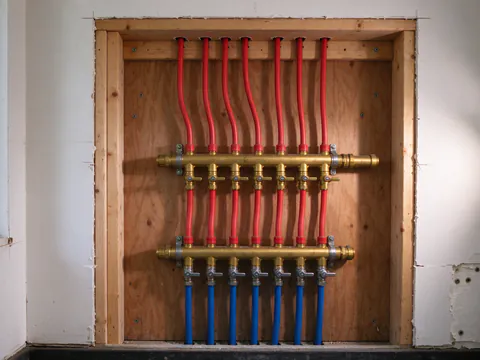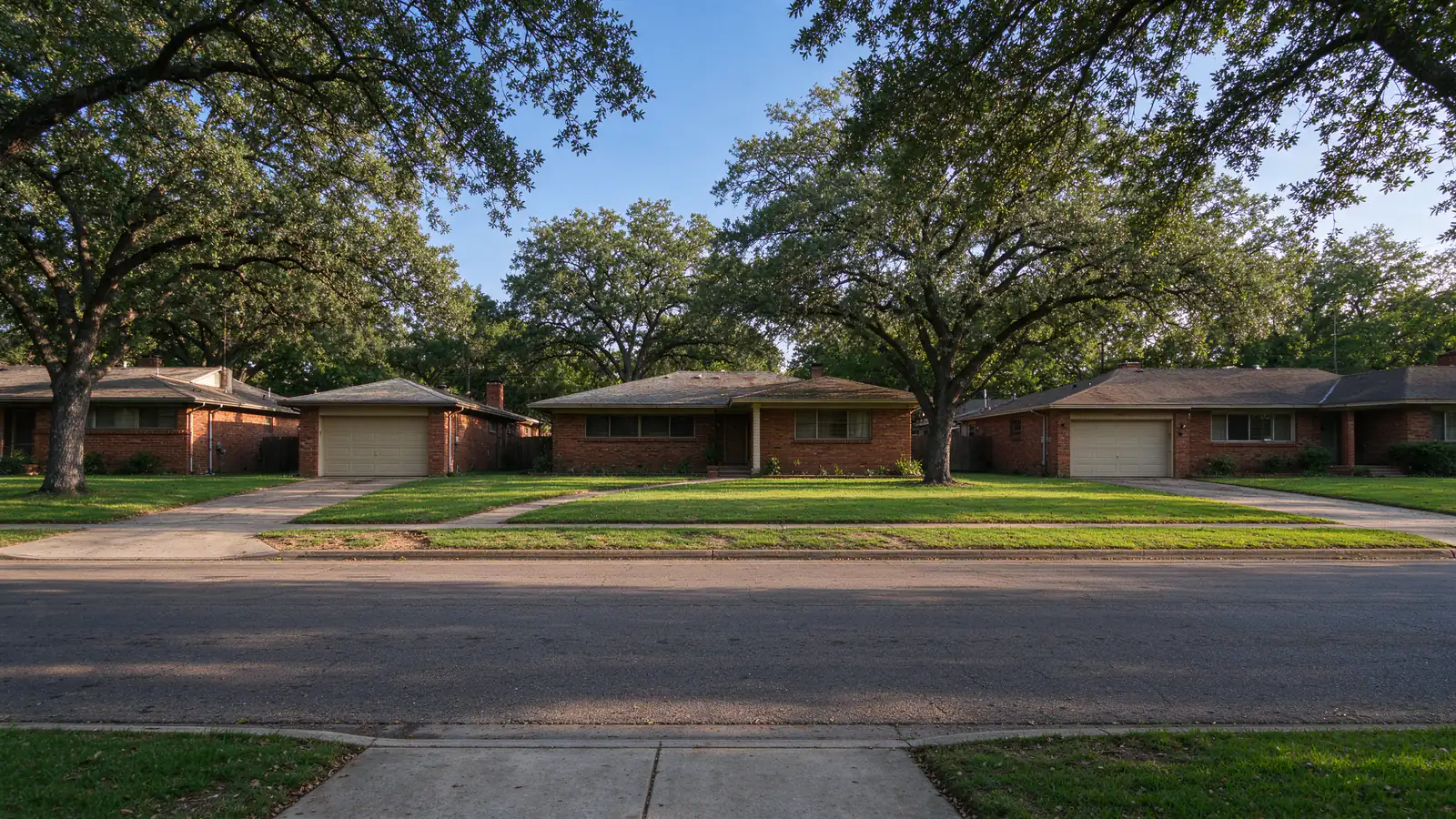
The shower in the back bath takes forever to run hot because the water heater is out in the garage at the other end of the house. A copper line in the attic has started to drip onto the hallway ceiling. Or you’re in a garden condo off Skillman and the leak is inside a wall you share with the unit next door. Lake Highlands has two kinds of housing, and each brings its own version of the problem.
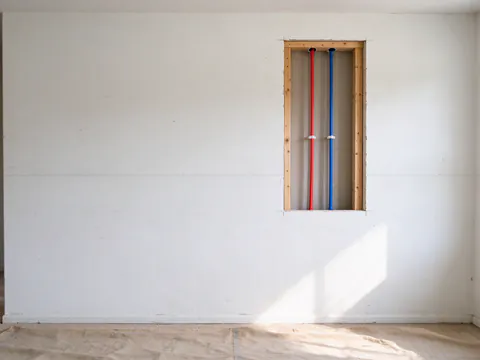
Fullbore Dallas Repiping replaces water supply lines in Lake Highlands houses and condo units, from one bathroom branch to the whole system. For a ranch house we plan an attic route and a whole-house repipe; for a condo we work out whose pipe it is first and then plan apartment and condo repiping around the association’s rules.
Ranch houses north of White Rock Lake
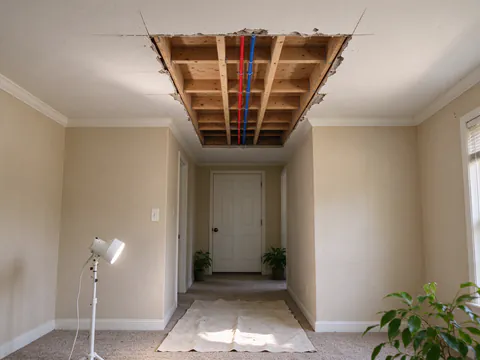
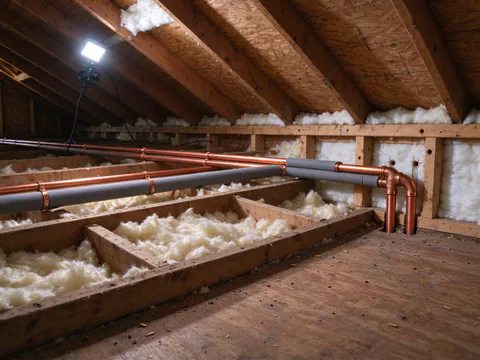
Most of the single-story ranches here sit on slab, so the old supply may run under the floor or in the slab itself. We leave those lines out of service and run new PEX or copper through the attic, dropping down interior walls to each fixture. The attic gets very hot in summer and can freeze in a hard winter, as the February 2021 storm showed. Our guide on attic pipe routing and freeze protection explains how the new lines are supported, shaded and insulated.
The long hot line from the garage
Many of these ranches keep the water heater in the garage at one end of the house. A repipe is the moment to shorten or right-size that hot line, or to plan a recirculation option, instead of rebuilding the same long run. Where an early-1970s house shows galvanized nipples at the heater and copper beyond, we look for the dielectric fittings between them; a missing one is a common leak point.
Garden condos and buildings along I-635
In a condo with its own shutoffs, the work stays inside your unit. Without them, any branch work needs a building or stack shutdown, which the association has to approve and schedule. Garden-style buildings, two or three stories with shared walls and attics, add a wrinkle: an opening in your unit can reach the next one, so the scope says who restores what. Where new pipe passes through fire-rated walls or floors, the firestopping is restored and written into the plan.
Associations usually want a few things before work starts: set work hours, notice to neighbors, shutdown coordination and proof of insurance from the plumbing contractor. We gather those up front so they don’t hold up the schedule.
Weak water at every tap?
When every faucet in the house is weak at once, the cause is often upstream of your pipes: a failing PRV, a partly closed main valve or a restricted service line. When one faucet is weak and the rest are fine, it is usually a clogged aerator or cartridge. Dallas water is moderately hard and builds scale in exactly those parts. We check all of that before pricing a repipe, and our guide on low water pressure versus low flow shows the simple checks you can do first.
Does it have to be the whole house?
Not always. If only the hot side is failing, or one bathroom group keeps leaking, partial repiping may be enough. We name every section that stays in service and why, so you can compare it fairly with a whole-house scope.
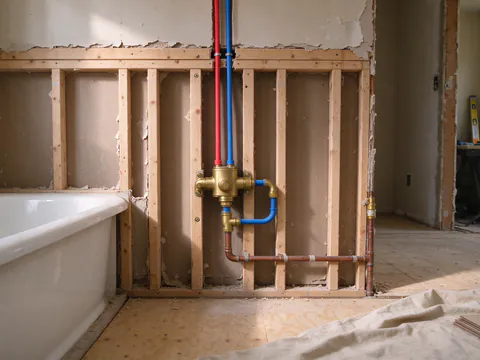
Material changes the plan too. Copper repiping costs more in material and needs sweat or press-connect joints. PEX repiping is flexible and usually needs fewer joints and openings. Both are allowed in Dallas when listed and installed to the code and the maker’s instructions.
Reading two estimates side by side
Two estimates for the same house can look far apart because they cover different work. Before comparing totals, check that both name the same fixtures, the same material and fittings, the same treatment of the water heater, PRV and valves, the same pressure test and flush, and the same drywall and texture restoration. Our guide on repiping quotes and warranties has a checklist.
Ours is built from the first visit: fixture count, attic access and route length, the existing material, and the patch and paint scope. Every one of those is listed, so you can see what moves the number. The repiping cost estimator walks through the same drivers ahead of time.
Tell us whether your Lake Highlands home is a house or a condo unit.
Share the build year, the pipe you can see and any association rules. We shape the estimate around that.
What the housing record shows
The Census Bureau’s 2020-2024 American Community Survey estimates show the split. In ZIP 75238 the median home was built in 1974 and about half the units are single-family houses. ZIPs 75243 and 75231 both have a 1982 median, but the housing there is mostly multifamily, with 44.5% of units in ZIP 75231 in buildings of 20 or more units.
As general trade history, Dallas houses from the late 1960s and early 1970s were usually plumbed with copper, sometimes with galvanized on parts of the system, and buildings from the late 1970s and 1980s may have copper, CPVC or polybutylene. A median does not tell us what is in your house; our guide on identifying water pipe material shows how to check.
Since January 2024, City of Dallas open data shows 4 permit records in these ZIPs that explicitly describe interior water-supply repiping. The City’s ForwardDallas plan places Lake Highlands in the NE-2 planning district, about half residential, with mixed-use development along I-635 and DART stations running through it. For a repipe, your address tells us more than the district does.
Permits, inspections and the service line
Every repipe here, house or condo, is permitted work. The permit goes in through DallasNow, the City inspects the new pipe at rough-in before walls close, and a final inspection closes it out. Since June 1, 2026 the City coordinates plumbing and mechanical rough and final inspections. Our guide on the repiping process and timeline shows where those inspections fall in the schedule.
The water service line outside is a separate scope. If Dallas Water Utilities has sent you a service-line material notice, the guide to repiping and water service lines explains how the two differ.