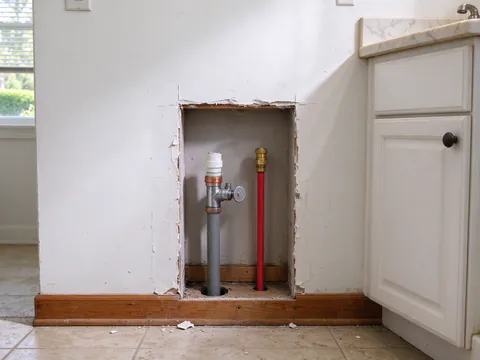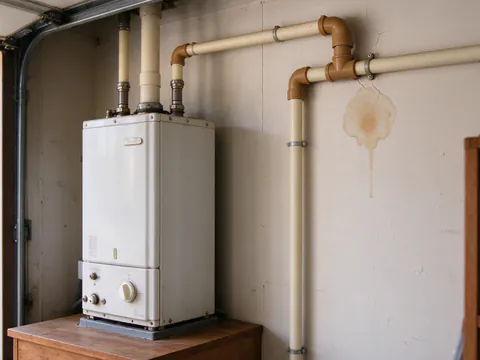
You find flexible gray pipe with metal crimp rings at the water heater and wonder if it’s the polybutylene the inspector warned about. Or the cream-colored plastic under the bathroom sink cracked when the plumber turned the stop valve. Or a green-stained drip has appeared in the ceiling below the upstairs bath. In the 1980s houses around Prestonwood and Bent Tree, those three stories cover most of what sends homeowners looking.
Fullbore Dallas Repiping replaces water supply lines in Far North Dallas homes, from one bathroom group to the whole house. The answer depends on which material is behind your walls, so we start there. Our guide on how to identify your water pipe material shows what to photograph before we come out.
Gray pipe, cracking plastic or pinholes?
Each material fails its own way, and each leads to a different plan.
Polybutylene tends to fail at the fittings and wherever the pipe was stressed, and the risk is spread through the whole system. Once we confirm it from the print line and the fittings, most owners replace it all; our polybutylene pipe replacement page describes that scope.
CPVC goes brittle with heat and age. It holds while nobody touches it and cracks when a valve is turned or a faucet is changed. One crack is a repair. A run of them is when a CPVC pipe replacement starts to make sense.
Copper that keeps springing pinholes is a separate question. Where the leaks cluster tells us more than how many there are, and our guide on recurring pinhole leaks explains how to read the pattern.
Two stories and an attic route
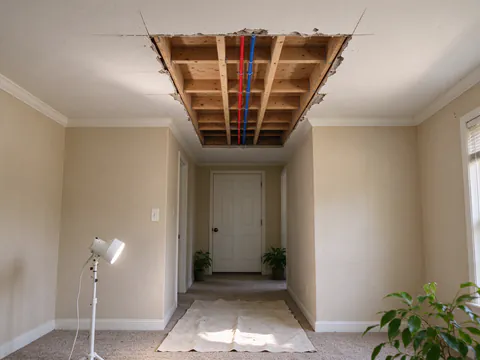
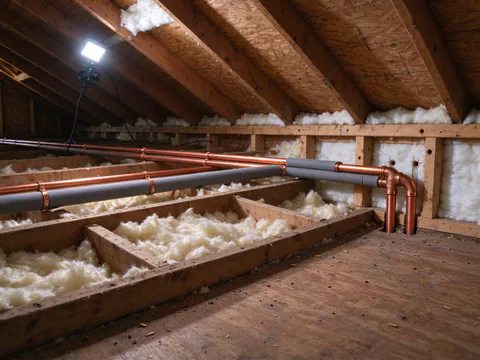
Most houses here sit on slab, and many already have their supply in the attic. We run new PEX or copper overhead, drop it through interior walls to each fixture, and cut the old lines out of service. The hard part in a two-story house is reaching the upstairs bathrooms. Those lines usually travel through a chase or a closet wall, sometimes through the ceiling of the room below, and we show you where each opening will be before work starts.
Material choice comes next. Both PEX and copper are allowed in Dallas when listed and installed to the code and the maker’s instructions. Our guide comparing PEX and copper covers the trade-offs in plain terms.
What your estimate should spell out
A good written scope for a house this size names more than the pipe. It should say where the upstairs openings go and who patches and textures them. It should cover the water heater and main shutoff: a house with a PRV is a closed system, so a thermal expansion tank is normally part of the job, and every transition fitting where new pipe meets a retained line is listed.
It should also say what happens to the old pipe. Polybutylene or CPVC is usually cut out of service and left in place where removing it would mean opening more walls. That is normal, but it belongs in writing, with no remaining connection to the new system. Attic sections get support and insulation, because attics here see summer heat and the occasional hard freeze.
Houses and condos side by side
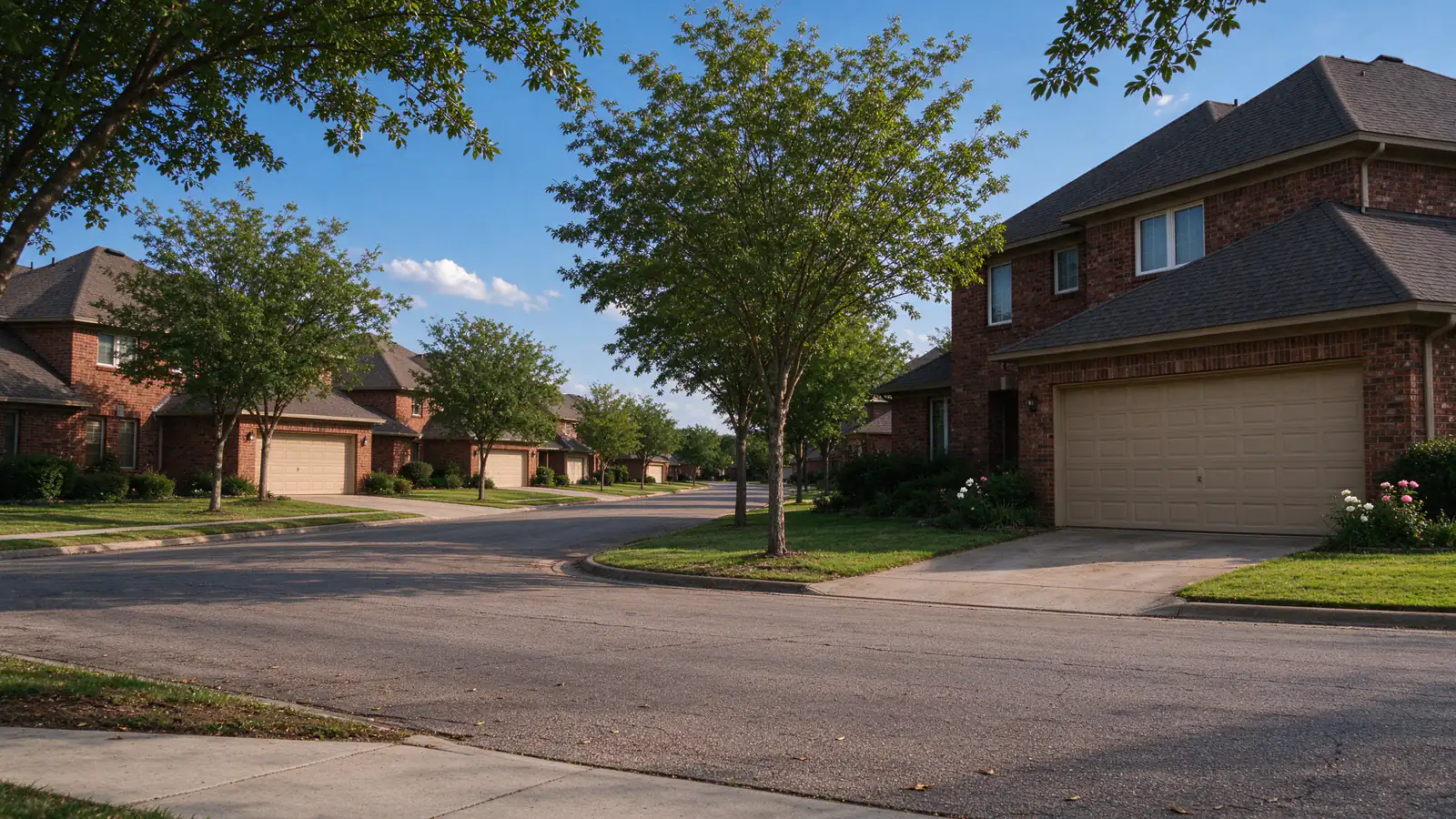
North of LBJ, a cul-de-sac of detached houses can sit one street from a block of condo buildings. For a homeowner off Preston Road or Frankford Road, the questions are attic room, bathroom count and how much finished drywall will need patching. For a condo owner near I-635 or the Galleria, they are ownership and access: which branches belong to your unit, which riser belongs to the building, and what notice the association requires. Our apartment and condo repiping page covers that side.
The permit path is the same for both. The permit goes in through DallasNow, the new pipe is inspected at rough-in while it is still exposed, and a final inspection closes it out. Our Dallas repiping permits guide explains each step.
Neighborhoods in Far North Dallas
Bent Tree
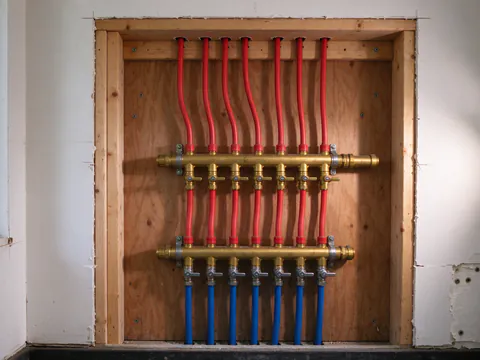
Bent Tree spans parts of ZIPs 75248, 75252 and 75287 and includes many larger homes. With several bathrooms, a wet bar or a long run to a pool bath or second water heater, the layout matters as much as the material. Where fixtures are spread across two wings, a home-run manifold or a pair of manifolds can make shutoffs simpler; our guide on manifold versus trunk-and-branch compares the options.
Prestonwood
Prestonwood sits largely in ZIP 75248, where houses from around 1980 are the norm, and that era is where polybutylene and CPVC most often turn up. If your house has already had a partial repipe, ask the seller or your records for a list of what was replaced and what was kept. A few leftover runs of old pipe can bring the same problems back.
Northwood Hills and Valley View
Around Northwood Hills and the old Valley View corridor, single-family streets sit near apartment and condo buildings. Houses here raise the same material questions as Prestonwood. Condo units raise association approvals and unit shutoffs. Where a building is weighing riser work, our plumbing riser replacement page explains how stacks are scheduled.
Send us photos of the pipe at the water heater and under a sink.
We start your estimate from the material that is actually there, then plan the route around your floor plan.
What the Census and permit records show
The Census Bureau’s 2020-2024 American Community Survey estimates put the median year built at 1980 in ZIP 75248, the oldest ZIP in the district, and 1991 in ZIP 75287. ZIP 75240 has the most large buildings, with 47.0% of units in buildings of 20 or more units.
City of Dallas open data shows 19 permit records in these ZIPs since January 2024 that explicitly describe interior water-supply repiping: 10 in ZIP 75248, 5 in 75252, 2 in 75287 and 1 each in 75240 and 75254. ZIP 75248 has the most of any ZIP in the city. The count covers only records whose descriptions say so.
As general trade history, houses from the late 1970s to the mid-1990s may have polybutylene, CPVC, Type M copper, or a mix where earlier repairs replaced part of the system. A ZIP median narrows the search; the pipe confirms it.
Getting to a number
We price your house after the first visit, from the fixture and bathroom count, one or two stories, the attic route, the existing material, valves and the PRV, and how much drywall we open and restore. The whole-house repiping page shows what a complete scope includes, and the repiping cost estimator walks through the same drivers before we visit.