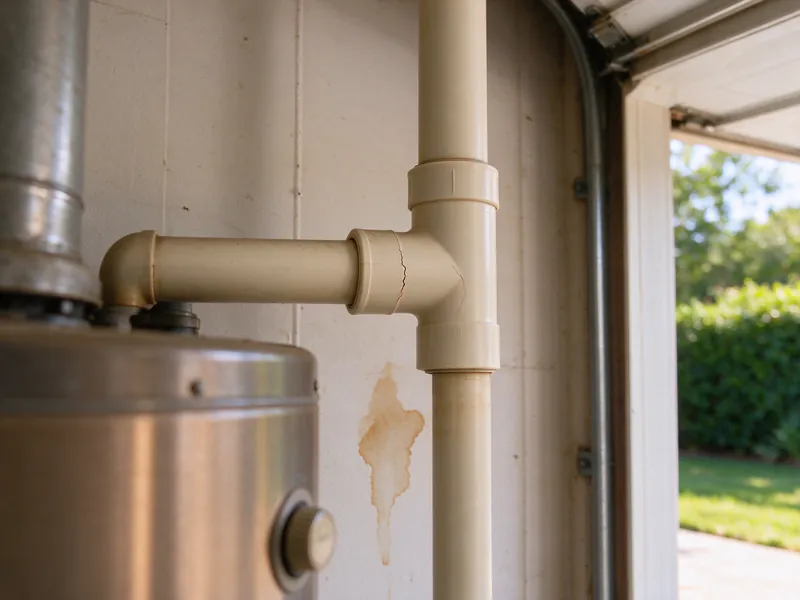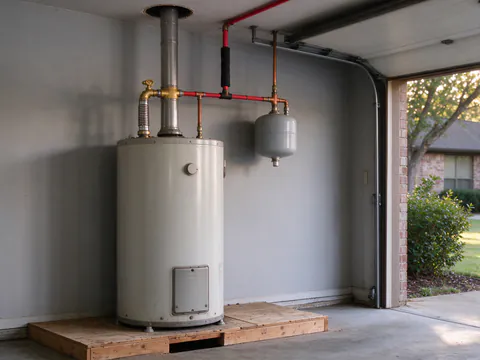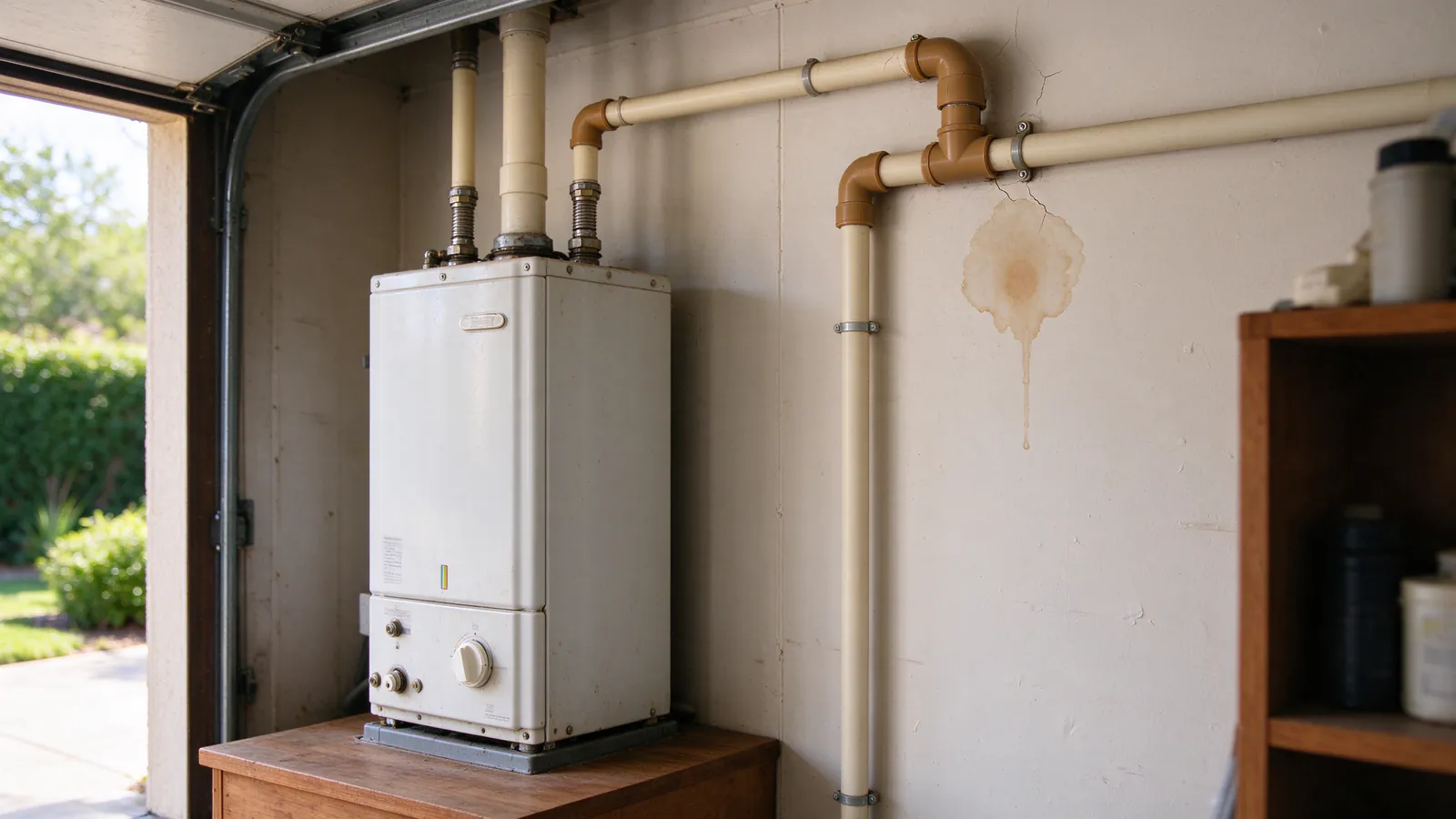
You went to turn off the toilet stop and it snapped clean off the pipe. Or a fitting above the water heater cracked when someone bumped it moving boxes in the garage. That is what aging CPVC does when it turns brittle. For CPVC pipe replacement, Dallas houses are judged on how brittle the pipe has become, not on the name of the material. Fullbore Dallas Repiping replaces water supply lines in Dallas homes, from a single bathroom branch to the whole house.
We replace the brittle cream or tan plastic lines with a listed PEX or copper system, join carefully to any CPVC that stays, then pressure test and have the City inspect the work. Where cracking shows up all over the house, the scope is closer to whole-house repiping; where it is confined to one area, partial repiping can fit.
What we check on the first visit
We confirm the material first. CPVC is rigid, usually cream, tan or off-white, and printed CPVC with an ASTM D2846 listing. At a glance it is easy to confuse with gray polybutylene or white PEX, so the printing settles it; our pipe identification guide shows each.
Then we check its condition, gently. How do the exposed lines feel under the sinks and at the water heater? Are there cracked fittings, white stress marks, or short new sections spliced in from past repairs? Where did the leaks happen: near heat, in the attic, at stops that were turned? A run close to the water heater flue or across a hot attic usually tells the story first. We also note anything touching the pipe, such as spray foam, sealants or oil-based treatments, because some of them cause stress cracking in CPVC.
Why CPVC turns brittle
CPVC, chlorinated polyvinyl chloride, is a rigid plastic made for hot and cold water and joined with solvent cement. It loses toughness as it ages, and heat speeds that up. Dallas attics run very hot through long summers, and hot lines carry heat every day, so attic runs and the lines near the water heater tend to age fastest. Brittle pipe can hold pressure for years if nothing disturbs it. The trouble comes with stress: an expansion cycle, a clamp that pins the pipe, a hard freeze, or someone turning a stop valve.
CPVC also grows noticeably with temperature. Long straight runs need room to move, and a run bent into place or clamped tight against framing carries stress into its joints. Chemical contact adds to it; pipe makers publish compatibility lists, and certain sealants, spray foams, oils and pest treatments are on the wrong side. With CPVC the pattern is cracks, not pinholes; the recurring pinhole leak guide covers metal pipe.
Is my house in the CPVC years?
CPVC shows up in some Dallas houses built from roughly the 1970s through the 1990s, and in later repairs. The U.S. Census Bureau’s 2020-2024 American Community Survey puts the median year built at 1982 in both ZIP 75231 and ZIP 75243, in the Lake Highlands area. That says which materials were common when those houses were plumbed. It says nothing certain about yours. The February 2021 freeze, documented by the National Weather Service in Fort Worth, was a hard test for brittle attic lines across the city.
Snapped a stop valve off old CPVC?
Before the next repair, we can tell you how brittle the rest of the pipe is and where a replacement should start and stop.
Why one repair turns into three
The biggest problem with brittle CPVC is that working on it can break it. A ratchet cutter, a fitting twisted free, or a line levered aside to reach a joint can crack the pipe a few inches away. One repair turns into three, sometimes inside a wall that was just closed. That is why our repair-or-repipe guide weighs brittleness heavily for CPVC.
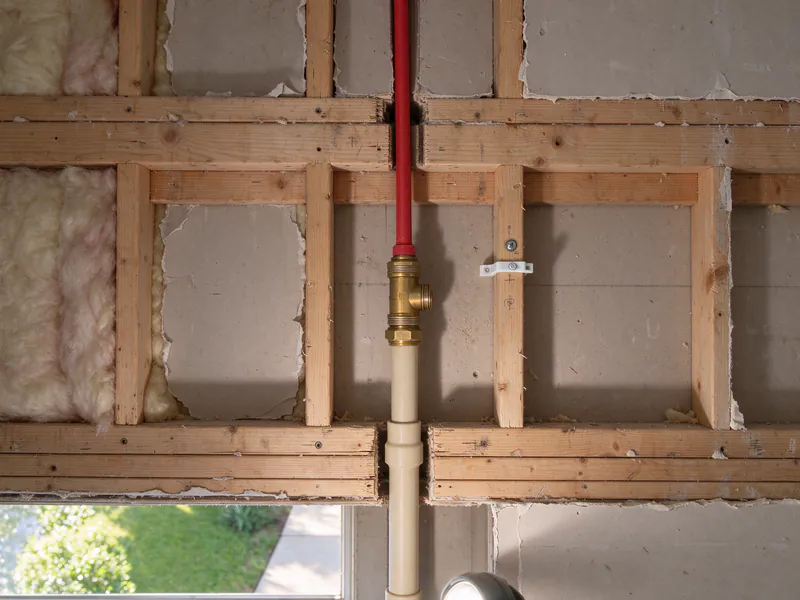
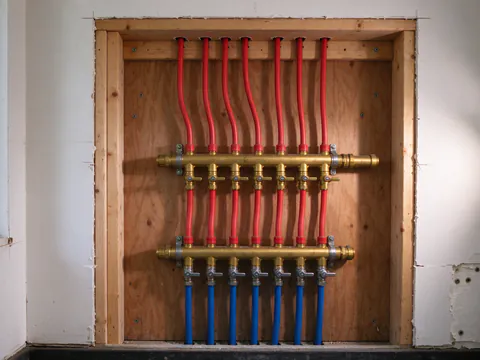
We plan around it. We run the new lines separately, usually overhead in the attic as PEX repiping, so the old CPVC stays undisturbed until each cutover. Where some CPVC stays, we make the transition with a listed fitting on a clean, square cut, with the old line supported so it does not flex. Where CPVC passes through a fire-rated wall, such as the one between the garage and the house, the replacement uses firestop products listed for the new pipe.
Will you have to open walls?
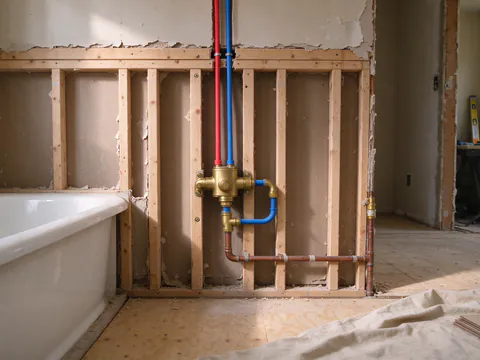
Yes, along the new route: a cut at the top of each wall where a drop enters and access behind each fixture where the new stub-outs land. The water heater area often needs extra room, because the brittle lines there are usually the first to go. Your estimate lists the expected openings and who patches, textures and paints each one; the wall openings guide explains finish levels.
We submit the permit through DallasNow, and the City inspects the rough-in before walls close and again at final, as the permits guide describes. If the inspector has to come back, the City charges a $75 reinspection fee, so we make sure the rough is ready the first time.
Most families stay in the house. We build the new lines while the old CPVC keeps carrying water, and the water goes off only for each cutover. Brittle pipe can crack when the system is drained and refilled, so your scope says who responds if a retained line fails during the job; the water shutoffs guide explains how cutovers are sequenced.
What CPVC replacement costs
When the whole house is replaced, the new system is PEX or copper, so our whole-house ranges apply. Our typical range for a whole-house PEX repipe in Dallas is $4,500 to $15,000 and up, and for a whole-house copper repipe $8,500 to $18,000 and up. More stories, more bathrooms, tile in the path and a larger patch-and-paint scope push a house toward the top.
For a partial job, we price it after the first visit from how much CPVC is brittle and where, the fixtures and branches, the attic route, how many transitions to retained CPVC we need, the new material, the water heater connections, valves and any PRV, openings in finished walls and tile, and the permit. Your written estimate lists each. The repiping cost estimator shows how the drivers change the scope, and the Dallas repiping cost guide explains how to compare quotes that describe the same work.
Before you decide
The PEX versus copper guide helps you choose what replaces the CPVC. The attic routing and freeze protection guide covers protecting the new lines, and the quotes and warranties guide lists what a scope should name. If only hot lines are cracking, hot water line replacement may be the right boundary.