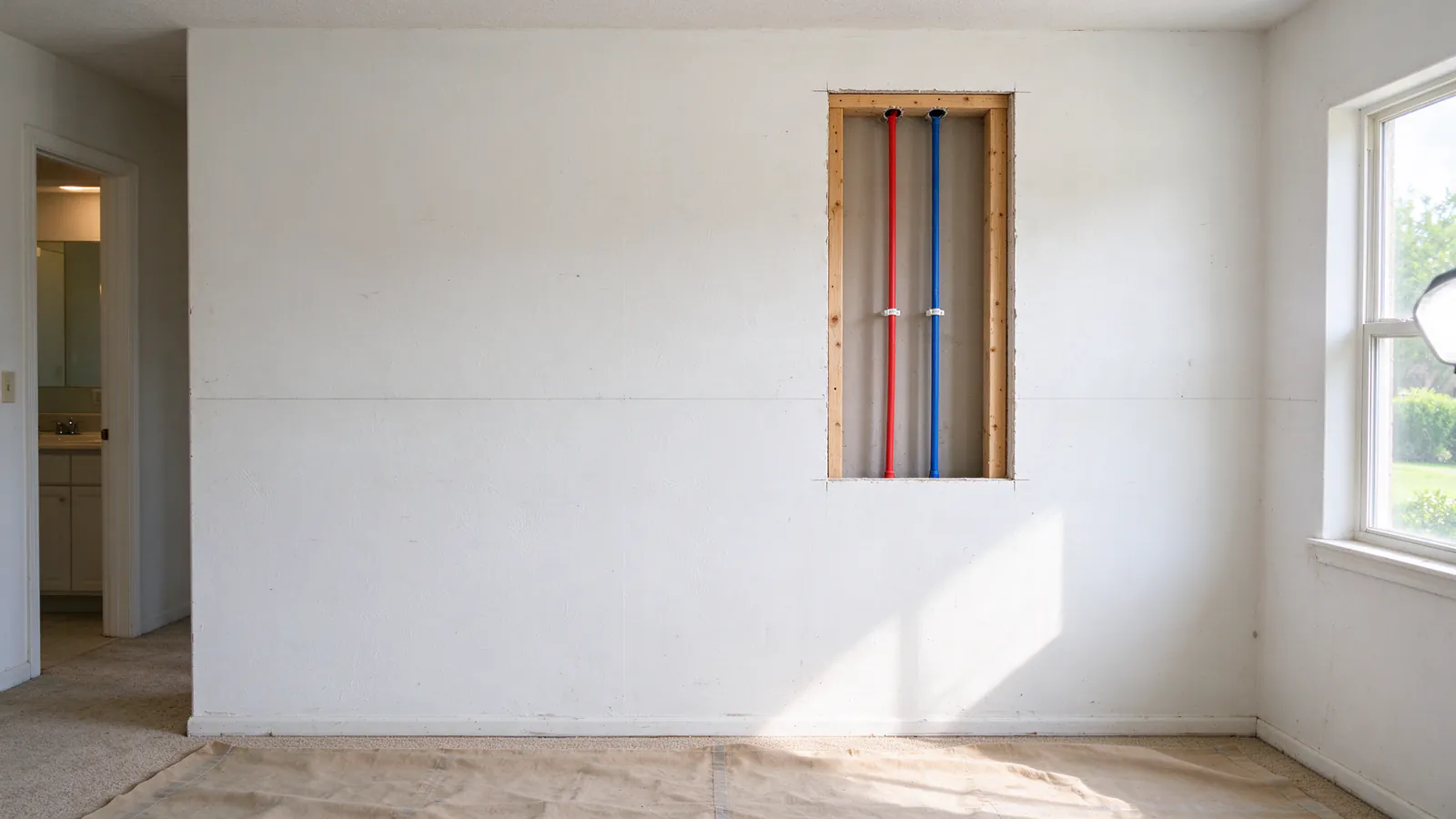
The question everyone asks first: will we have water? Water shutoff during repiping is shorter than most people expect, because we build the new system while the old one stays in service. The water goes off for cutovers, when the new piping is tied in at the main, at the water heater and at each fixture group. Your plan names which fixtures are off and when, and we phase the work so the house stays usable.
Fullbore Dallas Repiping replaces water supply lines in Dallas homes, including whole-house repiping, and we plan every shutoff around the people living there. Here’s how that plan comes together and what to get ready.
Why you keep water most of the time
In a typical Dallas slab house, new lines run through the attic and drop into walls right next to the old ones. Until a fixture is switched over, it keeps drawing from the old pipe. Routing, supports, insulation and most of the stub-outs get done before anyone touches a valve.
That’s also why your main shutoff matters early. Many older houses have a gate valve that won’t close all the way, or one that has seized. We often start by installing a new full-port ball valve so every cutover after that is under control.
When the water has to go off
The main and the water heater
Tying the new trunk into the service at the main shutoff, and reconnecting the water heater, means the whole house is off for that step. The heater is drained or isolated, and gas or power is made safe before the connections change. We usually group these steps so you get one longer whole-house shutoff instead of several short ones.
One bathroom at a time
Bathrooms, the kitchen and the laundry can each switch over separately. Phasing keeps one bathroom working while another is being connected. Commercial and apartment or condo repiping adds notices and floor-by-floor isolation, often outside business hours.
What we’ll promise, and what we won’t
We won’t promise a set number of hours without water before we’ve seen the house. What we will do is list the stages that need a full shutoff, the fixtures affected in each phase, and whether water comes back at the end of each work day where that’s practical.
Need the repipe planned around your household?
Your estimate sets out which fixtures go off in each phase, when the whole-house cutover happens and how water comes back between stages, before any work begins.
Offices, shops and apartment buildings
In an office, shop or apartment building, more people are affected. Each floor or riser may need its own isolation valve before work starts, so one stack can be cut over without draining the building. Occupants need written notice, and businesses that live on water, like restaurants and salons, often need cutovers after hours. Our commercial repiping and plumbing riser replacement pages explain how we sequence those jobs.
Getting ready for shutoff days
- Fill containers for drinking and cooking, and a bucket for flushing a toilet.
- Run the laundry and the dishwasher before cutover day.
- Agree with us which bathroom stays usable in each phase.
- Tell us about medical equipment, infants, pets or anyone who needs water at set times.
- In a shared building, confirm the notice rules with the manager or association.
When the water comes back
Expect air to spit from the faucets for a little while and some cloudy or discolored water. We open fixtures in a set order to push air and debris out. Aerators, showerhead screens and appliance inlet screens catch loosened scale and get cleaned after the flush; our guide to brown water and rusty pipes explains where that scale comes from.
Your water heater needs care
A tank has to be full before it’s heated again. An electric water heater switched on while empty can burn out its elements, so leave reconnecting and relighting to the plumber on your job. If hot water is slow or lukewarm afterward, our slow hot water guide explains the usual reasons.
Banging or knocking after refill
New knocks when a valve closes are a different question from trapped air. Our water hammer after repiping guide covers what causes it and how it’s fixed.
What’s urgent and what isn’t
If a leak is active while you wait for a repipe, your main shutoff is your first line of control. Find it now and make sure it closes. A valve that won’t close, a flooding meter box or water near electrical equipment is urgent; call Dallas Water Utilities about the meter. Planning the repipe isn’t urgent in the same way, and our repair or repipe guide helps you decide how much to replace.
Where shutoffs fit in the schedule
Shutoffs are one stage in a longer sequence that includes the City rough inspection and restoration. Our repiping process and timeline guide shows where they fall, and the wall openings guide explains the access work that comes before them.
Ask for the plan in writing
When you get an estimate, the shutoff plan comes with it: each cutover, the fixtures affected and how water comes back between stages.