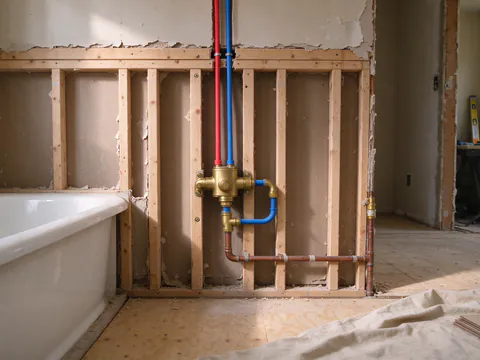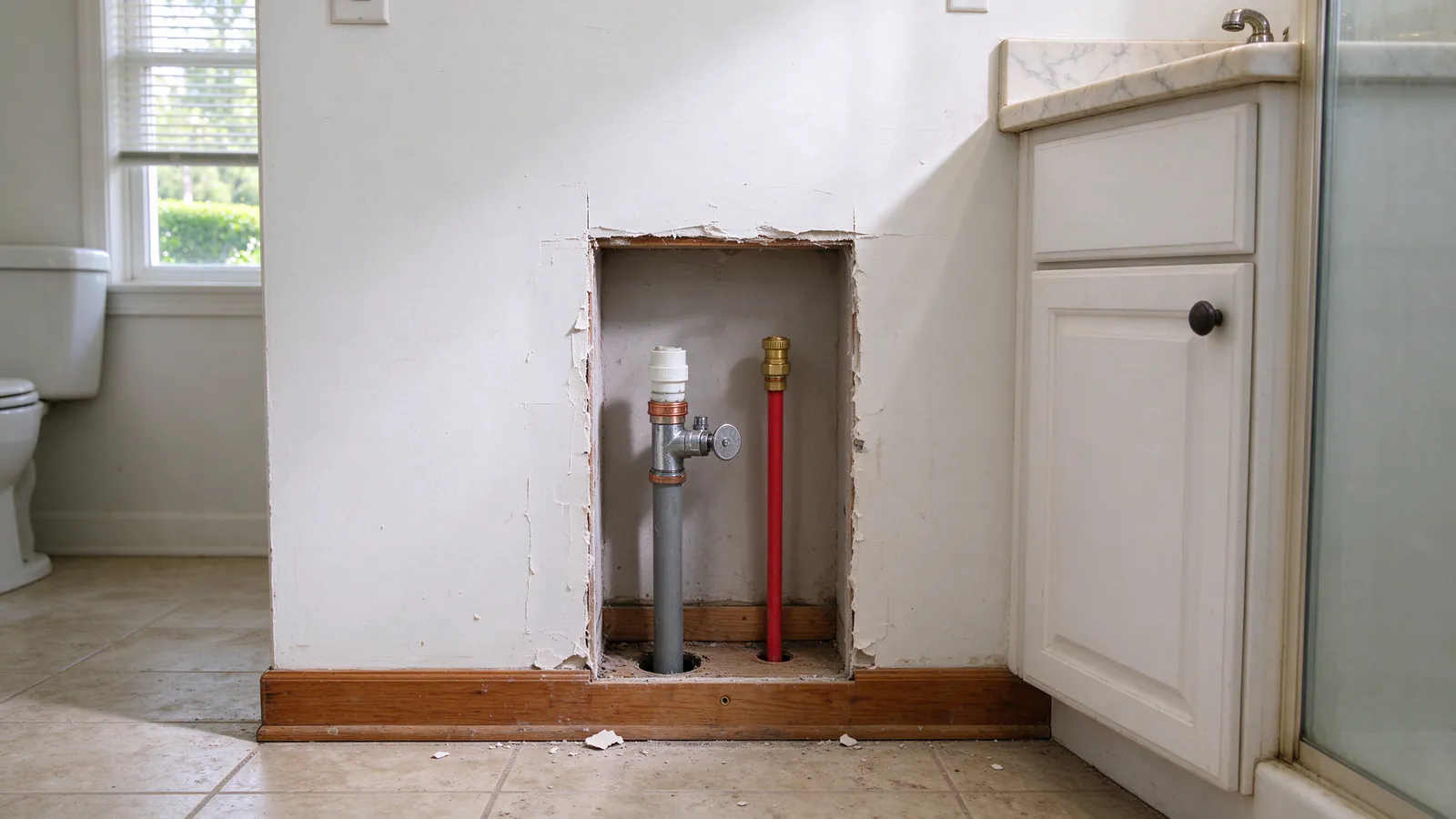
The home inspector circled it in red: gray plastic pipe at the water heater, “possible polybutylene.” Or you have had a fitting let go under a bathroom sink and want to know if more are coming. For polybutylene pipe replacement, Dallas homeowners should start with a question many skip: is the gray plastic actually polybutylene? Fullbore Dallas Repiping replaces water supply lines in Dallas homes, from a single bathroom branch to the whole house.
We confirm the material first, from the printing on the pipe and the fittings. Once we know it is PB, we replace the PB supply lines and their crimp fittings with a listed PEX or copper system, test it and have the City inspect it. When the whole house is PB, the scope is whole-house repiping; when only part of the house has it, partial repiping with a clear boundary can fit.
What we check on the first visit
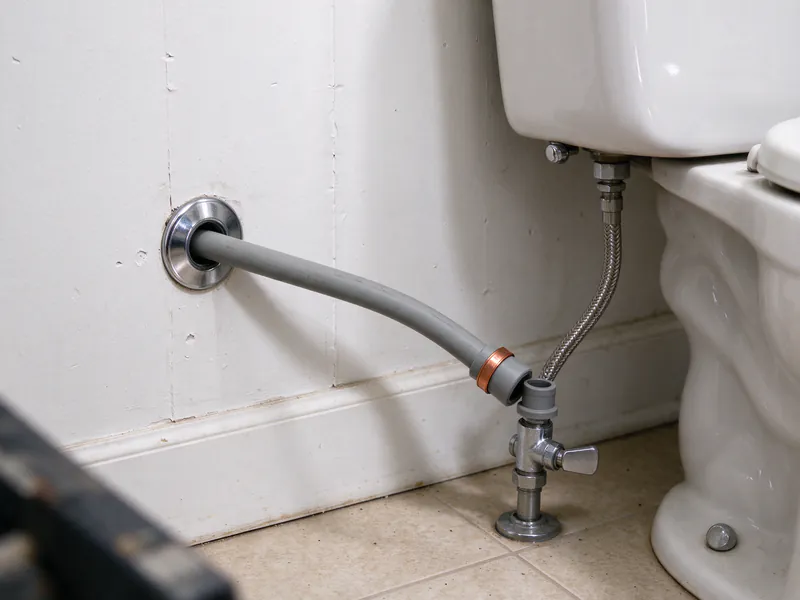
We identify the pipe before anything else. Gray plastic is not proof. Some PEX is gray, some CPVC looks pale gray in a dim closet, and a house can hold all three after years of repairs. So we read the printing along the pipe: PB usually carries a code such as PB2110, PEX says PEX with an ASTM F876 or F877 listing, and CPVC says CPVC with ASTM D2846. Our pipe identification guide shows each one.
Then we look at the fittings. PB joints are crimp rings, aluminum or copper, over insert fittings that may be gray or white plastic or copper. You will find them at the water heater, under sinks and at toilet stub-outs. We check every spot where pipe shows, note any past repairs and ask about leaks: where, when, and whether they were at a joint or along the pipe.
Why polybutylene keeps failing
PB failures cluster at the joints. Early systems used plastic insert fittings that could crack, and crimp rings that only seal when they are compressed just right; a ring crimped too loose or too tight can leak years later. The pipe itself can also weaken from the inside over time. Polybutylene’s problems have been widely linked to the disinfectants in treated drinking water, though no single cause explains every leak.
What sets PB apart is the pattern. A leak at one fitting says little about where the next one will come from, because every crimped joint in the house shares the same history. That is why patching one joint rarely ends it, and why our repair-or-repipe guide treats confirmed PB differently from a single copper leak.
Was my house built in the PB years?
PB went into many U.S. homes built from roughly the late 1970s into the mid-1990s and was widely written up in class-action litigation in the 1990s. The U.S. Census Bureau’s 2020-2024 American Community Survey puts the median year built at 1980 in ZIP 75248, 1989 in 75252 and 1991 in 75287. ZIP 75248 also had the most Dallas permit records explicitly describing interior water-supply repiping in City open data since January 2024: 10 of 100. None of that tells you what is in your house. The Far North Dallas page covers that area.
Found gray plastic pipe under your sink?
We read the printing and check the fittings, so your scope is set on what the pipe really is.
Replacing the pipe, not just the joints
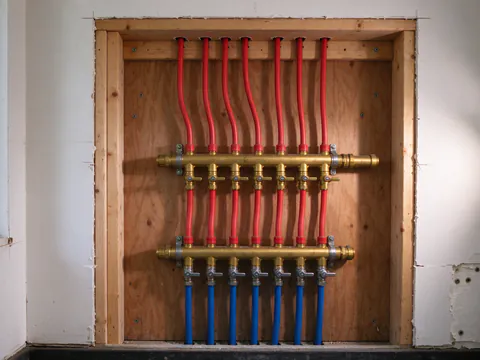
When we replace polybutylene, we replace the PB lines and every PB fitting inside the boundary, then reconnect each fixture with new stub-outs and stop valves. Swapping fittings while keeping the PB pipe leaves the aging material in service. Most PB houses go to PEX repiping, since flexible tubing follows routes much like the old PB did; copper repiping is the other option.
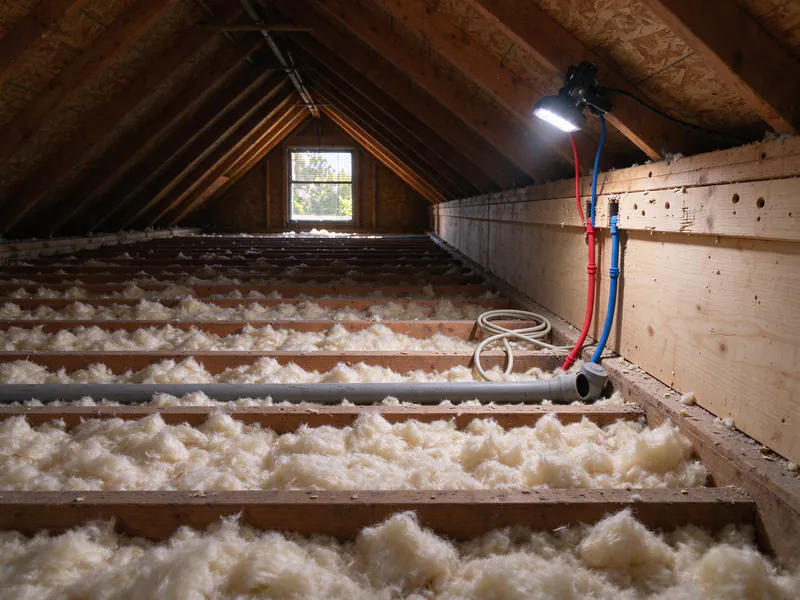
On a slab house we usually run the new lines through the attic and drop them down interior walls, and the PB in the slab is capped and left in place rather than dug out. Your written scope names every PB run left disconnected, which matters later when you sell the house.
Where PB hides after earlier repairs
Many PB houses have already been patched. A previous owner may have redone one bathroom, or a leak repair may have spliced copper into a PB run with a transition fitting. Those splices are easy to miss, and PB left between two newer sections keeps its old joints in service. We trace each fixture back toward the water heater to find them. Some service lines were PB too. A buried line between the meter and the house is outside an interior repipe; the service line guide explains that boundary.
Insurance, inspections and selling the house
Buyers, home inspectors and insurers flag PB more than any other material. We cannot promise what an insurer will decide about coverage, renewal or premium. What we can give you is a clean paper trail: a written scope listing the PB replaced and the new material, and the City’s inspection record. Replacing supply piping is permitted plumbing work in Dallas; we submit the permit through DallasNow, and the City inspects the rough-in before walls close and again at final. The quotes and warranties guide covers what a scope should name.
Will you have to open walls?
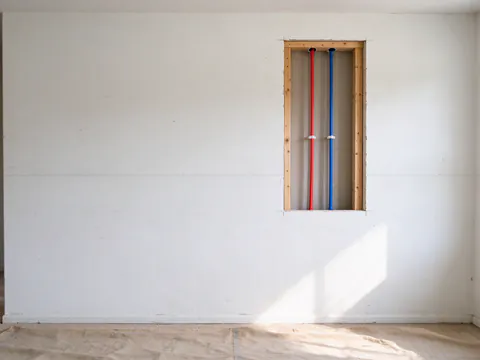
Yes, where the new lines drop to each fixture group: a small cut at the top of a wall and access behind the fixture where the stub-out lands. Your estimate lists the expected openings and who patches, textures and paints each one; the wall openings guide explains finish levels. The water stays on while we build the new system and goes off for each cutover, as the water shutoffs guide describes.
What polybutylene replacement costs
When the whole house is PB, the new system is PEX or copper, so our whole-house ranges apply. Our typical range for a whole-house PEX repipe in Dallas is $4,500 to $15,000 and up, and for a whole-house copper repipe $8,500 to $18,000 and up. Two stories, more bathrooms, tile in the path of the new lines and a larger patch-and-paint scope push a house toward the top.
When only part of the house is PB, we price it after the first visit from how much PB there is, the fixtures and branches, stories and attic route length, the new material, the openings, the water heater connections, valves and any PRV, and the permit. Your written estimate lists each one. The repiping cost estimator shows how the drivers change the scope, and the Dallas repiping cost guide explains how to compare quotes that describe the same work.
Before you decide
The PEX versus copper guide compares replacement materials, and the repiping process and timeline guide shows the order of work. For the broad view, the Dallas home repiping guide covers the whole decision.